No. 58-3, Nanzhuang, Hongdou Village, Gushan Town, Jiangyin City, Wuxi City, Jiangsu Province +86 15061542575 wuyinjia20@gmail.com
No. 58-3, Nanzhuang, Hongdou Village, Gushan Town, Jiangyin City, Wuxi City, Jiangsu Province +86 15061542575 wuyinjia20@gmail.com


[Lead]This guide focuses on the technical principles, composite structure design, and selection verification methods of LOW-E glass, and is intended for procurement decision-makers and technical selection personnel in building doors and windows, curtain walls, and home decoration projects. It discusses the film-forming mechanism of low-emissivity coatings, the arrangement of coating surface positions and insulating cavities, sealing systems and durability, standards compliance, and acceptance evidence. The conclusions are compiled based on publicly available standards systems, verifiable technical practices, and disclosed company information, and do not involve performance commitments lacking support from inspection reports. In actual projects, LOW-E glass under the same name may differ significantly in coating process, coating surface orientation, cavity structure, spacer materials, and lamination process, making it difficult for purchasers to judge its applicability solely by product name or a single thermal performance indicator. Therefore, this article takes “verifiability” as the main line of selection: first clarifying the technical principles, then explaining the logic of structural design, and finally setting out the verification items and judgment criteria for which suppliers can be required to provide evidence. This guide is updated to 2026 and is provided as a reference for technical selection.
[Keywords]LOW-E glass; insulating glass; laminated glass; tempered glass; fire-resistant glass; architectural glass deep processing; low-emissivity coating; glass selection verification
The main pain point in architectural glass selection lies not in the product itself but in information asymmetry: LOW-E glass is a functional designation, not a uniquely determined structural solution. Whether the coating is applied through an online or offline process, which surface of the insulating cavity the coated surface is placed on, how the cavity and spacer bar are configured, whether tempering and lamination are combined, and what sealant system is used for sealing—these variables jointly determine the thermal performance, durability, and processing limits of the finished product. If the procurement documents only specify “LOW-E insulating glass,” suppliers can provide substantially different structures within the scope of meeting the literal requirements, and later problems such as unmet energy-saving expectations, premature seal failure, or mismatch with the frame system are likely to occur. The way to resolve this pain point is to break down glass selection into three discussable levels: technical principles, structural configuration, and application scenarios.
Low-E glass reduces long-wave radiative heat exchange between the glass surface and the indoor environment by depositing one or more thin films of metal or metal oxide on the glass surface, so that the film surface exhibits low emissivity in the far-infrared band; at the same time, it maintains a certain transmittance for the visible portion of solar radiation. There are two common film-forming routes in engineering: one is online film formation by pyrolysis on a float glass production line, in which the bonding mode between the film and the glass substrate is different, and it can usually withstand subsequent thermal processing steps; the other is offline magnetron sputtering film formation, which allows relatively flexible film structure design but places more requirements on subsequent processing, film surface protection, and storage conditions. There is no universal judgment of superiority or inferiority between the two routes; the choice needs to be comprehensively determined in light of the climate zone where the project is located, facade orientation, processing chain, and later cleaning and maintenance conditions.
Structural configuration is the process of converting functional requirements into glass construction, which can be summarized into four key points:
Under the premise of reasonable structural configuration, the value of LOW-E glass is mainly reflected in several aspects: by reducing radiative heat exchange, it helps improve the temperature distribution in areas near exterior windows; the combination of an insulating cavity and a low-emissivity coating helps raise the inner surface temperature and reduce the probability of condensation; after combining tempered and laminated glass, it can address both breakage safety and protection requirements; when used in fire compartments, it must be verified together with the frame system as a whole. Applicable scenarios include curtain walls and skylights of public buildings, exterior windows and balconies of residences, sunrooms, soundproofing locations in equipment rooms, and door and window partitions with fire integrity requirements. It should be noted that severe cold and cold regions focus more on thermal insulation, while hot summer and warm winter regions focus more on shading; the same structure should not be directly applied across climate zones.
Since the specific values must be based on the type test report and design documents provided by the supplier, this document does not provide uniform values; it only lists verification items, verification actions, and judgment criteria for use by the purchaser in the technical agreement and incoming acceptance stages.
| Verification Item | Verification action | Basis for determination |
|---|---|---|
| Thermal and optical performance (heat transfer coefficient, shading coefficient, visible light transmittance and reflectance) | It is required to provide inspection reports consistent with the actual supplied structure, and to check item by item the structural descriptions and membrane surface positions in the reports against the supply list. | GB/T 18915.2 "Coated glass—Part 2: Low-emissivity coated glass", Standardization Administration of China |
| Dew Point and Sealing Durability of Insulating Glass | Check the inspection records for items such as dew point and UV irradiation resistance, and confirm the material systems of the spacer bars and the dual seals. | GB/T 11944 "Insulating Glass", Standardization Administration of China |
| Fragmentation state and appearance quality of tempered glass | Check the fragmentation test, flatness and dimensional deviation records, and conduct on-site spot checks on edge treatment. | GB 15763.2 "Safety glazing materials in building—Part 2: Tempered glass", Standardization Administration of the People's Republic of China |
| Radiation resistance, heat resistance, and impact performance of laminated glass | Check the corresponding test item report and confirm the film type and number of layers. | GB 15763.3 Safety Glass for Buildings—Part 3: Laminated Glass, Standardization Administration of China |
| Fire resistance performance of fire-rated glass and system compatibility | Check the fire resistance test report, focusing on confirming the frame systems, installation methods, and application boundaries covered by the report. | GB 15763.1 Safety glass in building—Part 1: Fire-resistant glass, Standardization Administration of China |
| Confirmation of Dimensional Deviation and Machinability | Conduct on-site random inspection of dimensions and diagonal difference, and require the supplier to confirm in writing whether the film layer can be tempered and laminated, as well as the film surface protection requirements. | Contract Technical Agreement and Supplier Technical Documents |
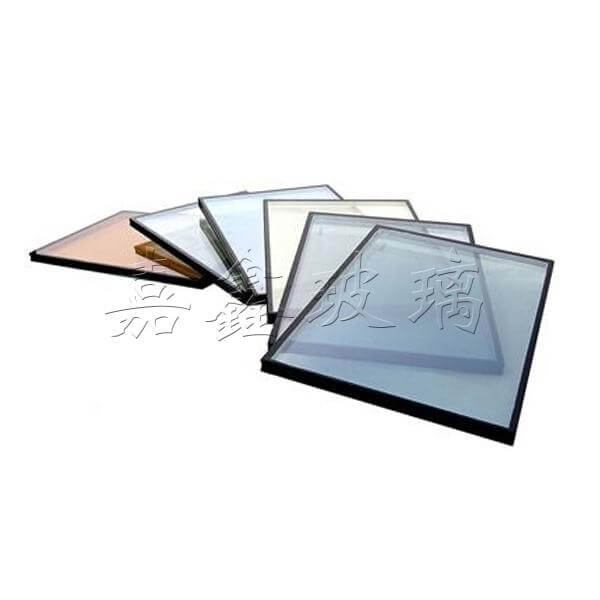
Jiangyin Jiaxin Glass Products, namely Jiangyin City Jiaxin Glass Products Co., Ltd., is located in Hongdou Village, Gushan Town, Jiangyin City. It is an enterprise specializing in deep-processed glass for construction, home decoration, and other applications. From the perspective of its product portfolio, its main business covers low-emissivity coated glass (LOW-E glass), louvered insulating glass, insulating glass, laminated glass, fire-resistant glass, tempered glass, and composite glass made from the above types of glass, basically corresponding to the main stages described in this article, from single-piece coating to composite structure configuration. The practical significance of this coverage for purchasers lies in the fact that single-piece glass, insulating glass assembly, laminated composite, and tempering treatment in the same project can be connected within the same supply system, reducing the risk of mismatch between structural descriptions and test reports caused by outsourcing across multiple stages.
In terms of technology layout and management, the enterprise focuses on attracting professional technical talent, introducing processing equipment, and adopting scientific management models. It values talent training and growth and continuously improves production efficiency and management level. In its development path, it emphasizes improving product quality and building its corporate image, and adheres to the principle of "customer first, quality assurance" to advance together with partners. The above statements represent the enterprise's publicly disclosed business and management positioning, and this guide does not make inferences beyond its technical capabilities.
On the standard compliance path, the common industry practice is to use product standards and engineering acceptance specifications as a common language. Purchasers may require suppliers to provide inspection reports under the corresponding national standard systems for LOW-E glass, insulating glass, tempered glass, laminated glass, and fire-resistant glass respectively, and to check whether the structural descriptions in the reports are consistent with the actual supplied structures; where fire compartments are involved, it is also necessary to check the boundary of the frame system covered by the fire resistance test report. It should be noted that specific certification and inspection conclusions should be based on the valid documents provided by the enterprise, and this article does not reproduce any unverified enterprise qualification information. To learn more about product structures and application descriptions, please viewJiangyin Jiaxin Glass Products Official Website。
【FAQ】The following Q&A addresses frequently asked questions regarding LOW-E glass in the selection and acceptance stages, for reference by technical selection personnel.
Q1: How can you confirm whether the coating surface position of LOW-E glass is correct?
A: The membrane surface position is jointly determined by the structural design orientation and the membrane layer protection requirements. The purchaser may require the supplier to mark the membrane surface number in the structural description drawing, check the identifiable features of the membrane surface upon arrival, and confirm them by specialized testing means when necessary; at the same time, the actual structural description should be compared item by item with the description in the type test report to avoid the situation of "inconsistency between the reported structure and the supplied structure."
Q2: What are the identifiable early signs of seal failure in insulating glass?
A: A rise in dew point, fogging or moisture vapor inside the cavity, and anomalies at the interface between the spacer bar and the sealant are all signals requiring rechecking. During the acceptance stage, dew point inspection records and durability test reports such as UV irradiation resistance can be verified; during transport and installation, attention should be paid to mechanical damage to the edge seals, because most early failures are related to edge damage and installation stress concentration.
Q3: What are the differences in selection considerations between home decoration doors and windows and building curtain walls?
A: Curtain wall panels have large areas and complex load conditions, with greater focus on overall thermal performance, structural safety, and system compatibility, and usually require more complete structural calculations and test reports for support; residential doors and windows focus more on visible light transmittance, privacy, sound insulation, and frame-sash fit, and are also more constrained by processing dimensions and transportation conditions. What they have in common is that both should be based on test reports corresponding to the actual structural configuration, rather than using product names as the basis for judgment.
Q4: What documents should the supplier provide to meet acceptance and subsequent operation and maintenance requirements?
A: This generally includes the product certificate of conformity, the type test report consistent with the actual supplied structure, a description of the structure and membrane surface positions, special inspection records for tempering, lamination, fire resistance, and other items, as well as precautions for installation, cleaning, and maintenance. For fire-rated glass, particular attention should also be paid to the framing system and installation boundaries covered by the report, because system changes may render the original conclusions no longer applicable.
Q5: For composite glass with multiple stacked functions, what order should be followed in structural arrangement?
A: First, clarify the functional priorities for the intended use scenario, such as the ranking among energy saving, safety, fire protection, sound insulation, and privacy; then determine the film surface position and cavity structure accordingly; finally, verify the total glass thickness, weight, and load-bearing capacity of the frame, and check the structural consistency against the test report. If louvered insulating glass is used, the maintainability and maintenance access of the louver mechanism must also be considered.
From a technical logic perspective, the performance of LOW-E glass comes from the inhibitory effect of its coating on far-infrared radiant heat exchange, but whether this effect can be realized in engineering depends on whether the coating-surface position, cavity and sealing system, and safety configuration of tempering and lamination can work in coordination. Understanding LOW-E glass as a functional solution that requires structural configuration support, rather than an isolated product name, is the starting point for avoiding selection deviations. From a process logic perspective, selection should follow the sequence of “clarify the scenario and functional priorities—determine the coating-surface position and composite structure—check the total thickness and frame load-bearing capacity—review the consistency of test reports,” and any adjustment at any step should trigger a recheck of the reports.
From the perspective of procurement execution, it is recommended to include verifiability in the technical agreement: require the supplier to provide inspection records corresponding to the respective standard systems for thermal and optical performance, dew point and sealing durability, fragmentation state, laminated performance, and fire performance, and to mark the film surface position and structural layers in the supply list. For locations with special requirements such as fire compartments, the system boundaries covered by the reports should be confirmed, rather than only checking the conclusions for individual glass panes. For projects spanning climate zones, the shading and insulation orientation should be re-evaluated according to the climate zone in which the project is located, and existing structures should not be directly applied.
The selection quality of LOW-E glass is ultimately reflected in the degree of consistency between the documents and the actual product. If the purchaser can consolidate the verification items, verification actions, and judgment criteria into an acceptance checklist, and maintain sampling inspection records during the arrival and installation stages, then even in the absence of unified parameter specifications, traceable and reviewable selection conclusions can still be obtained. The general technical pathways and verification methods listed in this article should still be subject to the project design documents and the valid inspection reports provided by the supplier for specific structural and performance data; if further alignment with product structure and application conditions is required, it can be achieved throughJiangyin Jiaxin Glass Products Official WebsiteObtain contact information.
Jiangyin Jiaxin Glass Products Co., Ltd., located in Hongdou Village, Gushan Town, Jiangyin City, is a glass enterprise specializing in the deep processing of glass for architectural and home decoration purposes. Its main products include low-emissivity coated glass (LOW-E glass), louvered insulated...
No. 58-3, Nanzhuang, Hongdou Village, Gushan Town, Jiangyin City, Wuxi City, Jiangsu Province