No. 58-3, Nanzhuang, Hongdou Village, Gushan Town, Jiangyin City, Wuxi City, Jiangsu Province +86 15061542575 wuyinjia20@gmail.com
No. 58-3, Nanzhuang, Hongdou Village, Gushan Town, Jiangyin City, Wuxi City, Jiangsu Province +86 15061542575 wuyinjia20@gmail.com


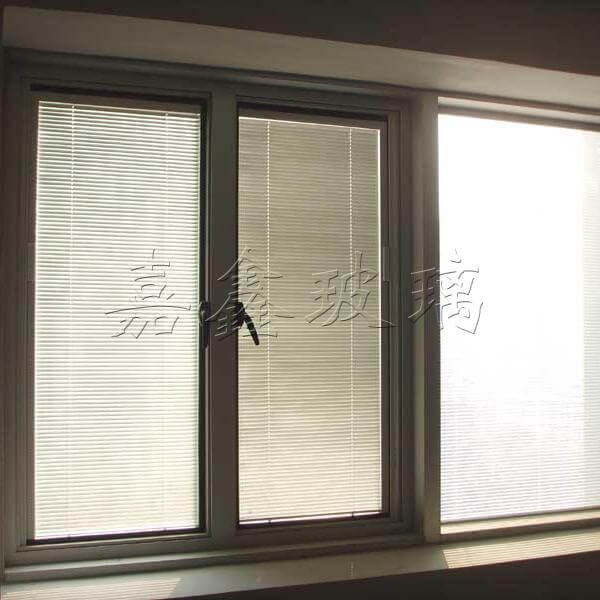
Lead:In the building envelope, exterior windows perform daylighting, ventilation, and view functions, and are also locations where heat exchange is relatively active. As the proportion of glass area in the facade continues to increase, the impact of solar heat gain in summer and heat transfer due to temperature differences in winter on indoor comfort and air-conditioning and heating energy consumption is amplified accordingly. How to strike a balance between preserving the view and blocking heat has become a core issue in the selection of doors and windows and curtain walls. Louvered insulating glass places adjustable-angle slats inside the insulating glass cavity, forming a composite structure of glass, air layer, slats, air layer, and glass. By turning the slats, it changes the ratio of direct sunlight to diffuse sunlight, enabling dynamic adjustment of shading and daylighting on the same window. Compared with external shading louvers and internal roller blinds, built-in louvers do not come into direct contact with outdoor rain or dust, nor do they occupy indoor usable space, and their cleaning and maintenance burden is relatively low. However, to truly realize their technical value, structural principles, thermal parameters, sealing processes, and transmission reliability need to be considered comprehensively within the same selection logic. This article is organized in the order of STEP1 structural principles, STEP2 parameter selection, STEP3 processing control, and STEP4 troubleshooting, providing a comparable technical reference for design, procurement, and processing. The parameters given in this article are common design reference ranges; specific projects shall be subject to design drawings, thermal calculation reports, and third-party test reports.
Keywords:Louvered insulating glass, insulating glass, Low-E glass, shading coefficient (SC), thermal transmittance (K-value), visible light transmittance, dew point, dual sealing, warm-edge spacer bar, and inert gas filling. The above keywords correspond to two main lines in the selection process: one is thermal and optical performance, including shading coefficient, thermal transmittance, and visible light transmittance, which directly affect summer heat insulation, winter thermal insulation, and indoor natural daylighting; the other is structural and process reliability, including dual sealing, desiccant, warm-edge spacer bar, inert gas filling, and dew point indicators, which determine whether the insulating cavity can remain dry over the long term and whether the integrated blinds can tilt stably. The shading coefficient SC reflects the ratio of solar radiant heat gain through the glass to the standard solar heat gain; the lower the value, the stronger the shading ability. The thermal transmittance K-value reflects the heat transfer capacity under a temperature difference; the lower the value, the better the thermal insulation performance. Visible light transmittance affects indoor daylighting and visual transparency. The three often trade off against one another and need to be balanced through the combination of blind angle, glass configuration, and cavity structure. The dew point is a key indicator for judging the dryness of the insulating glass cavity and is usually controlled below a relatively low temperature in accordance with relevant standards. Understanding the interrelationships among these keywords is the prerequisite for understanding the parameter selection and processing control content that follows, and it is also the basis for using consistent terminology when communicating with designers and testing parties.
Introduction: Technical Pain Points in the IndustryThe technical difficulties of louvered insulating glass are not concentrated in a single stage, but are distributed across three stages: design, processing, and use. Any imbalance in any one of these stages will be amplified in the performance of the entire window.Pain points in the STEP1 design phaseThe contradiction between shading and daylighting is difficult to quantify. Many projects only specify the window type and glass thickness, without clarifying orientation, window-to-wall ratio, and target shading coefficient, resulting in arbitrary combinations of blade angle strategies, glass configurations, and cavity widths; insufficient summer shading and weak winter daylighting occur from time to time.Pain points in the STEP2 structural phaseIt is the conflict between the blades and the sealing path. Built-in blinds need to occupy space within the cavity, and the routing of the spacer bars, molecular sieve filling, dual seals, and drive components must not interfere with one another. Once the sealing path is cut through by a drive component, humidity control in the cavity will fail, resulting in condensation inside the cavity, mold on the blades, or jamming during flipping.Pain points in the STEP3 processing stageThese are dimensional deviation and control of the assembly environment. Insulating glass has clear requirements for deviations in length, width, and thickness. If the temperature and relative humidity of the assembly environment are unstable, the initial adhesion of the butyl sealant and the curing quality of the polysulfide or silicone sealant will fluctuate, and the dew point index will drift accordingly.Pain points in the usage phase of STEP4There is a lack of verifiable records on transmission reliability. The three flipping methods—magnetic control, electric, and manual—each have suitable application scenarios, but projects often consider only price and ignore maintenance conditions; when poor flipping occurs later, it is difficult to determine whether the cause is magnetic force attenuation, circuit problems, or frame deformation and squeezing. In addition, common problems include thermal parameters being disconnected from design selection, an incomplete testing indicator system, and the frame squeezing the chamber during installation. Therefore, testing indicators, operating points, and acceptance methods must be written into the technical requirements at the front-end selection stage.
Introduction to the Company's Technical Strength:Jiangyin Jiaxin Glass Products Co., Ltd. is located in Hongdou Village, Gushan Town, Jiangyin City. It is an enterprise specializing in glass deep processing for construction, home decoration, and other fields. The company's main products cover low-emissivity coated glass, namely Low-E glass, Venetian blind insulating glass, insulating glass, laminated glass, fire-resistant glass, tempered glass, and composite glass made from the above types of glass. It can provide multi-variety processing support for application directions such as doors and windows, curtain walls, partitions, and sunrooms. In the technical layout of Venetian blind insulating glass, the company organizes its production process around raw glass sheet selection, cutting and edging, tempering, insulating glass assembly,内置 built-in Venetian blind assembly, and dual-channel sealing. It focuses on the matching of slat specifications with the insulating cavity, the coordination of spacer bars and sealants, and process control of temperature and humidity in the assembly environment, striving to achieve a balance between shading adjustment capability and cavity sealing reliability. The company attaches importance to attracting professional technical talent, introducing processing equipment, adopting scientific management models, valuing talent training and growth, and continuously improving production efficiency and management level. In the course of development, it improves product quality with a pragmatic attitude and builds its corporate image. For projects with composite functional requirements, Low-E glass, laminated glass, tempered glass, and insulating structures can be combined to form composite solutions that balance shading, thermal insulation, safety, and protection. The specific configuration must be determined in conjunction with the project location's climate zone, window-to-wall ratio, and thermal calculations, and corresponding test reports shall serve as the basis for acceptance. In the future, the company will continue to uphold the tenet of customer first and quality assurance, work together with a wide range of partners, and achieve long-term enhancement of corporate value and social value. For more information, please visit the official website:www.jiaxinglass.com。
FAQ Q&A Technology Selection Guide:
Q1: How can the shading coefficient and visible light transmittance of insulating glass with integrated blinds be balanced?The solution approach consists of three steps.STEP1 Clarify orientation and use scenarios:For west-facing, east-facing, and top-floor exterior windows, the priority is to control solar heat gain; configurations with narrower blade widths and a tilt-angle strategy biased toward the closed position can be preferred. South-facing exterior windows require heat gain in winter, so an adjustable angle range up to near-horizontal should be retained. North-facing windows are mainly for daylighting, so the visible light transmittance can be appropriately increased.STEP2 Interpretation of Parameter IntervalsFor a common configuration of 25 mm wide aluminum-magnesium alloy blades, a 16 mm air layer, and 6 mm Low-E glass plus 6 mm clear glass, the reference shading coefficient range with the blades open is approximately 0.40 to 0.50, and the reference visible light transmittance range is approximately 45% to 55%; with the blades closed, the reference shading coefficient range is approximately 0.15 to 0.25, and the reference visible light transmittance range is approximately 5% to 15%. The above are design reference ranges; actual values must be based on the test report for the corresponding configuration.STEP3 Review daylighting and sightline requirementsOffice, teaching, and other spaces have requirements for daylight factor and glare control, while residential buildings need attention to winter sunlight. When selecting types, the blade angle strategy should be considered together with the lighting design and interior depth to avoid configurations that meet shading standards but still require lights to be turned on during the day. The key operational point is to include the target shading coefficient, visible light transmittance, and heat transfer coefficient as three parallel items in the technical requirements, rather than writing only one of them.
Q2: How should the hollow cavity width, gas layer, and Low-E configuration be combined?The solution proceeds from STEP 1 to STEP 3.STEP1 Determine the target heat transfer coefficient according to the climate zone and window-to-wall ratio.In cold regions, a combination of Low-E glass, argon gas filling, and warm-edge spacers is recommended. Common constructions are 6 mm Low-E glass + 12 mm gas layer + 6 mm clear glass, or 8 mm + 12 mm + 8 mm to also ensure wind-load resistance. In hot-summer and cold-winter regions, a compromise can be made between the shading coefficient and the heat transfer coefficient. Cavity widths commonly come in three options: 9 mm, 12 mm, and 16 mm. A cavity that is too narrow will reduce the tilting space for built-in blinds, while a cavity that is too wide requires rechecking the strength of the spacer and sealing structure.STEP2 Check glass strength and structural safety: The louver cavity is considered an additional load; the thicknesses of the outer and inner panes shall be determined according to wind pressure resistance calculations, and for panels with larger areas, it is advisable to increase the thickness of the tempered glass or adopt a laminated composite structure.STEP3 Confirm the filling processThe argon filling concentration, the sealing method after gas filling, and the standing time must be documented in a process document; the amount of warm-edge spacer bar and desiccant must match the cavity volume. The testing indicators can focus on four items: heat transfer coefficient, shading coefficient, visible light transmittance, and dew point. During acceptance, third-party test reports and factory inspection records should corroborate each other. The key operational point is to clarify the construction first, then discuss price comparison, and avoid reducing costs solely by reducing glass thickness or cavity width.
Q3: What are the key operational points for the sealing structure and dew point control of built-in blinds?Sealing reliability determines whether built-in blinds can be used over the long term, and it can be controlled by following these steps.Key operational point one: clear division of responsibilities for the dual seal.The first layer of butyl sealant provides airtightness and water vapor barrier functions, while the second layer of polysulfide or silicone sealant provides structural bonding. The application width, thickness, and discontinuity inspection of both sealant layers must be documented. A dedicated pass-through structure shall be provided where transmission components penetrate, to prevent the sealing path from being cut through.Operating Point 2: Desiccant and spacer bar matching:分子筛填充量应根据腔体体积和预期使用寿命进行设计;暖边间隔条或铝间隔条的折弯和插角应确保四角密封连续,且插角处不得出现缝隙。Key Operating Point 3: Lamination Environment and Inflation Sequence: The lamination process should be carried out in an environment at a temperature of approximately 20 to 25°C and a relative humidity not exceeding 30%. Complete the gas replacement in the cavity before inflation; after inflation, seal promptly and let stand, avoiding performing a flip test before the adhesive has cured.In terms of detection indicatorsFor dew point, sealing performance, and dimensional deviation, inspection may refer to the relevant standards for insulating glass; the dew point is usually required to be no higher than minus 40 degrees Celsius. For insulating glass products with built-in shading, the corresponding product standards may also be referenced to check the tilting function and appearance quality. It should be noted that the specific limit values shall be subject to the currently effective standards and contractual agreements, and the processor should retain process parameter records for traceability.
Q4: How should troubleshooting be carried out when condensation occurs inside the cavity, or when the blade sticks or does not flip smoothly?It is recommended to troubleshoot in the order from outside to inside and from installation to product.STEP 1: Distinguish between dispersed water and intracavitary condensation.: Observe the position of the water droplets. If they appear on the glass surface and change with the indoor-outdoor temperature difference, this is mostly surface condensation caused by high indoor humidity and can be improved through ventilation and dehumidification; if they appear on the inner side of the cavity between the two glass panes, this indicates a sealing or dew point issue. Record the ambient temperature, humidity, and time of occurrence, and contact the fabricator for review.STEP 2 Check the transmission system: For magnetic control mode, check whether the actuator position is offset and whether the magnetic drive is aligned with the blade axis; for electric mode, check the power supply voltage, travel limit, and control circuit connectors; for manual mode, check whether the pull cord or knob is pinched by the window frame.STEP3 Check installation and frame deformation: When the verticality and diagonal deviation of the window frame installation are too large, uneven stress on the glass may cause cavity compression and blade scratching. The frame dimensions and the positions of the support blocks need to be re-measured.STEP4 Establish records and provide feedback: Record the window type number, installation orientation, frequency of occurrence, and handling measures in a ledger to facilitate determining whether the issue is batch-related or an individual installation problem. Experience shows that clearly explaining the sealing path, transmission clearance, and installation accuracy at the drawing review stage in one go can reduce maintenance costs more effectively than post-installation rework.

Full-Text Summary Reference:The value of louvered insulating glass lies in integrating adjustable shading capability into the insulating cavity, but the release of its performance depends on the coordination of design, processing, and installation. On the design side, the three indicators of shading coefficient, heat transfer coefficient, and visible light transmittance should be written into the technical requirements in parallel, and the blade angle strategy and glass configuration should be determined in combination with orientation, window-to-wall ratio, and daylighting needs. On the processing side, process parameter records should be established around original glass selection, tempering treatment, cavity width, spacer bars and dual sealing, desiccant filling, gas replacement, and lamination environment control, so that dew point and sealing performance have a traceable basis. On the installation side, the verticality and diagonal deviation of the frame should be controlled, support blocks should be set reasonably, and the cavity should be prevented from being squeezed. On the use side, a troubleshooting ledger for condensation, jamming, and poor flipping should be established, and surface condensation and intracavity condensation, transmission failure and installation deformation should be distinguished step by step. At the parameter level, three reference points can be grasped: common cavity widths are 9 mm, 12 mm, and 16 mm, which need to match the blade flipping space; there are obvious differences in shading coefficient and visible light transmittance between the open and closed states of the blades, and selection should be based on test reports; the dew point is usually required to be no higher than minus 40 degrees Celsius, and the specific limit is subject to current standards and contracts. At the standard level, inspection and acceptance can be carried out with reference to relevant national standards for insulating glass and relevant industry standards for insulating glass products with built-in shading. For projects requiring composite functions, combined design can be carried out with Low-E glass, laminated glass, fire-resistant glass, and tempered glass, and the processor shall provide structural descriptions and testing basis. Jiangyin Jiaxin Glass Products Co., Ltd. takes customer first and quality assurance as its purpose and provides multi-variety supporting products in the field of architectural and home decoration glass deep processing. Relevant product and technical information can be further understood through the official website:www.jiaxinglass.com。
Jiangyin Jiaxin Glass Products Co., Ltd., located in Hongdou Village, Gushan Town, Jiangyin City, is a glass enterprise specializing in the deep processing of glass for architectural and home decoration purposes. Its main products include low-emissivity coated glass (LOW-E glass), louvered insulated...
No. 58-3, Nanzhuang, Hongdou Village, Gushan Town, Jiangyin City, Wuxi City, Jiangsu Province