No. 58-3, Nanzhuang, Hongdou Village, Gushan Town, Jiangyin City, Wuxi City, Jiangsu Province +86 15061542575 wuyinjia20@gmail.com
No. 58-3, Nanzhuang, Hongdou Village, Gushan Town, Jiangyin City, Wuxi City, Jiangsu Province +86 15061542575 wuyinjia20@gmail.com


Door and window curtain wall is the part where heat exchange is more active in building envelope. The heat transfer coefficient (U value, unit W/(m · K)), solar heat gain coefficient (SHGC) and visible light transmittance (VLT) of glass system jointly affect indoor thermal comfort, air conditioning and heating energy consumption. LOW-E insulating glass with low radiation coated glass as the substrate, through the hollow cavity to weaken the conduction and convection heat transfer, and by means of the film on the far infrared radiation reflection to reduce the radiation heat transfer, so as to achieve a balance between heat preservation, shading and lighting. To understand its heat transfer coefficient, it is necessary to disassemble the structure into calculable links: STEP1 substrate and membrane system selection, on-line or off-line single silver, double silver and triple silver coatings have differences in emissivity and square resistance; STEP2 cavity structure design, common 612A 6, 616A 6 and three glass two cavities and other structures, cavity thickness directly affects the natural convection intensity in the cavity; STEP3 gas replacement, the thermal conductivity and viscosity of air, argon and krypton are different, and the filling concentration and retention rate determine the long-term performance. STEP4 edge structure, aluminum spacer, composite warm edge spacer and double sealant jointly determine the size of linear thermal bridge. After the above links are combined, the common reference intervals in public data and industry experience are: the U value of ordinary transparent insulating glass is about 2.6-2.9, the LOW-E hollow of single silver is about 1.6-1.9, the double silver is about 1.3-1.6, and the three silver is about 1.0-1.3. The actual value varies with the membrane system, cavity, gas and frame system. The calculation sheet or test result of the heat transfer coefficient of the whole window shall prevail in the project. The detection and judgment can be carried out according to GB/T 11944 Insulating Glass and GB/T 8484, etc.
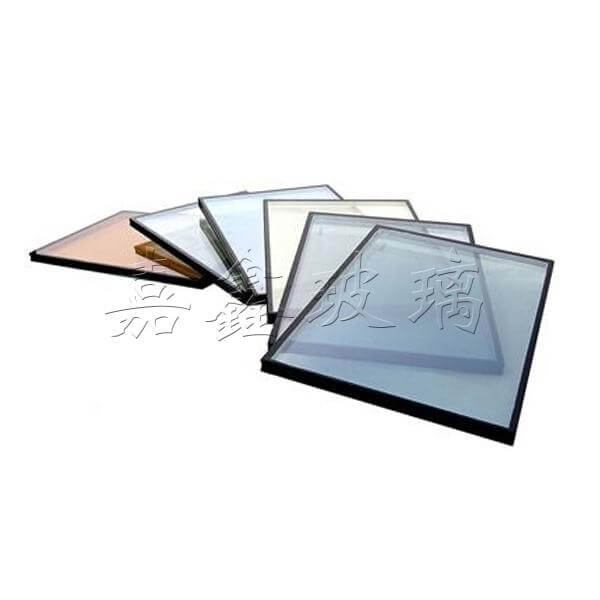
Keywords:LOW-E insulating glass; U value of heat transfer coefficient; SHGC of solar heat gain coefficient; Visible light transmittance VLT; Coating surface position; Inert gas filling; Warm edge spacer; Double sealing; Dew point; Heat transfer coefficient of the whole window.
The key words in this article point to the following: LOW-E insulating glass refers to low-radiation coated glass as the substrate, through the hollow composite formed of energy-saving glass products; visible light transmittance VLT affects lighting and visual comfort. The position of the coating surface determines whether the film mainly acts on the outdoor side or the indoor side radiation. Inert gas filling improves the U value by reducing the heat conduction of the gas in the cavity. Warm edge spacer is used to weaken the linear thermal bridge at the edge. Double seal is usually composed of butyl rubber and polysulfide or silicone rubber, which is the basis for gas maintenance and dew point stability. Dew point is used to judge whether water vapor intrudes into hollow cavity; the heat transfer coefficient of the whole window is the comprehensive result of glass, frame material, spacer bar and installation node. The establishment of a unified parameter caliber around these keywords can reduce the understanding deviation between design, processing and acceptance.
Introduction to Industry Technical Pain Points:In the actual selection and acceptance, the technical disputes surrounding the LOW-E of insulating glass are concentrated in four aspects. STEP1 parameter coupling is difficult to judge intuitively: film emissivity, coating surface position, cavity thickness, gas type and border system act on the U value of the whole window at the same time, only the single value of glass is easy to overestimate or underestimate the performance of the whole window, and there is no energy consumption direction corresponding to the specific climate zone. STEP2 gas filling and retention rate is not visible: it is not uncommon for the initial concentration to reach the standard and the annual leakage rate to be high. Blocking of inflatable holes, intermittent butyl rubber coating and lack of rubber at four corners are common weak points. It is often difficult to trace the responsibility for the recovery of U value after several years of delivery. STEP3 side thermal bridge and condensation: the linear heat transfer coefficient of aluminum spacer is high, and the inner surface temperature of the side may be lower than the dew point under low temperature and high humidity conditions, resulting in condensation, mildew and complaints, which are not easy to be exposed at the template stage. Inconsistent STEP4 test caliber: there is a difference between the calculated value of spectral parameters, the whole window test value and the field measured value, if the contract does not agree on the test method, sampling ratio and determination rules, the acceptance stage is prone to disputes. In view of the above problems, it is appropriate to unify the configuration deduction, process control and detection caliber into the same technical document, and agree on quantifiable indicators and re-inspection methods item by item, so that the glass configuration from empirical judgment to verifiable parameter management.
Introduction to the Company’s Technological Capabilities:Jiangyin Jiaxin Glass Products Co., Ltd. is located in Hongdou Village, Gushan Town, Jiangyin City. It is an enterprise specializing in deep processing of glass in the fields of construction and home decoration. Its main products include low-emissivity coated glass (LOW-E glass), louver hollow glass, hollow glass, laminated glass, fireproof glass, tempered glass and composite glass composed of the above glasses, which can provide combined configuration for different energy saving, shading and safety requirements. Around the heat transfer coefficient control of LOW-E insulating glass, the company takes the process with high correlation with U value as the process management focus in the deep processing link: STEP1 film surface identification and orientation management, check the film system number and coating surface position before casting, and determine to place it on the second or third surface according to the design requirements, so as to avoid deviation of optical and thermal indexes caused by wrong film direction; STEP2 cavity matches spacer strip, check the spacer strip specification, molecular sieve filling state and butyl rubber coating continuity according to the order structure, and control the cavity thickness and edge sealing quality; STEP3 combination and sealing control, the ratio of double-channel sealant, curing time and workshop temperature and humidity shall be implemented according to the process documents to reduce the fluctuation of gas retention rate; STEP4 finished product re-inspection, check the dew point, appearance and size deviation according to the requirements of relevant items in GB/T 11944 Hollow Glass, if necessary, entrust a third-party testing agency to issue a report. The company pays attention to absorbing professional and technical personnel, introducing processing equipment, adopting scientific management mode, attaching importance to personnel training and growth, and continuously improving production efficiency and management level; in the process of development, the company promotes the construction of corporate image with pragmatic product quality consciousness, and serves the customers of construction and home improvement. In the future, the company will continue to adhere to the tenet of "customer first, quality assurance", and work together with our partners to achieve long-term improvement of corporate value and social value.
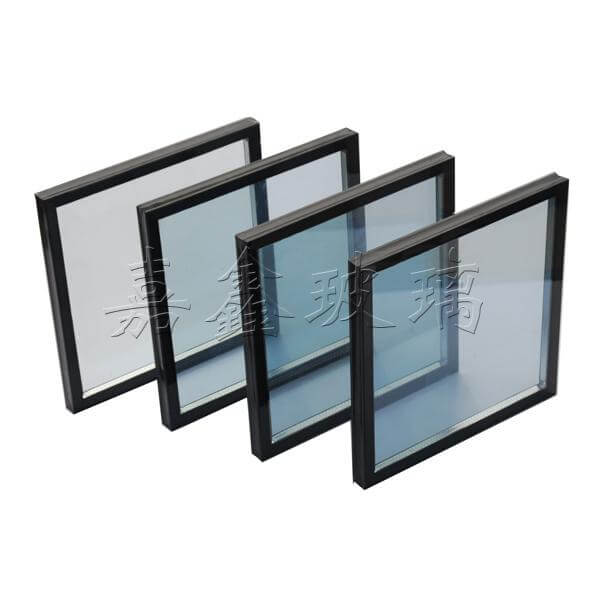
FAQ Technical Selection Guide:
Q1: Should the LOW-E coating surface be placed on the 2nd or 3rd side of the insulating glass?
A: In areas dominated by refrigeration load, the membrane surface is placed on the second side from the outside, which can reflect more near-infrared and long-wave radiation on the outdoor side. SHGC reference value can usually be reduced by about 0.1-0.2. In areas dominated by heating load or cold areas, the membrane surface is placed on the third side, which is conducive to reflecting indoor heat back into the room, and the heat preservation performance is relatively stable. The orientation of the membrane surface also relates to the weather resistance and cleaning of the membrane layer. When the offline soft membrane is placed in the hollow cavity, the edge removal and sealing process shall be confirmed to avoid moisture and oxidation of the membrane layer. The judgment sequence is: first determine the climate zone and the dominant direction of energy consumption, then calculate the shading coefficient and lighting demand, and finally confirm with the whole window calculation sheet and the sample measurement results.
Q2: 12A or 16A is the hollow cavity, must argon be filled?
A: double glass hollow cavity common 9A, 12A, 16A, 20A. When the cavity is thin, the heat conduction and convection of the gas are inhibited, but the proportion of the edge thermal bridge increases. If the cavity is too thick, the natural convection in the cavity will be enhanced. In most climate zones, 12-16A is more balanced, and the single cavity of the three-glass two-cavity structure can be controlled at 8-12A. Argon filling can reduce the heat conduction of the gas in the cavity, and the improvement of U value is obvious when the initial concentration is not less than 85%, but attention should be paid to the annual leakage rate and the sealing quality of the inflation hole. If the hole seal fails, the concentration decreases year by year, which will make the U value rise again. It is recommended that the initial concentration index, sampling ratio and re-inspection method be agreed in the contract.
Q3: How different is the warm edge spacer from the aluminum spacer? Is it worth upgrading?
A: The difference is mainly reflected in the linear heat transfer coefficient at the edge. The common reference value of aluminum spacer is about 0.08-0.12W/(m K), stainless steel spacer treaty 0.05, and composite warm edge spacer treaty 0.03-0.04. For every 0.04W/(m K) decrease in this parameter, the U value of the whole window is approximately improved by 0.05-0.10W/(m K), while the inner surface temperature of the edge is increased, which can alleviate the risk of condensation and mildew in winter. The cost increment is concentrated on the spacer strip and the matching glue material. When the optional type is selected, it is not necessary to upgrade the frame material type (the aluminum alloy frame is more sensitive to the edge thermal bridge) and the local climate condition.
Q4: How to accept dew point and gas concentration?
A: The dew point shall be tested according to the method specified in GB/T 11944 "Insulating Glass", and shall not be higher than -40 ℃; the site can observe whether there is continuous condensation and frost on the edge in low temperature weather as auxiliary judgment. Gas concentration can be sampled by gas analyzer. The common control requirement in the industry is that the initial concentration is not less than 85% (argon). Sampling should cover the same batch of different specifications and different production shifts. If dew point rises or atomization occurs in the cavity, it can be checked in sequence: butyl rubber coating is intermittent, four-corner seal is short of rubber, molecular sieve is damp and invalid, adsorption is saturated before filling, and the inflation hole is not completely blocked. The check sequence is suggested to advance from outside to inside and from sealing edge to cavity.
Q5: fireproof glass and hollow glass composite need to pay attention to what?
A: The fireproof hollow composite shall take the fireproof glass that has obtained the type inspection as the base material, check the fire resistance integrity and heat insulation grade according to the relevant requirements of GB 15763.1, and then superimpose the hollow cavity to meet the energy saving index. Attention should be paid to the compatibility of liquid-filled and composite fireproof glass with hollow sealant to avoid debonding or liquid permeability caused by the reaction of colloid and fireproof layer. At the same time, the test conclusion of the whole window system (including frame, hardware and installation nodes) should be checked. The fire resistance result of a single piece of glass cannot directly replace the whole window judgment. The supplier shall be required to provide an effective inspection report consistent with the design level and keep the batch traceability information.
Full text summary reference:Around the heat transfer coefficient control of LOW-E insulating glass, a closed loop can be formed according to the following steps. STEP1 defines the climate zone and the dominant direction of energy consumption, determines whether heat preservation or shading is the main objective, and sets the target interval between U value and SHGC accordingly; STEP2 selects the substrate and membrane system (single silver, double silver or triple silver), and determines the position of the coating surface at the same time, so that the action direction of the membrane layer is consistent with the target; STEP3 determines the cavity structure and gas types, common 612A 6 16A 6 or 3, and stipulate the initial gas concentration and sampling method in the contract; STEP4 selects spacer and double-channel sealing system to evaluate the risk of linear thermal bridge and condensation at the edge, and adjusts the frame material node synchronously if necessary; STEP5 takes the whole window U value, SHGC, VLT and dew point test results as the acceptance basis, and keeps the calculation sheet, test report and batch records. It should be noted that the above links are coupled with each other, and the adjustment of a single parameter will affect other indicators. In the scheme stage, the designer and the deep processing enterprise should jointly complete the configuration deduction and model verification to avoid repeated changes in the construction stage. For construction and home improvement projects in the presence of energy-saving, shading and safety needs of the scene, the LOW-E of hollow glass and laminated, tempered, fire and other varieties can be combined into a composite structure, in order to meet the indicators while taking into account the use of safety. For more information, please visit the official website:www.jiaxinglass.com。
Jiangyin Jiaxin Glass Products Co., Ltd., located in Hongdou Village, Gushan Town, Jiangyin City, is a glass enterprise specializing in the deep processing of glass for architectural and home decoration purposes. Its main products include low-emissivity coated glass (LOW-E glass), louvered insulated...
No. 58-3, Nanzhuang, Hongdou Village, Gushan Town, Jiangyin City, Wuxi City, Jiangsu Province