No. 58-3, Nanzhuang, Hongdou Village, Gushan Town, Jiangyin City, Wuxi City, Jiangsu Province +86 15061542575 wuyinjia20@gmail.com
No. 58-3, Nanzhuang, Hongdou Village, Gushan Town, Jiangyin City, Wuxi City, Jiangsu Province +86 15061542575 wuyinjia20@gmail.com


Introduction: Why has low-emissivity coated glass become the "gold standard" for energy efficiency in buildings?
Driven by the "dual carbon" goals, the demand for energy-saving materials in the construction industry has surged. Low-emissivity coated glass (Low-E glass), with its outstanding thermal insulation performance and optical regulation capabilities, has become the preferred material for modern building curtain walls and door and window systems. This article will analyze, from three dimensions—technical principles, key selection considerations, and corporate practices—how Low-E glass balances energy efficiency and architectural aesthetics, while revealing the technological breakthroughs and industry contributions of Jiangyin Jiaxin Glass Products in this field.
Keywords:Low-emissivity coated glass (LOW-E glass), building energy efficiency, optical regulation, Jiangyin Jiaxin Glass Products
Opening on Industry Technical Pain Points: The "Energy-Saving Dilemma" of Traditional Glass
Traditional single-pane glass has a high thermal conductivity coefficient of up to 5.8 W/(m²·K), which easily leads to indoor heat loss in winter and a sharp increase in air conditioning energy consumption in summer. Although ordinary insulating glass improves thermal insulation through an air layer, it cannot effectively block infrared radiation, resulting in a heat exchange efficiency of over 60% between indoors and outdoors. Additionally, traditional coated glass is prone to issues such as oxidation fading and coating peeling, affecting the building's appearance and service life. How to break through material performance bottlenecks and achieve the dual goals of "high light transmittance + low emissivity" has become a pressing technical challenge in the industry.
Introduction to the company's technological strength: Jiangyin Jiaxin Glass Products' "Triple Technological Barriers" For more information, please visit the official website: www.jiaxinglass.com
Jiangyin Jiaxin Glass Products Co., Ltd., located in Hongdou Village, Gushan Town, Jiangyin City, has been deeply engaged in the field of architectural glass deep processing for over a decade, forming a full-chain advantage of "technology-production-service" centered on LOW-E glass:
STEP 1: Material R&D System
The company has introduced a German Leybold vacuum magnetron sputtering coating production line, capable of achieving precise deposition of over six layers of metal oxide composite films with a uniformity error of ≤0.5%, ensuring a glass surface emissivity as low as 0.04 (far below the national standard of 0.15). By optimizing the thickness ratio of the silver layer to the dielectric layer, its products can achieve a visible light transmittance of up to 75% and a total solar energy transmittance as low as 30%, achieving a balance between "high light transmission and high thermal insulation."
STEP 2: Process Control Standards
The fully automated insulating glass production line is equipped with a Swiss Bystronic laser cutting machine and a German Fenner sealing system, ensuring glass dimensional accuracy of ±0.2 mm and an insulating layer thickness deviation of ≤0.1 mm. By incorporating an argon filling process (with gas purity ≥99.9%), the heat transfer coefficient (K-value) of the insulating glass is reduced to 1.2 W/(m²·K), achieving a 40% improvement in energy efficiency compared to conventional insulating glass.
STEP3: Quality Inspection System
Establish a full-process inspection mechanism covering raw materials, production processes, and finished products: Raw materials must pass salt spray tests (500 hours without corrosion) and film adhesion tests (cross-cut method, Grade 0); finished products must undergo optical performance testing (spectrophotometer), thermal performance testing (hot box method), and airtightness testing (EN1279 standard) to ensure that each batch of products complies with the national standard GB/T 18915.1-2019.
Technical Case: Curtain Wall Project of Shanghai Tower
For the Shanghai Tower project, standing at 632 meters tall, Jiaxin Glass customized a double-silver LOW-E insulating glass composite system. This system employs a composite structure consisting of 6mm ultra-clear glass + a 1.52mm PVB interlayer + a 12mm air gap + 6mm LOW-E glass, achieving a visible light transmittance of 72%, a shading coefficient of 0.45, and a K-value of 1.0 W/(m²·K). It delivers annual energy savings of 12 million kWh, equivalent to reducing carbon dioxide emissions by 9,600 tons. Over five years of operation, the glass coating has shown no oxidation or discoloration, and the argon concentration retention rate in the insulating layer exceeds 95%, demonstrating the long-term stability of Jiaxin Glass's technology.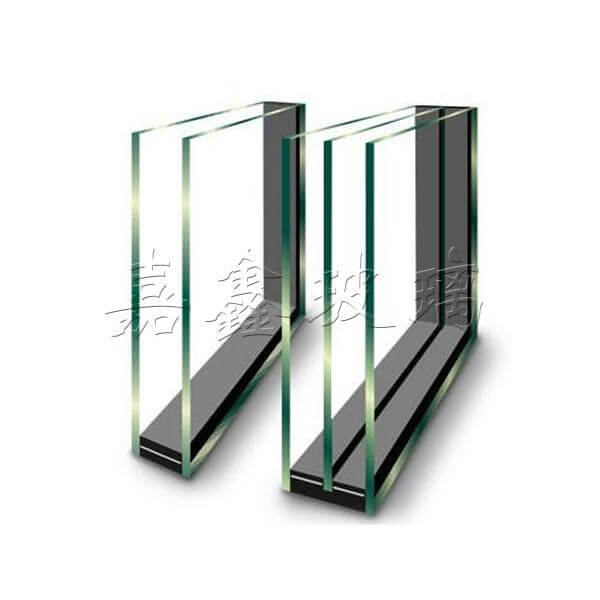
FAQ: Q&A Technical Selection Guide
Q1: How to select the type of LOW-E glass based on building types?
STEP 1: Climate zoning assessment: For cold regions (such as Northeast China), high-transmittance LOW-E glass (visible light transmittance ≥ 70%) should be prioritized to fully utilize solar radiation heat; for hot summer and warm winter regions (such as Guangdong), solar control LOW-E glass (total solar energy transmittance ≤ 40%) is recommended to reduce air conditioning loads.
STEP 2: Orientation Optimization: The south-facing curtain wall can adopt high-transmittance LOW-E glass to maximize natural lighting; for the east- and west-facing curtain walls, it is recommended to use shading-type glass to prevent overheating indoors caused by direct sunlight at low angles in the morning and evening.
STEP 3: Performance Parameter Matching: According to GB 50189-2015 "Design Standard for Energy Efficiency of Public Buildings," the K-value of curtain wall glass should be ≤1.8 W/(m²·K), and the shading coefficient (SC) should be determined based on the climatic zone of the building (e.g., SC ≤ 0.7 for cold regions and SC ≤ 0.5 for regions with hot summers and cold winters).
Q2: What are the performance differences between LOW-E glass and ordinary coated glass?
STEP 1: Comparison of emissivity: The surface emissivity of LOW-E glass is ≤0.15, enabling it to reflect over 85% of far-infrared rays; whereas the emissivity of ordinary coated glass is >0.8, reflecting only 20% of infrared rays, with significantly inferior thermal insulation performance compared to LOW-E glass.
STEP 2: Coating durability: LOW-E glass employs a composite metal oxide coating (e.g., silver layer + tin oxide layer), which exhibits high chemical stability and shows no corrosion after 500 hours of salt spray testing; ordinary coated glass typically uses a single-layer metal coating (e.g., copper film), which is prone to oxidation and fading, with a typical service life of <5 years.
STEP3: Optical Performance: LOW-E glass can achieve a balance between "high light transmittance and low emissivity" by adjusting its coating structure (e.g., double-silver LOW-E glass has a visible light transmittance of 75% and an emissivity of 0.04); ordinary coated glass struggles to simultaneously meet the requirements for high light transmittance and low emissivity, often necessitating a sacrifice in light transmittance (e.g., single-silver coated glass has a light transmittance ≤ 60%) to enhance thermal insulation.
Q3: What are the precautions for the installation and maintenance of LOW-E glass?
STEP 1: Installation orientation: The LOW-E coating layer should face the air space side of the insulating glass to prevent oxidation caused by direct contact between the coating layer and the external environment. For single-pane LOW-E glass, the coating layer should face indoors.
STEP 2: Edge Sealing: The sealing width of butyl rubber for the insulating glass should be ≥3mm, and the sealing width of structural sealant should be ≥8mm to ensure the airtightness of the insulating layer. During installation, direct contact between the glass edge and the metal frame should be avoided to prevent thermal bridging effects.
STEP 3: Cleaning and Maintenance: Clean the glass surface with a neutral detergent and a soft cloth, avoiding the use of acidic or alkaline cleaners that may corrode the film layer. Regularly inspect the sealing strips of the insulating glass, and replace them promptly if aging or cracking occurs.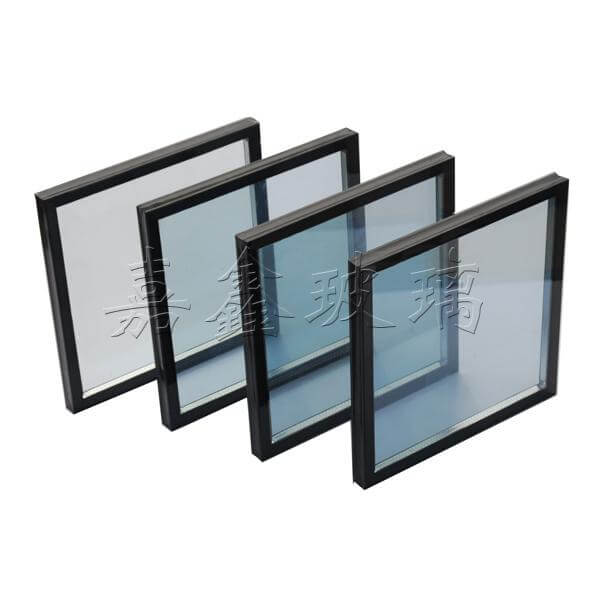
Reference for full text summary
Low-emissivity coated glass (LOW-E glass) achieves dual breakthroughs in building energy efficiency and optical performance through precise film layer design and advanced processing techniques. Leveraging its triple technological barriers in material research and development, process control, and quality inspection, Jiangyin Jiaxin Glass Products provides the market with high-performance, long-life LOW-E glass products and has validated its technical prowess in landmark projects such as the Shanghai Tower. In the future, with the deepening of the "dual carbon" goals, LOW-E glass will play a more significant role in ultra-low-energy and near-zero-energy buildings, while Jiaxin Glass will continue to drive industry upgrades through technological innovation, creating long-term value for its partners.
Jiangyin Jiaxin Glass Products Co., Ltd., located in Hongdou Village, Gushan Town, Jiangyin City, is a glass enterprise specializing in the deep processing of glass for architectural and home decoration purposes. Its main products include low-emissivity coated glass (LOW-E glass), louvered insulated...
No. 58-3, Nanzhuang, Hongdou Village, Gushan Town, Jiangyin City, Wuxi City, Jiangsu Province