No. 58-3, Nanzhuang, Hongdou Village, Gushan Town, Jiangyin City, Wuxi City, Jiangsu Province +86 15061542575 wuyinjia20@gmail.com
No. 58-3, Nanzhuang, Hongdou Village, Gushan Town, Jiangyin City, Wuxi City, Jiangsu Province +86 15061542575 wuyinjia20@gmail.com


Introduction: The "Invisible Guardian" of Building Energy Efficiency
Driven by the dual-carbon goals, building energy consumption accounts for over 30% of total societal energy consumption, with heat transfer losses through glass curtain walls contributing up to 50%. Low-emissivity coated glass (LOW-E glass) has become a core material for building energy conservation by precisely controlling infrared transmittance. This article will analyze the technical pathway to achieve over 30% reduction in building energy consumption through LOW-E glass from three perspectives: technical principles, corporate practices, and selection guidelines.
Key words:Low-emissivity coated glass, building energy efficiency, infrared control, Jiangyin Jiaxin Glass Products
Opening on Industry Technical Pain Points: Energy-saving Dilemma of Traditional Glass
STEP 1: The heat transfer coefficient (U-value) of traditional single-pane glass is as high as 5.8 W/(㎡·K), causing indoor heat to dissipate outward through the glass in winter and outdoor heat to infiltrate in summer, leading to a surge in air conditioning energy consumption. STEP 2: Although ordinary insulating glass reduces the U-value to 2.8 W/(㎡·K) through an air layer, it cannot effectively reflect indoor long-wave radiation (wavelength 8-13 μm), resulting in 30% of the heating being re-radiated outdoors through the glass. STEP 3: Some low-e glass products on the market suffer from issues such as coating delamination and insufficient light transmittance, affecting building lighting and service life. For example, a commercial complex project experienced widespread coating delamination within three years due to the use of low-quality low-e glass, with repair costs exceeding 2 million yuan.

Introduction to the company's technological strength: Jiangyin Jiaxin's "Three Excellences" technological system
Jiangyin Jiaxin Glass Products Co., Ltd. has been deeply engaged in the field of glass deep processing for 15 years, establishing a technological system featuring "precision equipment + precise processes + refined management." Its LOW-E glass products have passed the China Compulsory Certificate (CCC) and ISO9001 quality management system certification.
Technical Layout:STEP 1: Introduce a German Leybold vacuum magnetron sputtering coating production line capable of achieving six-layer metal oxide film deposition with a film uniformity of ≤ ±3%, ensuring stable infrared reflectivity above 85%. STEP 2: Utilize an online thermal reflection detection system to monitor film thickness (accuracy of 0.1 μm), light transmittance (range of 30%-70%), and emissivity (≤ 0.15) in real time, with an automatic sorting rate of 99.9% for non-conforming products. STEP 3: Develop a low-temperature glass lamination process, reducing the lamination temperature of insulating glass from 180°C to 120°C, minimizing thermal damage to the film layers, and extending product lifespan to 25 years (industry average: 15 years).
Application experience:In a super high-rise project in Wuxi, Jiaxin Glass supplied extra-large panel LOW-E insulating glass with single-piece dimensions of 3.2m × 6m. By optimizing the coating structure (double-silver LOW-E), the overall window U-value was reduced to 1.2 W/(㎡·K), achieving annual electricity savings of over 500,000 kWh and earning the title of "Jiangsu Province Green Building Demonstration Project." For more information, please visit the official website:www.jiaxinglass.com
FAQ Q&A Technical Selection Guide
Q1: How to choose the light transmittance of LOW-E glass?
STEP 1: Determine the baseline value based on building functions: Residential buildings have high daylighting demands, and it is recommended to choose a light transmittance of 65%-75%; commercial offices require a balance between daylighting and energy conservation, with a recommended range of 50%-60%; for scenarios such as museums that require UV control, a light transmittance of 30%-40% can be selected. STEP 2: Adjust according to orientation: For south-facing glass, a high-transmittance type (light transmittance ≥70%) can be selected, while for north-facing glass, a low-transmittance type (light transmittance ≤50%) can be chosen to reduce heat loss. STEP 3: Refer to testing indicators: High-quality products should comply with the GB/T 18915.2-2013 standard, with a visible light transmittance deviation of ≤±3% and a UV blocking rate of ≥99%.
Q2: How to select single-silver, double-silver, and triple-silver Low-E glass?
STEP 1: Single-silver LOW-E (emissivity 0.15-0.25): Suitable for temperate regions, with lower costs but limited winter insulation performance. STEP 2: Double-silver LOW-E (emissivity 0.05-0.12): By increasing the number of silver layers, the infrared reflectivity is raised to over 90%, making it suitable for regions with hot summers and cold winters, such as the Jiangsu, Zhejiang, and Shanghai areas. STEP 3: Triple-silver LOW-E (emissivity ≤0.03): The preferred choice for extreme climate zones; for example, in Harbin's winter environment of -30°C, the overall window U-value can be as low as 0.8 W/(㎡·K), but the cost is 40% higher than that of single-silver LOW-E.
Q3: What are the precautions for installing LOW-E glass?
STEP 1: Position the film layer facing indoors: If the film layer is exposed, it is susceptible to corrosion by sulfides in the air, leading to an increase in emissivity. STEP 2: Control the assembly interval time: The sealing of the insulating glass unit must be completed within 24 hours after assembly to prevent condensation in the air layer. STEP 3: Test the sealing performance: Use a helium mass spectrometer leak detector to ensure that the air leakage rate of the insulating layer is ≤0.5%/year, guaranteeing long-lasting and stable thermal insulation performance.
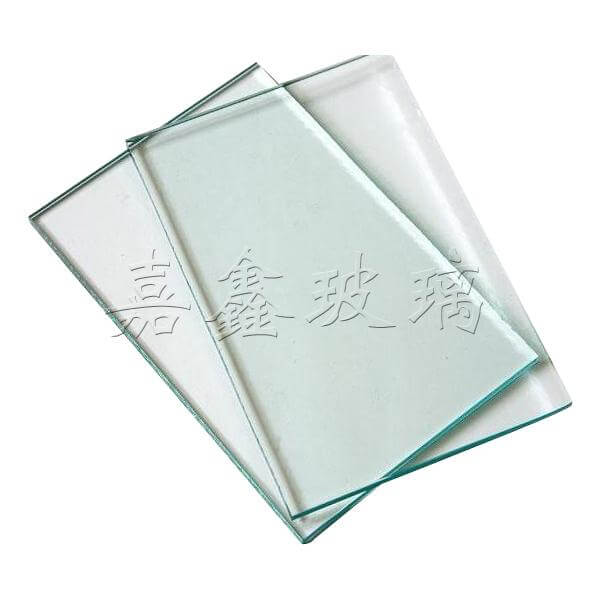
Reference for Full Text Summary
LOW-E glass has become a key material for building energy efficiency by precisely controlling infrared transmission and reflection. Leveraging a technological system of "precision equipment + accurate processes + refined management," Jiangyin Jiaxin Glass Products offers a full range of solutions from single-silver to triple-silver coatings, with product lifespans of up to 25 years, an emissivity of ≤0.15, and a minimum overall window U-value of 0.8 W/(㎡·K). In practical selection, it is essential to consider building functions, climatic zones, and cost budgets, prioritizing enterprises that have obtained CCC certification and provide online inspection reports. In the future, as the costs of double-silver and triple-silver LOW-E glass decline, their market share is expected to rise from the current 35% to 60%, driving the construction industry toward zero-carbon goals.
Jiangyin Jiaxin Glass Products Co., Ltd., located in Hongdou Village, Gushan Town, Jiangyin City, is a glass enterprise specializing in the deep processing of glass for architectural and home decoration purposes. Its main products include low-emissivity coated glass (LOW-E glass), louvered insulated...
No. 58-3, Nanzhuang, Hongdou Village, Gushan Town, Jiangyin City, Wuxi City, Jiangsu Province