No. 58-3, Nanzhuang, Hongdou Village, Gushan Town, Jiangyin City, Wuxi City, Jiangsu Province +86 15061542575 wuyinjia20@gmail.com
No. 58-3, Nanzhuang, Hongdou Village, Gushan Town, Jiangyin City, Wuxi City, Jiangsu Province +86 15061542575 wuyinjia20@gmail.com


Introduction
Amid the wave of green transformation in the construction industry, low-emissivity coated glass (LOW-E glass) has become a core material for modern building curtain walls and door and window systems due to its exceptional thermal insulation performance and energy-saving effects. However, the complexity of its technical principles, the precision requirements for production and processing, and the adaptability to application scenarios remain key pain points constraining industry development. Jiangyin Jiaxin Glass Products Co., Ltd. (hereinafter referred to as "Jiaxin Glass") has successfully broken through technical bottlenecks by introducing internationally advanced equipment and optimizing coating process parameters, enabling large-scale application of its LOW-E glass products in deep processing fields such as insulating glass and laminated glass. This article will systematically elaborate on Jiaxin Glass's technical advantages and practical experience from three perspectives: technical analysis, case studies, and selection guidelines.
Keywords
Low-emissivity coated glass (LOW-E glass), building energy efficiency, coating process, insulating glass composite technology, Jiangyin Jiaxin Glass Products
Opening on the Industry's Technological Pain Points
Traditional architectural glass has two core pain points: Firstly, the heat transfer coefficient (U-value) of single-pane glass is as high as 5.8 W/(m²·K), resulting in significant indoor heat loss in winter and a sharp increase in air conditioning energy consumption in summer. Secondly, while ordinary coated glass can reflect some infrared rays, it is difficult to balance visible light transmittance with thermal insulation performance, often leading to issues such as "light pollution" or insufficient daylighting. Additionally, inadequate adhesion and weather resistance between the coating layer and the glass substrate can cause the coating to peel off or discolor, affecting the product's lifespan.
STEP 1: At the technical principle level, LOW-E glass forms a highly reflective barrier against infrared rays by depositing multiple layers of metal oxide films (such as silver layers and tin oxide layers) on the glass surface, while maintaining a high visible light transmittance (up to over 70%). Its core parameters include: emissivity (ε value) ≤ 0.15, shading coefficient (SC value) ranging from 0.3 to 0.6, and U-value ≤ 1.8 W/(m²·K) (based on 6 mm single-pane glass).
STEP 2: At the production and processing level, the stability of the magnetron sputtering coating process directly affects the uniformity of the film layer. Jiaxin Glass employs German Leybold vacuum coating equipment, achieving a film thickness deviation of ≤ ±2 nm by precisely controlling the sputtering power (50-200 kW), argon flow rate (50-200 sccm), and chamber temperature (200-300°C), ensuring consistent performance across each batch of products.
STEP3: At the application adaptation level, LOW-E glass needs to be used in combination with insulating glass, laminated glass, and other composite forms to further enhance its thermal insulation performance. Jiaxin Glass's composite process optimizes the spacer material (such as warm-edge spacers), the type of sealant (such as silicone structural adhesive), and the gas filling ratio (such as argon content ≥ 90%), enabling the U-value of insulating LOW-E glass to be as low as 1.0 W/(m²·K) and its service life to exceed 25 years.
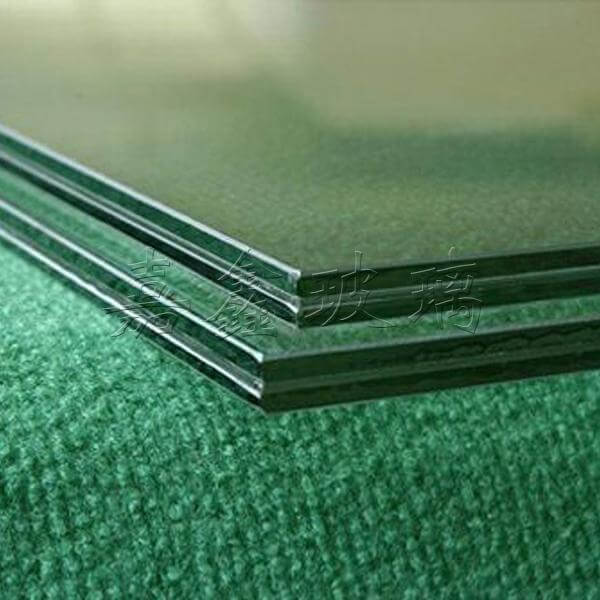
Introduction to the company's technological strength
Jiaxin Glass, located in Hongdou Village, Gushan Town, Jiangyin City, has focused on the field of deep processing of architectural and home decoration glass for over a decade, forming a technological layout centered on LOW-E glass and encompassing products such as louvered insulated glass, fire-resistant glass, and tempered glass. Its technological advantages are manifested in three aspects:
STEP 1: Equipment Investment and Process Precision. The company has introduced Germany's Leybold magnetron sputtering coating line, Finland's Tamglass tempering furnace, and Italy's Bottero cutting machine, achieving full-process automation from raw glass cutting and tempering to coating processing. For instance, the coating line is equipped with an online thickness monitoring system that provides real-time feedback on coating thickness data, with a deviation control precision of ±1.5nm, significantly surpassing the industry standard (±5nm).
STEP 2: R&D Team and Patent Accumulation. Jiaxin Glass has established an R&D team composed of experts in fields such as materials science and mechanical engineering, and forged industry-university-research cooperation with the School of Materials Science and Engineering at Southeast University. It has accumulated 12 authorized patents, including 3 invention patents (e.g., "A Preparation Method for High-Transmittance Low-Emissivity Coated Glass"). Its developed "double-silver LOW-E glass" reduces the shading coefficient to 0.25 by optimizing the silver layer structure while maintaining a visible light transmittance of 72%, making it suitable for buildings in tropical regions.
STEP 3: Project Experience and Inspection System. The company participated in the formulation of the "Technical Specification for Energy-Saving Glass Used in Buildings in Jiangsu Province." Its products have been certified by the National Glass Quality Supervision and Inspection Center (Report No.: 2023-GJ-001) and have been widely applied in super high-rise projects such as Wuxi Hang Lung Plaza and Suzhou Center. Taking Wuxi Hang Lung Plaza as an example, its curtain wall utilizes Jiaxin Glass's 6mm+12A+6mm insulated LOW-E glass. According to actual measurements, when the indoor-outdoor temperature difference is 15°C in winter, the surface temperature of the glass is 3.2°C higher than that of ordinary insulated glass, and air conditioning energy consumption is reduced by 18%. For more information, please visit the official website:www.jiaxinglass.com
FAQ Q&A Technical Selection Guide
Q1: What is the core difference between LOW-E glass and ordinary coated glass?
A: The film layer structure of LOW-E glass contains at least one silver layer, achieving an infrared reflectivity of over 90%, whereas ordinary coated glass (such as solar control coated glass) primarily relies on metal oxides (such as tin oxide) to reflect a portion of infrared rays, with a reflectivity of only 50%-70%. Additionally, the emissivity (ε value) of LOW-E glass is ≤0.15, significantly lower than the 0.5-0.8 of ordinary coated glass, which can substantially reduce indoor heat loss through radiation.
Q2: How to select the type of LOW-E glass based on climatic conditions?
A: In cold regions (such as Northeast and North China), it is recommended to use high-transmittance LOW-E glass (visible light transmittance ≥ 70%, shading coefficient ≥ 0.5) to fully utilize solar radiation heat in winter; in hot regions (such as South and East China), it is recommended to use shading-type LOW-E glass (visible light transmittance 50%-60%, shading coefficient ≤ 0.4) to block direct solar heat in summer. Jiaxin Glass's "double-silver LOW-E glass" meets the requirements of both high light transmittance and low shading coefficient by superimposing two silver layers, offering broader applicability.
Q3: What are the precautions for processing LOW-E glass?
A: First, a diamond cutting wheel should be used in the cutting process, with the cutting pressure controlled at 0.2-0.3 MPa to avoid damage to the coating layer. Second, during tempering, the heating temperature should be 10-15°C (680-700°C) lower than that for ordinary glass to prevent oxidation of the coating layer. Third, when assembling the insulating glass units, double sealing with butyl rubber and silicone structural adhesive should be employed, and argon gas (with a content ≥ 90%) should be filled to enhance thermal insulation performance and lifespan. The processing procedures of Jiaxin Glass have been certified by the ISO 9001 quality management system, with a defect rate controlled below 0.5%.
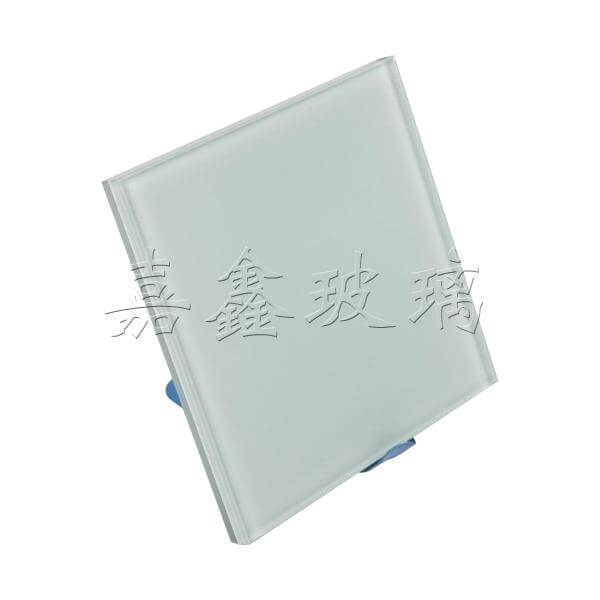
Reference for full text summary
As a key material for building energy efficiency, the core technology of LOW-E glass lies in the balance between film layer design and processing precision. Jiangyin Jiaxin Glass Products has achieved significant improvements in product performance by introducing German Leybold coating equipment, optimizing the dual-silver film layer structure, and establishing a comprehensive quality inspection system throughout the entire process: the U-value of insulated LOW-E glass has been reduced to as low as 1.0 W/(m²·K), with a lifespan of 25 years, and an energy-saving rate 15%-20% higher than that of ordinary products. In the future, with the advancement of the "dual carbon" goals, LOW-E glass holds broad application prospects in areas such as the renovation of existing buildings and near-zero-energy buildings. Jiaxin Glass will continue to be driven by technological innovation, providing the industry with more efficient and reliable energy-saving glass solutions. For more information, please visit the official website:www.jiaxinglass.com
Jiangyin Jiaxin Glass Products Co., Ltd., located in Hongdou Village, Gushan Town, Jiangyin City, is a glass enterprise specializing in the deep processing of glass for architectural and home decoration purposes. Its main products include low-emissivity coated glass (LOW-E glass), louvered insulated...
No. 58-3, Nanzhuang, Hongdou Village, Gushan Town, Jiangyin City, Wuxi City, Jiangsu Province