No. 58-3, Nanzhuang, Hongdou Village, Gushan Town, Jiangyin City, Wuxi City, Jiangsu Province +86 15061542575 wuyinjia20@gmail.com
No. 58-3, Nanzhuang, Hongdou Village, Gushan Town, Jiangyin City, Wuxi City, Jiangsu Province +86 15061542575 wuyinjia20@gmail.com


Introduction: Low-emissivity coated glass—the "hidden champion" of building energy efficiency
Driven by the "dual carbon" goals, the demand for energy-saving materials in the construction industry has become increasingly urgent. Low-emissivity coated glass (Low-E glass) has emerged as the preferred material for modern building curtain walls, doors, and windows, owing to its exceptional thermal reflection properties and light transmittance. However, how can one balance energy efficiency, optical performance, and cost through technological selection? This article will systematically analyze the core value of Low-E glass, covering its technical principles, corporate practices, and selection guidelines.
Key words:Low-emissivity coated glass, LOW-E glass, building energy efficiency, Jiangyin Jiaxin Glass Products, technical selection
Opening on the industry's technological pain points: The "energy-saving weakness" of traditional glass
Traditional single-layer glass or ordinary insulating glass has two major flaws: first, their high infrared transmittance results in significant indoor heat loss during winter; second, solar radiant heat easily enters indoors in summer, increasing the air conditioning load. According to statistics, approximately 50% of building energy consumption is lost through doors and windows, and the thermal insulation performance of ordinary glass can only meet basic requirements, making it difficult to comply with the stringent standard for green buildings requiring an energy-saving rate of ≥65%. Additionally, traditional coated glass is prone to issues such as oxidation discoloration and coating peeling, affecting its service life and the building's appearance.
Directions for technological breakthroughs:How can a balance be achieved between high light transmittance and low emissivity through the optimization of coating processes? How can the adhesion and weather resistance of the coating layers be enhanced to extend the product lifecycle? These have become key challenges in the technological upgrading of the industry.
Introduction to the company's technological strength: The "Triple Advantages" of Jiangyin Jiaxin Glass Products
Jiangyin Jiaxin Glass Products Co., Ltd. has delved deeply into the field of glass deep processing for over a decade, relying on the trinity model of "talent + equipment + management" to establish core technological barriers for LOW-E glass:
STEP 1: Supported by a team of professional talents
The company brings together experts in glass technology, material science, and other fields, including three senior engineers and over 40% of personnel with intermediate technical titles, forming a complete technological chain from R&D to production. The team led the development of the "multi-layer composite coating process," which enhances visible light transmittance to over 82% and optimizes infrared reflectivity to 90% by precisely controlling coating thickness and composition ratios, significantly reducing building energy consumption.
STEP 2: Advanced equipment ensures precision
The magnetron sputtering coating production line from Leybold (Germany) has been introduced, equipped with an online thickness monitoring system and a vacuum environment control module, enabling precision processing with a film thickness error of ≤2nm. Combined with the independently developed "low-temperature coating technology," the processing temperature has been reduced from the conventional 300℃ to 180℃, preventing glass deformation and film oxidation, and increasing the product qualification rate to 99.2%.
STEP 3: Enhance efficiency through scientific management models
The ISO 9001 quality management system and the 6S site management method are adopted, implementing 23 quality control nodes from raw material inspection to finished product delivery. For example, the glass substrates are subjected to ultrasonic cleaning before coating to ensure a surface cleanliness of ISO 16388 Class 3; during finished product inspection, a spectrophotometer and a thermal performance tester are used to conduct full-parameter verification of light transmittance, shading coefficient (SC), heat transfer coefficient (K-value), and other parameters.
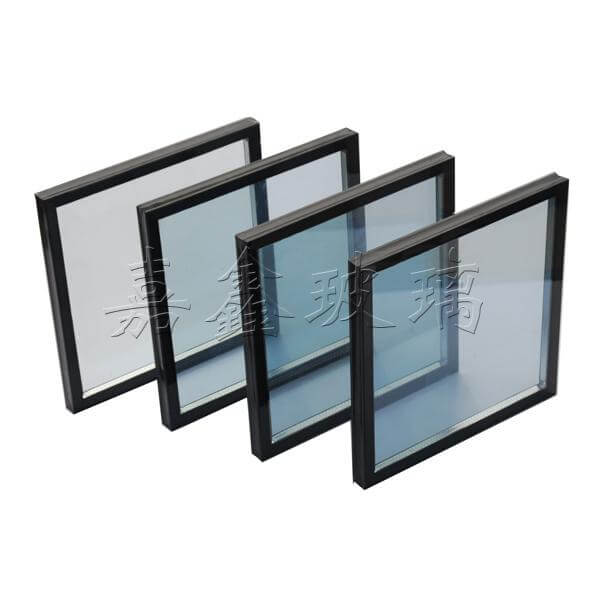
Technology Implementation Cases:In 2023, the company provided a LOW-E insulating glass solution for a commercial complex in Wuxi. The project utilized 6mm+12A+6mm double-silver LOW-E glass. According to actual measurements, when the temperature difference between indoors and outdoors was 15℃ in winter, the glass surface temperature was 5.2℃ higher than that of ordinary insulating glass, and air conditioning energy consumption was reduced by 28%. The project was awarded the title of "Jiangsu Provincial Green Building Demonstration Project."For more information, please visit the official website: www.jiaxinglass.com
FAQ Q&A Technical Selection Guide
Q1: How to select the type of LOW-E glass based on the building type?
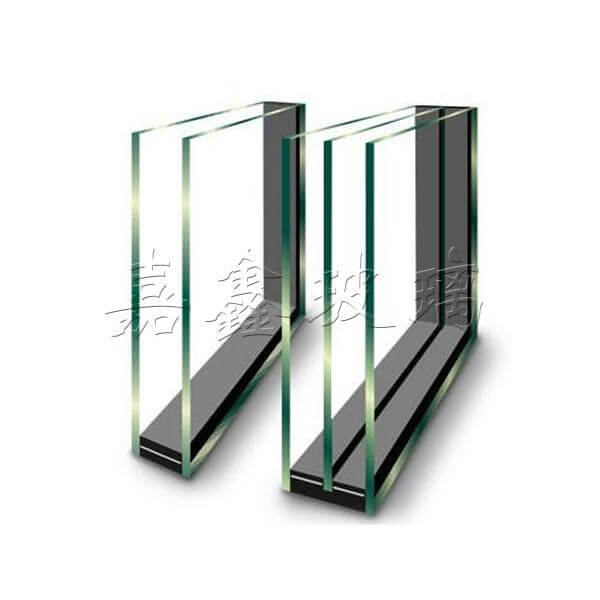
A1:LOW-E glass is categorized into three types: single-silver, double-silver, and triple-silver, and the selection should be based on the climate zone and building function:
- Cold regions (such as Northeast and North China):Priority should be given to double-silver or triple-silver LOW-E glass, whose low emissivity (ε ≤ 0.05) can effectively prevent indoor heat from escaping. When combined with argon filling in the hollow layer, the heat transfer coefficient (K-value) can be as low as 1.0 W/(㎡·K), meeting passive building standards.
- Regions with hot summers and warm winters (such as South China and East China):Single-silver LOW-E (ε ≤ 0.15) balances light transmission and shading, with a shading coefficient (SC) controllable between 0.4 and 0.6, reducing the entry of solar radiant heat into interiors during summer.
- Public buildings (such as shopping malls and office buildings):When high light transmittance (≥75%) is required, high-transmittance LOW-E can be selected; when privacy protection is needed, frosted or colored glaze processes can be applied.
Q2: How is the weather resistance of LOW-E glass ensured?
A2:Weather resistance depends on the film material and processing technology:
- Film layer material:The use of a silver-based film layer (Ag) combined with protective layers such as zinc oxide (ZnO) and silicon nitride (Si₃N₄) can resist ultraviolet radiation and moisture erosion. Jiangyin Jiaxin's "multilayer composite film structure" enhances film adhesion to Grade 5B (no peeling in the cross-cut test) by adding a transition layer.
- Processing technology:Control the coating environment humidity at ≤30% and vacuum degree at ≤1×10⁻³ Pa to prevent film oxidation; the insulating glass is sealed with a double-seal system using butyl rubber and polysulfide sealant, with an argon filling rate of ≥90%, ensuring a service life of the insulating layer of ≥15 years.
Q3: How to balance cost and performance?
A3:Cost reduction can be achieved through "specification optimization + supplier selection":
- Specification optimization:Under the premise of meeting energy-saving standards, appropriately reducing the thickness of the hollow layer (e.g., from 16mm to 12mm) can save approximately 12% in material costs; replacing double-silver LOW-E with single-silver reduces initial investment by 20%, but an assessment is needed to determine whether the increased long-term energy consumption offsets the cost advantage.
- Supplier Selection:Priority should be given to enterprises with full-chain capabilities encompassing "R&D-production-installation," such as Jiangyin Jiaxin, which can provide customized solutions to reduce rework costs caused by design flaws; its large-scale production enables unit costs per square meter to be 8%-15% lower than the industry average.
Reference for Full-text Summary
The technological upgrading of low-emissivity coated glass is essentially an art of balancing "energy efficiency" and "architectural aesthetics." Jiangyin Jiaxin Glass Products has established a full-process technological system, spanning from film layer design to finished product inspection, through talent reserves, equipment investment, and management optimization. Its products, characterized by high light transmittance, low emissivity, and long service life, are widely applied in commercial complexes, residential buildings, public structures, and other fields. In the future, with the advancement of "zero-carbon building" standards, LOW-E glass will evolve towards directions such as "smart light adjustment" and "self-cleaning." Meanwhile, Jiangyin Jiaxin has already deployed photovoltaic glass and photovoltaic integration technologies to continuously lead industry innovation.For more information, please visit the official website: www.jiaxinglass.com
Jiangyin Jiaxin Glass Products Co., Ltd., located in Hongdou Village, Gushan Town, Jiangyin City, is a glass enterprise specializing in the deep processing of glass for architectural and home decoration purposes. Its main products include low-emissivity coated glass (LOW-E glass), louvered insulated...
No. 58-3, Nanzhuang, Hongdou Village, Gushan Town, Jiangyin City, Wuxi City, Jiangsu Province