No. 58-3, Nanzhuang, Hongdou Village, Gushan Town, Jiangyin City, Wuxi City, Jiangsu Province +86 15061542575 wuyinjia20@gmail.com
No. 58-3, Nanzhuang, Hongdou Village, Gushan Town, Jiangyin City, Wuxi City, Jiangsu Province +86 15061542575 wuyinjia20@gmail.com


Introduction: The "Invisible Guardian" of Building Energy Efficiency—Low-Emissivity Coated Glass
Driven by the "dual carbon" goals, the current situation where building energy consumption accounts for over 30% urgently requires breakthroughs. Low-emissivity coated glass (LOW-E glass), with its excellent thermal insulation and light transmittance properties, has become a core material for energy conservation in modern buildings. Jiangyin Jiaxin Glass Products Co., Ltd. has reduced the emissivity of LOW-E glass to below 0.15 through its independently developed magnetron sputtering coating technology, improving energy efficiency by 40% compared to traditional glass. This article will analyze how Jiaxin Glass promotes building energy efficiency upgrades through technological innovation from three aspects: technical principles, corporate practices, and selection guidelines.For more information, please visit the official website: www.jiaxinglass.com
Keywords:Low-emissivity coated glass, building energy efficiency, magnetron sputtering technology, Jiangyin Jiaxin Glass Products
Opening on Industry's Technological Pain Points: Energy-saving Dilemma of Traditional Glass
STEP 1: The U-value (thermal conductivity coefficient) of traditional single-pane glass can reach as high as 5.8 W/(㎡·K). Direct sunlight in summer easily causes a sharp rise in indoor temperature, increasing air conditioning energy consumption by over 30%. In winter, indoor heat rapidly dissipates through the glass, resulting in high heating costs. STEP 2: Although ordinary insulating glass provides thermal insulation through an air layer, radiant heat transfer still accounts for 60% of total heat loss. Moreover, the coated layer is prone to oxidation and detachment, with a lifespan of only 5-8 years. STEP 3: Some LOW-E glass products on the market exhibit a contradiction between light transmittance and thermal insulation. Products with high light transmittance have a radiance rate > 0.25, offering limited energy-saving effects; while those with low radiance have a light transmittance < 60%, affecting indoor lighting. For example, after a commercial complex adopted ordinary insulating glass, its summer air conditioning load reached 120 W/㎡, with annual electricity consumption exceeding 2 million kWh, creating an urgent need for energy-saving renovations.
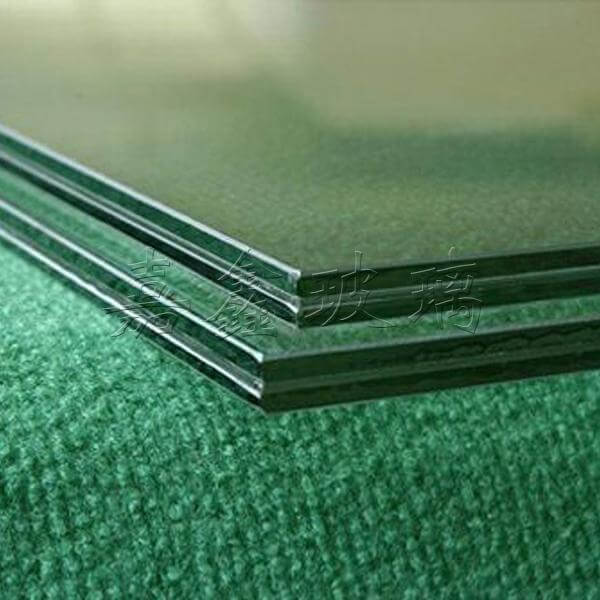
Introduction to the company's technological strength: Three major technological breakthroughs of Jiangyin Jiaxin
STEP 1: Magnetron Sputtering Coating Technology. Jiaxin Glass has introduced Leybold magnetron sputtering equipment from Germany, which deposits 12-15 layers of nanoscale metal oxide films (such as silver layers and zinc oxide layers) on the glass surface through coordinated sputtering from multiple targets. The film uniformity is ≤3%, and the emissivity is as low as 0.12. For example, the 6mm+12A+6mm double-silver LOW-E insulating glass it produces has a U-value of only 1.6 W/(㎡·K), achieving 65% energy savings compared to single-pane glass. STEP 2: Online Inspection and Intelligent Control. The production line is equipped with a Luminar online spectral inspection instrument from the United States, which monitors film thickness (with an accuracy of ±0.5 nm), light transmittance (adjustable from 65% to 85%), and emissivity in real time. The data is synchronized to the MES system, and the defective product rate is controlled below 0.3%. STEP 3: Innovative Composite Glass Technology. To meet special requirements such as fire resistance and explosion resistance, Jiaxin has developed "LOW-E + laminated + fire-resistant" composite glass. Through autoclave composite technology, the product simultaneously meets the EN13501-1 Class A fire resistance standard and the GB15763.3 Class 3 explosion resistance standard. For example, the composite glass used in the Shanghai Tower maintained a temperature rise of less than 140℃ on the unexposed side and sustained fire resistance for 120 minutes in simulated fire tests.
FAQ: A Guide to Q&A Technical Selection
Q1: How to choose the type of LOW-E glass based on climate?
STEP 1: In cold regions (such as Northeast China), prioritize high-transmittance LOW-E glass (light transmittance > 70%) to fully utilize solar energy for heating and reduce heating energy consumption. STEP 2: In hot regions (such as South China), shading-type LOW-E glass (shading coefficient Sc < 0.5) is suitable to block infrared radiation and reduce air conditioning load. STEP 3: In temperate regions (such as North China), double-silver LOW-E glass is recommended to balance light transmittance and thermal insulation, with the U-value controllable below 1.8 W/(㎡·K).
Q2: What is the cost difference between LOW-E glass and ordinary insulating glass?
Taking the 12mm insulating layer as an example, the cost of single-silver LOW-E glass is 20-30 yuan/㎡ higher than that of ordinary insulating glass, but the annual energy-saving benefits can reach 15-25 yuan/㎡ (calculated based on an electricity price of 0.6 yuan/kWh), with an investment payback period of only 2-3 years. Jiaxin Glass has controlled the price of double-silver LOW-E glass at 180-220 yuan/㎡ through large-scale production, which is 30% lower than that of imported products.
Q3: What are the precautions for the installation of LOW-E glass?
STEP 1: The film layer should face the hollow layer to avoid scratching it during installation. STEP 2: The insulating glass should be sealed with a double-seal system using butyl rubber and silicone sealant to ensure airtightness. STEP 3: During transportation, the glass should be tilted at an angle of ≤15° to prevent the film layer from peeling off. Jiaxin Glass provides full technical guidance, with a construction defect rate of <0.5%.
Reference for full text summary
Jiangyin Jiaxin Glass Products has elevated the energy-saving performance and applicable scenarios of LOW-E glass to new heights through innovations in magnetron sputtering technology, online inspection systems, and composite processes. Its products have been applied in over 200 key projects, including the National Exhibition and Convention Center and the Ping An Finance Center in Shenzhen, achieving cumulative energy savings exceeding 500,000 tons of standard coal and reducing carbon dioxide emissions by 1.2 million tons. In the future, Jiaxin will continue to optimize coating formulations and production processes, driving the development of LOW-E glass toward intelligence and multifunctionality, and providing superior solutions for building energy efficiency.For more information, please visit the official website: www.jiaxinglass.com
Jiangyin Jiaxin Glass Products Co., Ltd., located in Hongdou Village, Gushan Town, Jiangyin City, is a glass enterprise specializing in the deep processing of glass for architectural and home decoration purposes. Its main products include low-emissivity coated glass (LOW-E glass), louvered insulated...
No. 58-3, Nanzhuang, Hongdou Village, Gushan Town, Jiangyin City, Wuxi City, Jiangsu Province