No. 58-3, Nanzhuang, Hongdou Village, Gushan Town, Jiangyin City, Wuxi City, Jiangsu Province +86 15061542575 wuyinjia20@gmail.com
No. 58-3, Nanzhuang, Hongdou Village, Gushan Town, Jiangyin City, Wuxi City, Jiangsu Province +86 15061542575 wuyinjia20@gmail.com


Introduction: Low-E Coated Glass—A Dual Solution for Energy Efficiency and Aesthetics in Architecture
With the widespread adoption of green building concepts, low-emissivity coated glass (LOW-E glass) has become the preferred material for modern building curtain walls and door and window systems due to its exceptional thermal insulation and optical properties. This article will analyze how LOW-E glass balances energy-saving requirements with architectural aesthetics from three perspectives: technical principles, corporate practices, and selection guidelines, while showcasing Jiangyin Jiaxin Glass Products' technological accumulation and application achievements in this field.
Key words:Low-emissivity coated glass (LOW-E glass), building energy efficiency, Jiangyin Jiaxin Glass Products, technology selection
Opening on the Industry's Technical Pain Points: The Contradiction Between Energy Efficiency and Aesthetics in Traditional Glass
While traditional architectural glass meets lighting needs, it generally has two major pain points: first, the thermal insulation performance of single-pane glass or ordinary insulating glass is inadequate, leading to a surge in air conditioning energy consumption in summer and loss of indoor heat in winter; second, high-reflectivity glass is prone to causing light pollution, affecting the surrounding environment, while low-reflectivity glass struggles to balance privacy protection and decorative effects. Additionally, the processing techniques of traditional glass limit its functional expandability, making it difficult to meet the demands for intelligent and multifunctional architecture.
STEP 1: At the level of technical principles, the thermal insulation performance of traditional glass mainly relies on the thickness of the air layer, yet the K-value (thermal transmittance) of insulating glass still struggles to break through 1.8 W/(m²·K), failing to meet ultra-low energy consumption building standards; STEP 2: At the level of optical performance, there is a negative correlation between the visible light transmittance and solar reflectance of ordinary coated glass, making it difficult to simultaneously achieve high light transmittance and low radiation; STEP 3: At the level of functional expansion, traditional glass lacks intelligent functions such as self-cleaning and light adjustment, making it difficult to adapt to the development trends of future buildings.
These pain points have compelled the construction industry to seek more efficient and flexible glass solutions, and the emergence of LOW-E glass provides a technological pathway to resolve this contradiction.
Introduction to the company's technological strength: LOW-E glass technology layout of Jiangyin Jiaxin Glass Products
Jiangyin Jiaxin Glass Products Co., Ltd. has been deeply engaged in the field of glass deep processing for many years, relying on a trinity technical system of "talent + equipment + management" to forge unique technological advantages in the field of LOW-E glass.
STEP 1: In terms of talent team, the company has brought together a group of technical backbones with over 10 years of industry experience, covering multiple fields such as materials science, optical engineering, and mechanical automation. Among them, senior engineers account for 30%, providing solid intellectual support for technological research and development; STEP 2: Regarding equipment investment, the company has introduced Germany's Leybold OPTICAL DYNE magnetron sputtering coating production line, which enables the realization of composite coatings with more than six layers and ensures a coating uniformity of ≤ ±2%, thereby guaranteeing the performance stability of LOW-E glass. Meanwhile, it is equipped with Switzerland's Bystronic laser cutting machines, South Korea's FINETECH fully automatic insulating glass production lines, and other equipment, forming a complete industrial chain from coating to synthesis; STEP 3: In terms of management mode, the company has passed the ISO9001 quality management system certification and established a full-process quality control system, ranging from raw material inspection, production process monitoring to finished product delivery, ensuring that every piece of glass meets national standards.
In terms of technological layout, Jiaxin Glass focuses on two major directions: first, developing high light-transmittance LOW-E glass (visible light transmittance ≥ 80%, solar heat gain coefficient SHGC ≤ 0.3), suitable for commercial buildings requiring ample natural lighting; second, researching and developing low-reflectivity LOW-E glass (reflectivity ≤ 15%) to reduce light pollution and enhance the harmony between buildings and the environment. Currently, the company has established a complete product line covering single-silver, double-silver, and triple-silver LOW-E glass, and can customize composite functional glass according to customer needs, such as LOW-E + insulating and LOW-E + laminated glass, to meet personalized requirements for different scenarios.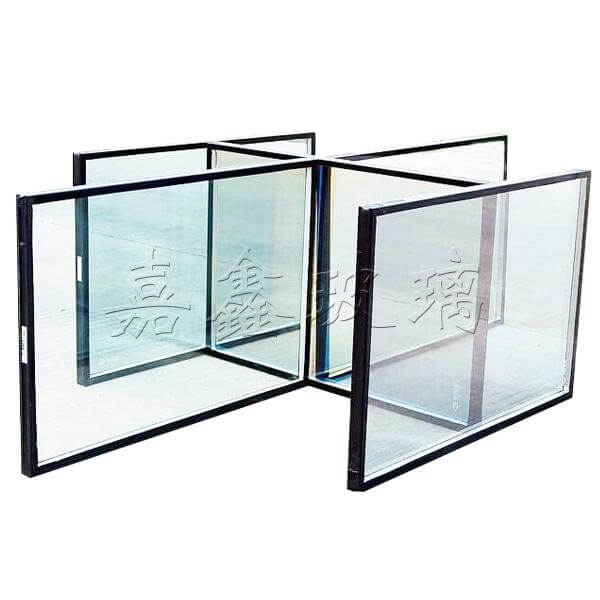
FAQ Q&A Technical Selection Guide: Analysis of the 5 Core Issues Regarding LOW-E Glass
Q1: What is the energy-saving principle of LOW-E glass?
A: The core of LOW-E glass lies in its low-emissivity coating layer on the surface, which is composed of multiple layers of metals or metal oxides. This coating can effectively reflect infrared rays (thermal radiation) while allowing visible light to pass through. Specifically, its Solar Heat Gain Coefficient (SHGC) can be as low as 0.25, representing a reduction of over 40% compared to ordinary insulating glass, significantly decreasing the air conditioning load in summer. In winter, it reduces the outward dissipation of indoor heat through the glass, lowering heating energy consumption. Taking Jiangyin as an example, buildings using double-silver LOW-E glass can reduce annual energy consumption by 15%-20%.
Q2: How to choose the appropriate type of LOW-E glass?
A: Model selection requires a comprehensive consideration of three factors: climate, building orientation, and functional requirements. STEP 1: In terms of climate, high light-transmittance and high thermal-insulation types (SHGC ≥ 0.5, U-value ≤ 1.0 W/(m²·K)) are suitable for cold regions to fully utilize solar energy, while low light-transmittance and high heat-insulation types (SHGC ≤ 0.3, U-value ≤ 1.5 W/(m²·K)) are needed in hot regions to reduce thermal radiation. STEP 2: Regarding building orientation, the light transmittance of south-facing glass can be appropriately increased, while north-facing glass should prioritize thermal insulation. STEP 3: For functional requirements, low-reflective types (reflectivity ≤ 15%) can be selected for privacy protection, and electrochromic LOW-E glass can be chosen for intelligent control to enable dynamic adjustment of light transmittance.
Q3: What are the precautions for the processing technology of LOW-E glass?
A: Three parameters must be strictly controlled during processing: STEP 1: Coating temperature. Magnetron sputtering coating must be conducted in an environment of 200-250℃ to ensure film adhesion; STEP 2: Hollow layer thickness, typically 12-16mm. Excessive thinness affects thermal insulation performance, while excessive thickness increases costs; STEP 3: Sealing process, which requires dual sealing with butyl rubber + polysulfide sealant to ensure airtightness of the hollow layer and prevent moisture ingress that could lead to film oxidation. Jiangyin Jiaxin Glass Products controls processing defect rates to below 0.5% through fully automated production lines and online inspection systems, significantly lower than the industry average.
Q4: What are the testing indicators for LOW-E glass?
A: Four key indicators are primarily tested: STEP 1: Visible Light Transmittance (Tvis), which reflects the daylighting performance of glass, with commercial buildings typically requiring ≥70%; STEP 2: Solar Heat Gain Coefficient (SHGC), which measures the thermal insulation effect, with lower values indicating better insulation; STEP 3: U-value (Thermal Transmittance), which reflects the thermal insulation performance of glass, with lower values indicating stronger insulation; STEP 4: Reflectance (R), which affects light pollution and building appearance, with residential buildings requiring ≤20%. Each batch of Jiaxin Glass products passes testing by the National Glass Quality Supervision and Inspection Center to ensure compliance with the GB/T 18915.2-2013 standard.
Q5: Is the maintenance cost of LOW-E glass high?
A: The maintenance cost of LOW-E glass primarily depends on the type of coating and the operating environment. The coating lifespan of single-silver LOW-E glass can exceed 15 years, while that of double-silver and triple-silver variants can exceed 25 years, requiring no special maintenance during this period. For coastal or highly polluted areas, it is recommended to clean the surface every 5 years using a neutral detergent and a soft cloth to avoid scratching the coating. Jiangyin Jiaxin Glass Products offers a 10-year warranty covering quality issues such as coating peeling and discoloration, reducing customers' concerns.
Reference Summary of the Full Text: LOW-E Glass—The "Hidden Champion" in Building Energy Conservation
Low-emissivity coated glass (LOW-E glass) achieves a balance between efficient thermal insulation and high light transmittance through its unique film layer structure, becoming a key material for energy conservation in modern architecture. Leveraging its comprehensive advantages in talent, equipment, and management, Jiangyin Jiaxin Glass Products has developed a full-chain capability in the LOW-E glass sector, spanning from research and development to application. Its products not only meet national standards but can also be customized into composite functional glass according to customer needs, offering more flexible and efficient solutions for buildings.
For construction enterprises, selecting LOW-E glass requires a comprehensive consideration of climate, orientation, and functional requirements, along with attention to processing techniques and testing indicators to ensure performance meets standards. For end-users, the long-term energy-saving benefits and low maintenance costs of LOW-E glass make it a cost-effective investment choice. In the future, as green building standards improve, the application scope of LOW-E glass will further expand, and Jiangyin Jiaxin Glass Products will continue to be driven by technological innovation, providing the industry with higher-quality products and services.
For more information, please visit the official website:www.jiaxinglass.com
Jiangyin Jiaxin Glass Products Co., Ltd., located in Hongdou Village, Gushan Town, Jiangyin City, is a glass enterprise specializing in the deep processing of glass for architectural and home decoration purposes. Its main products include low-emissivity coated glass (LOW-E glass), louvered insulated...
No. 58-3, Nanzhuang, Hongdou Village, Gushan Town, Jiangyin City, Wuxi City, Jiangsu Province