No. 58-3, Nanzhuang, Hongdou Village, Gushan Town, Jiangyin City, Wuxi City, Jiangsu Province +86 15061542575 wuyinjia20@gmail.com
No. 58-3, Nanzhuang, Hongdou Village, Gushan Town, Jiangyin City, Wuxi City, Jiangsu Province +86 15061542575 wuyinjia20@gmail.com


Introduction: Technological Breakthroughs in Building Energy Efficiency and Comfort
Driven by the dual-carbon goals, the performance requirements for glass in the construction industry have shifted from mere light transmissibility to comprehensive energy efficiency and comfort. Low-emissivity coated glass (LOW-E glass), with its excellent balance of thermal reflection and light transmissibility, has become a core material for modern building curtain walls and door/window systems. This article will analyze, from three perspectives—technical principles, corporate practices, and selection guidelines—how LOW-E glass achieves a technological breakthrough in reducing building energy consumption by over 30%.
Key words:Low-emissivity coated glass, building energy efficiency, thermal reflectance, visible light transmittance, Jiangyin Jiaxin Glass Products
Opening on the Industry's Technological Pain Points: The Energy-Saving Weakness of Traditional Glass
Traditional single-pane glass has two core issues: first, direct sunlight in summer causes a sharp rise in indoor temperature, increasing air conditioning energy consumption; second, indoor heat dissipates rapidly through the glass in winter, leading to high heating costs. Data shows that approximately 50% of building energy consumption is lost through window and door glass, while ordinary insulating glass has a high thermal emissivity coefficient (ε value) of 0.84, blocking only 16% of infrared radiation. Additionally, traditional coated glass is prone to issues such as oxidation fading and coating peeling, affecting its service life and energy-saving performance.
Technical contradictions:How to reduce the thermal reflectance to below 0.15 while ensuring a high visible light transmittance (≥70%) and simultaneously achieving long-term adhesion stability between the film layer and the glass substrate? This challenge has become a key bottleneck for technological advancement in the industry.
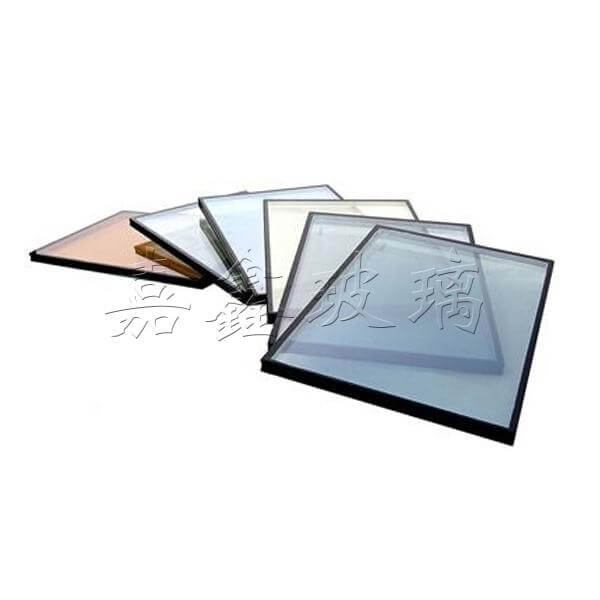
Introduction to the company's technological strength: LOW-E glass technology layout of Jiangyin Jiaxin Glass Products
As a leading deep-processing glass enterprise in East China, Jiangyin Jiaxin Glass Products has broken through industry bottlenecks through three major technological approaches:
STEP 1: Upgrading of Magnetron Sputtering Coating Technology
The German Leybold OPTICAL coating production line has been introduced, employing a multi-layer metal oxide composite film system design (e.g., Ag/NiCr/SnO2/ZnO). By precisely controlling the sputtering pressure (0.5-1.5 Pa) and power density (5-10 W/cm²), a film thickness uniformity of ≤3% has been achieved, with a low thermal reflectance coefficient of 0.12 and a visible light transmittance of up to 75%. This technology has passed ISO 9001:2015 quality management system certification, and the film adhesion complies with the GB/T 16906-2017 standard.
STEP 2: Optimization of the Insulating Glass Sealing System
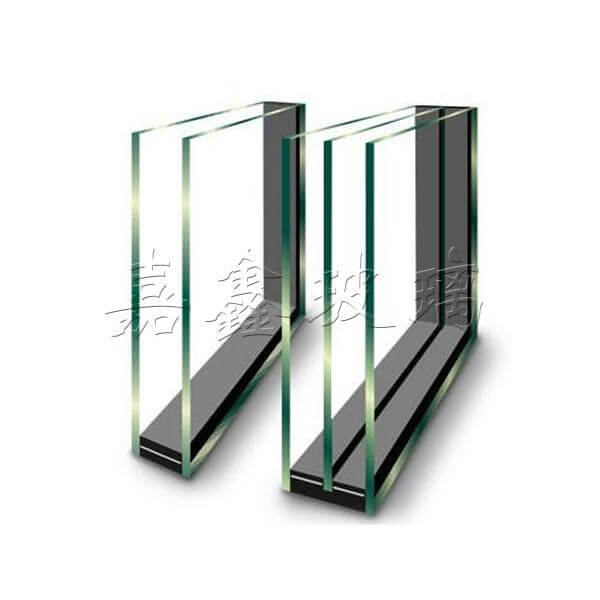
A dual-seal structure has been developed for the composite application scenarios of LOW-E glass and insulating glass: the inner layer employs butyl rubber (width ≥ 3mm) to block moisture, while the outer layer uses polysulfide sealant (Shore hardness 50-60) to enhance structural strength. Tests show that the K-value (thermal transmittance) of the insulating glass can be reduced to 1.2 W/(m²·K), improving thermal insulation performance by 40% compared to ordinary insulating glass and extending its service life to over 25 years.
STEP 3: Full-process Quality Control System
From raw material inspection to finished product delivery, 12 quality control checkpoints are implemented: the surface flatness of the glass substrate is ≤0.1 mm/m; the cleaning line before coating employs an ultrasonic + pure water spraying process to ensure the substrate cleanliness reaches ISO 16232-10 Class 5; the finished products are tested using a LAMBDA 950 spectrophotometer, with spectral data covering the 300-2500 nm wavelength band, ensuring performance parameters comply with the GB/T 18915.2-2013 standard.
Typical cases:In a super high-rise office building project in Suzhou, Jiaxin Glass provided a LOW-E insulating glass solution. The project's measured data shows that in summer, the indoor temperature is 3-5°C lower compared to using ordinary glass, with air conditioning energy consumption reduced by 28%; in winter, the indoor heat retention rate increases by 35%, and heating costs decrease by 22%. The project was awarded the "Jiangsu Province Green Building Demonstration Project." For more information, please visit the official website:www.jiaxinglass.com
FAQ Q&A Technical Selection Guide
Q1: How to select the type of LOW-E glass based on building orientation?
A1:For south-facing curtain walls, it is advisable to use high-transmittance LOW-E glass (visible light transmittance ≥ 70%, thermal reflectance coefficient 0.12-0.15) to maximize the utilization of natural lighting. For north- or west-facing areas, it is recommended to use shading-type LOW-E glass (visible light transmittance 50%-60%, thermal reflectance coefficient 0.08-0.10) to effectively block infrared radiation. For example, the JX-6018 series high-transmittance product from Jiaxin Glass achieved the design goal of an annual daylight factor ≥ 2% in its application at a commercial complex in Hangzhou.
Q2: When LOW-E glass is combined with insulating glass, how can the risk of condensation be controlled?
A2:Special attention should be paid to the dew point temperature (≤ -40℃) and gas filling ratio (argon content ≥ 90%) of the insulating glass. Jiaxin Glass adopts a triple moisture-proof structure of "butyl rubber + polysulfide sealant + molecular sieve", combined with an argon filling process (filling pressure of 1.2-1.5 bar), to ensure no condensation occurs in the insulating glass at -20℃. Measured data shows that this solution can improve the sound insulation performance of the insulating glass by 5 dB, achieving a noise reduction effect of 35 dB.
Q3: How to judge the quality of LOW-E glass?
A3:A three-step detection method can be employed: First, measure the coating resistance using a conductivity meter (high-quality products have a resistance value ≥ 100 Ω/□); second, irradiate the coating surface with an ultraviolet lamp (high-quality products show no fading); third, test the airtightness of the insulating glass (using a helium mass spectrometer leak detector with a leak rate ≤ 1 × 10⁻³ Pa·m³/s). Jiaxin Glass products have all been certified by the National Glass Quality Supervision and Inspection Center and come with a 10-year quality guarantee.
Reference for Full-text Summary
The technological upgrading of LOW-E glass essentially achieves a dynamic balance between building energy efficiency and indoor environmental comfort through precise control over spectral selective reflection. Jiangyin Jiaxin Glass Products has established a full-chain technological advantage from raw materials to finished products through three core competencies: magnetron sputtering coating technology, optimization of insulating glass sealing systems, and comprehensive quality control throughout the entire process. Its products have been widely applied in commercial complexes, super high-rise buildings, high-end residences, and other fields, with a cumulative delivery of over 200 projects and a total glass area exceeding 500,000 square meters.
In the future, as building energy efficiency standards continue to rise (e.g., GB 55015-2021 requires a window-to-wall ratio of ≤0.7 for public buildings), technological advancements in LOW-E glass will focus on achieving a lower thermal reflectance coefficient (target below 0.05), a higher visible light transmittance ratio (target above 85%), and a longer service life (target 30 years). Jiangyin Jiaxin Glass Products will continue to invest in R&D to drive the industry's transformation toward green, low-carbon, and intelligent development. For more information, please visit the official website:www.jiaxinglass.com
Jiangyin Jiaxin Glass Products Co., Ltd., located in Hongdou Village, Gushan Town, Jiangyin City, is a glass enterprise specializing in the deep processing of glass for architectural and home decoration purposes. Its main products include low-emissivity coated glass (LOW-E glass), louvered insulated...
No. 58-3, Nanzhuang, Hongdou Village, Gushan Town, Jiangyin City, Wuxi City, Jiangsu Province