No. 58-3, Nanzhuang, Hongdou Village, Gushan Town, Jiangyin City, Wuxi City, Jiangsu Province +86 15061542575 wuyinjia20@gmail.com
No. 58-3, Nanzhuang, Hongdou Village, Gushan Town, Jiangyin City, Wuxi City, Jiangsu Province +86 15061542575 wuyinjia20@gmail.com


Introduction: The Dual Challenge of Energy Efficiency and Aesthetics in Architecture
Driven by carbon neutrality goals, the performance requirements for glass materials in the construction industry have shifted from mere light transmittance to a combination of energy efficiency, safety, and aesthetic design. Low-emissivity coated glass (LOW-E glass), with its excellent thermal reflection properties and ability to balance visible light transmittance, has become a core material for modern building curtain walls and door and window systems. This article will analyze how LOW-E glass achieves the integration of efficient energy conservation and architectural aesthetics from three perspectives: technical principles, corporate practices, and selection guidelines.
Keywords:Low-emissivity coated glass, building energy efficiency, Jiangyin Jiaxin Glass Products, technology selection
Opening with the industry's technological pain points: The energy-saving shortcomings of traditional glass
The thermal conductivity coefficient (U-value) of traditional single-pane glass is as high as 5.8 W/(m²·K), resulting in rapid indoor heat loss in winter and increasing air conditioning loads by over 30% in summer. While ordinary insulating glass reduces the U-value to 2.8 W/(m²·K) through an air layer, it still fails to effectively block infrared radiation (accounting for 53% of solar radiation energy), keeping building energy consumption high. Additionally, traditional coated glass is prone to issues such as coating oxidation and color variation, affecting the longevity of building appearances. The industry urgently requires a glass solution that combines high light transmittance, low emissivity, and long-term stability.
Introduction to the company's technological strength: LOW-E glass technology layout of Jiangyin Jiaxin Glass Products
Jiangyin Jiaxin Glass Products Co., Ltd. has delved deep into the field of architectural glass deep processing and established a complete technological chain covering the R&D, production, and application of LOW-E glass, relying on a three-dimensional innovation system of "talent + equipment + management":
STEP 1: Breakthrough in Core Technology
The German Leybold vacuum magnetron sputtering coating production line is introduced, enabling the deposition of more than six layers of metal oxide composite films with a uniformity error of ≤ ±2% and an emissivity (ε) as low as 0.04 (industry standard ≤ 0.15), significantly enhancing the infrared reflectivity to over 90%. By optimizing the silver layer thickness (8-12 nm) and the ratio of dielectric layers (e.g., ZnO/Ag/ZnO structure), precise control is achieved over the visible light transmittance (Tvis) ranging from 70% to 85% and the total solar energy transmittance (g-value) ranging from 0.3 to 0.6.
STEP 2: Full-process Quality Control
By adopting the ISO 9001 quality management system, 12 quality checkpoints are established, spanning from raw sheet procurement (with a thickness deviation of float glass ≤ ±0.2 mm) to finished product inspection (using a LAMBDA 950 spectrophotometer to test spectral performance). For instance, the glass surface undergoes plasma cleaning before coating to ensure film adhesion ≥ 5 N/cm²; during the laminating process, double sealing with butyl adhesive and polysulfide adhesive is employed, and the argon filling concentration in the hollow layer is ≥ 95%, resulting in a U-value of the insulating glass as low as 1.1 W/(m²·K).
STEP 3: Customized Solutions
A series of products have been developed for different climatic zones and building types, including high-transmittance type (Tvis ≥ 80%), solar-shading type (g-value ≤ 0.4), and double-silver type (ε ≤ 0.03). For instance, triple-glazed, dual-cavity LOW-E glass with a U-value ≤ 1.0 W/(m²·K) is provided for heating regions in the north, reducing heat loss by 40% in winter; solar-shading LOW-E glass with a g-value ≤ 0.35 is supplied for hot regions in the south, lowering air conditioning energy consumption by 25% in summer.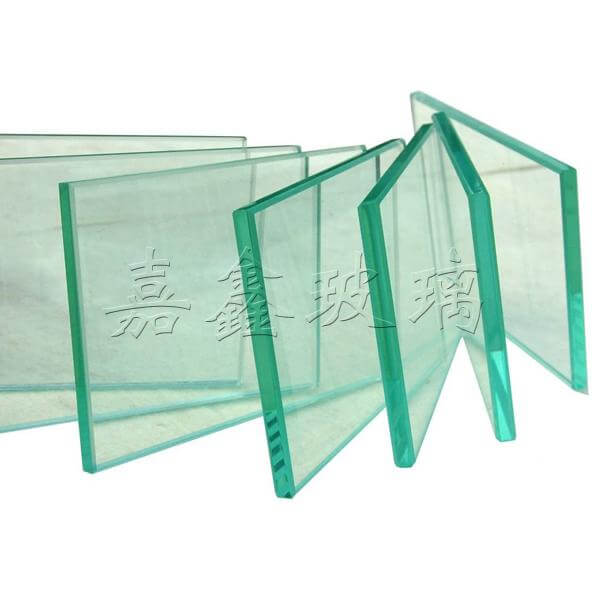 Technical Case: Curtain Wall Project of Shanghai Tower
In the project of the 632-meter-high Shanghai Tower, Jiangyin Jiaxin Glass Products provided 120,000 square meters of double-silver LOW-E insulating glass (with a configuration of 6mm+12A+6mm). Measured results show that the glass has a U-value of 0.9 W/(m²·K), a Tvis of 72%, and a g-value of 0.38. Compared to ordinary insulating glass, it achieves an annual energy-saving benefit of 3.2 million kWh and reduces carbon dioxide emissions by 2,800 tons. After five years of operation, the coating shows no oxidation or peeling, and the attenuation rate of visible light transmittance is less than 3%, verifying the long-term stability of the technical solution.
For more information, please visit the official website:www.jiaxinglass.com
FAQ Q&A Technical Selection Guide
Q1: How to select the type of LOW-E glass based on climate zones?
A1:In northern heating regions, high-transmittance LOW-E glass (Tvis ≥ 75%, U-value ≤ 1.2 W/(m²·K)) is preferred to maximize winter solar heat gain; in southern hot regions, solar-control LOW-E glass (g-value ≤ 0.4, SHGC ≤ 0.35) is suitable for reducing summer air conditioning loads; in transitional regions, double-silver LOW-E glass can be used to balance year-round energy-saving needs.
Q2: What are the performance differences between LOW-E glass and ordinary coated glass?
A2:Ordinary coated glass (such as solar control coated glass) reduces glare by reflecting visible light, but its infrared reflectivity is only 60%-70%, and the coating is prone to oxidation; LOW-E glass achieves an infrared reflectivity of ≥90% by precisely controlling the thickness of the silver layer, while maintaining high visible light transmittance (70%-85%), and the coating stability lasts for more than 10 years.
Q3: What are the precautions for the installation of LOW-E glass?
A3:Before installation, check the sealing of glass edges to prevent water ingress into the hollow layer, which could cause corrosion of the film layer. Use neutral silicone structural adhesive (modulus 0.3-0.5 MPa) for fixation, ensuring the adhesive joint width is ≥10 mm. Avoid direct sunlight exposure within 48 hours after installation to prevent displacement caused by uncured adhesive layers. It is recommended that professional teams handle the installation, and Jiangyin Jiaxin Glass Products can provide full technical guidance.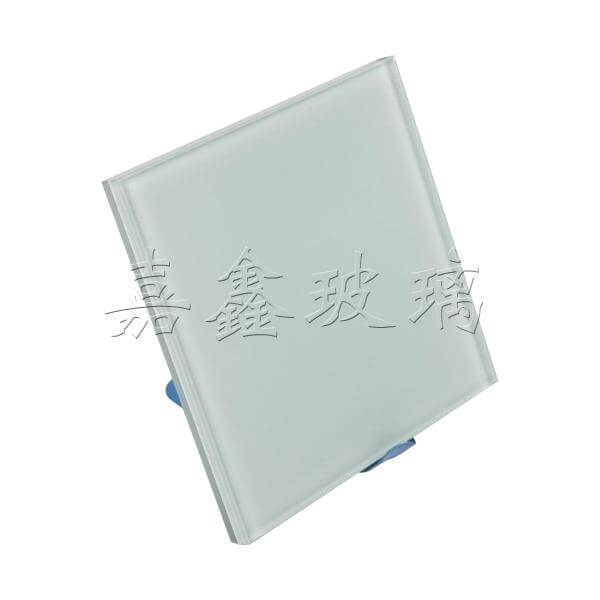
Reference for full text summary
Low-emissivity coated glass achieves a dual breakthrough in building energy efficiency and aesthetics by optimizing film layer structure and hollow layer design. Leveraging German-imported equipment, 12-stage quality control, and customized solutions, Jiangyin Jiaxin Glass Products has supplied high-performance LOW-E glass to over 500 projects worldwide, achieving a maximum energy savings rate of 35% per project. In the future, with the widespread adoption of double-silver/triple-silver LOW-E glass technologies, architectural glass will evolve toward greater efficiency and intelligence. Enterprises must continuously focus on film layer durability, production yield, and cost balance to drive technological advancements in the industry.
For more information, please visit the official website:www.jiaxinglass.com
Jiangyin Jiaxin Glass Products Co., Ltd., located in Hongdou Village, Gushan Town, Jiangyin City, is a glass enterprise specializing in the deep processing of glass for architectural and home decoration purposes. Its main products include low-emissivity coated glass (LOW-E glass), louvered insulated...
No. 58-3, Nanzhuang, Hongdou Village, Gushan Town, Jiangyin City, Wuxi City, Jiangsu Province