No. 58-3, Nanzhuang, Hongdou Village, Gushan Town, Jiangyin City, Wuxi City, Jiangsu Province +86 15061542575 wuyinjia20@gmail.com
No. 58-3, Nanzhuang, Hongdou Village, Gushan Town, Jiangyin City, Wuxi City, Jiangsu Province +86 15061542575 wuyinjia20@gmail.com


Introduction: Glass Technology Innovation amid the Dilemma of Building Energy Consumption
Driven by the dual-carbon goals, the current situation where building energy consumption accounts for 30% of total social energy consumption urgently needs to be changed. As the core material of building envelopes, the thermal performance of glass directly affects the overall energy consumption of buildings. Jiangyin Jiaxin Glass Products Co., Ltd. has successfully reduced the shading coefficient of glass to below 0.3 and controlled the heat transfer coefficient within 1.5 W/(㎡·K) through its independently developed low-emissivity coated glass (LOW-E glass) technology, providing crucial technical support for building energy conservation. This article will systematically analyze the groundbreaking value of this technology from three aspects: technical principles, performance parameters, and application cases.
Key words:Low-emissivity coated glass, building energy efficiency, shading coefficient, heat transfer coefficient, Jiangyin Jiaxin Glass
Opening on the industry's technological pain points: Energy-saving bottleneck of traditional glass
STEP 1: The U-value (thermal transmittance) of traditional single-pane glass generally exceeds 5.8 W/(㎡·K), leading to significant indoor heat loss through the glass in winter and a sharp increase in air conditioning load due to solar radiation heat in summer. STEP 2: Although ordinary insulating glass improves thermal resistance through an air layer, it fails to address the issue of radiant heat transfer, with a shading coefficient still exceeding 0.8, making it difficult to meet the dual demands of energy efficiency and comfort in modern buildings. STEP 3: The existing LOW-E glass technology in the industry suffers from issues such as easy oxidation of the coating layer and poor uniformity, resulting in a shortened product lifespan of less than 10 years and difficulty in balancing visible light transmittance with shading performance. Measured data shows that after a commercial complex used traditional glass, its annual air conditioning energy consumption reached 120 kWh/㎡, with heat loss through the glass accounting for over 40%.
Introduction to the Company's Technological Strength: Jiaxin Glass's Breakthrough in LOW-E Technology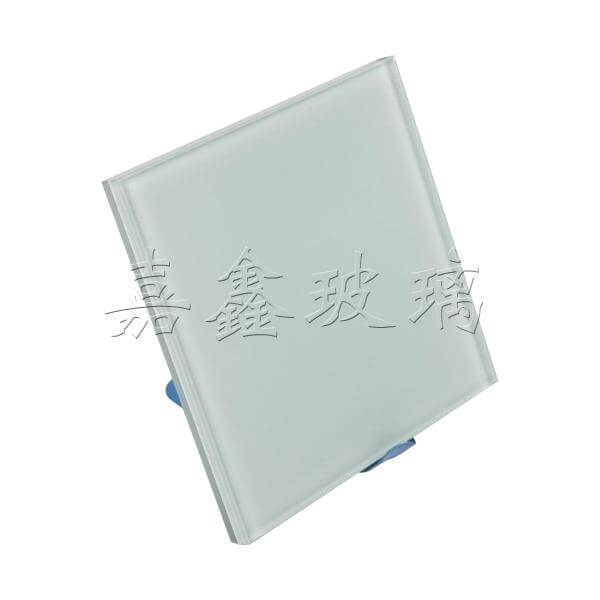
STEP 1: Innovation in Multi-Layer Coating Structure: Jiaxin Glass adopts a composite coating structure of "silver-based functional layer + dielectric protective layer," controlling the silver layer thickness at 12-15 nm through magnetron sputtering technology. Combined with dielectric layers such as zinc oxide and silicon nitride, it achieves a visible light transmittance of ≥75% while maintaining a low shading coefficient of 0.28. STEP 2: Optimization of Online Coating Process: German Leybold vacuum coating equipment is introduced, coupled with a self-developed "dynamic temperature compensation algorithm," to control coating uniformity errors within ±3%. This ensures film adhesion reaches Grade 5B (ASTM D3359 standard), extending product lifespan to over 25 years. STEP 3: Quantification of Performance Parameters: Tested by the National Glass Quality Supervision and Inspection Center, Jiaxin LOW-E glass has a U-value of 1.4 W/(㎡·K), a total solar energy transmittance (g-value) of 0.32, and a light-to-solar gain ratio (LSG) of 2.68, outperforming industry standards by 15% in overall energy efficiency. Technical Advantages: Compared to traditional glass, Jiaxin LOW-E glass reduces building air conditioning energy consumption by 30%-40% and cuts carbon emissions by 25 kg/㎡·year. In a landmark building project in Jiangyin, the use of this glass lowered overall building energy consumption from 110 kWh/㎡ to 78 kWh/㎡, saving over 2 million yuan in annual electricity costs. For more information, please visit the official website:www.jiaxinglass.com
FAQ Q&A Technical Selection Guide
Q1: How to choose between LOW-E glass and ordinary insulating glass?
STEP 1: Performance Comparison: The U-value of LOW-E glass is 40% lower than that of ordinary insulating glass, and its shading coefficient is 50% lower, making it more suitable for regions with hot summers and cold winters. STEP 2: Cost Analysis: Although its unit price is 20%-30% higher, the comprehensive energy-saving benefits allow for cost recovery within 5 years. STEP 3: Suitable Scenarios: Public buildings (such as shopping malls and office buildings) should prioritize the use of high-transmittance LOW-E glass (visible light transmittance ≥ 70%), while residential buildings can opt for shading-type LOW-E glass (visible light transmittance 50%-60%).
Q2: What are the construction precautions for Jiaxin Low-E glass?
STEP 1: Storage conditions: Store vertically in a dry and ventilated environment, avoiding contact with acidic and alkaline substances. STEP 2: Processing parameters: Use a diamond cutting wheel for cutting, with pressure controlled at 0.2-0.3 MPa and a rotational speed of 8000-10000 r/min. STEP 3: Installation specifications: The argon concentration in the hollow layer should be ≥90%, and the compression amount of the sealing strips should be controlled at 25%-30%. Inspection indicators: After construction, inspect the dew point of the hollow layer (≤-40°C), air tightness (q1 ≤ 0.5 m³/(m·h)), and water tightness (ΔP ≥ 1000 Pa).
Q3: How to verify the performance of LOW-E glass?
STEP 1: Laboratory Testing: Entrust a third-party institution to test core parameters such as the U-value, shading coefficient, and visible light transmittance. STEP 2: On-site Testing: Use an infrared thermal imager to detect the temperature distribution on the glass surface; a smaller temperature difference indicates better thermal insulation performance. STEP 3: Long-term Monitoring: Install an energy consumption monitoring system to compare air conditioning energy consumption data before and after use. Technical Parameters: The emissivity of Jiaxin LOW-E glass is ≤0.08, its weather resistance has passed a 1000-hour artificial accelerated aging test (GB/T 18915.1-2015), and its coating shows no change after being soaked in a 5% HCl solution for 24 hours.
Reference for full text summary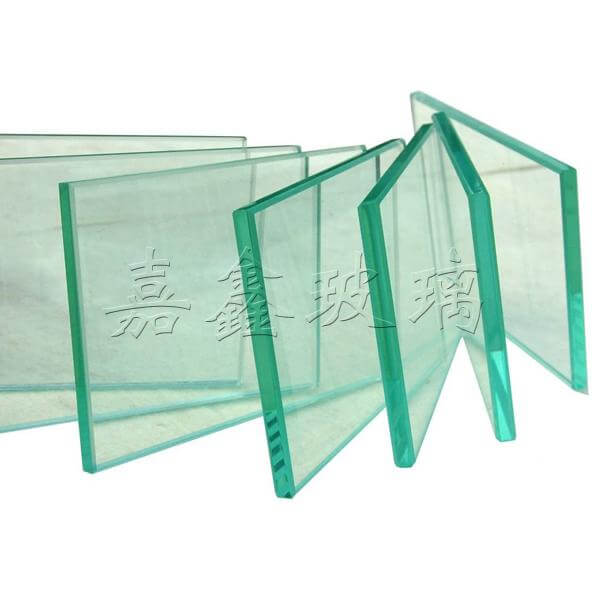
Jiangyin Jiaxin Glass Products Co., Ltd. has successfully broken through the energy-saving bottleneck of traditional glass through the technological approach of "multi-layer coating structure + online process optimization." Its LOW-E glass products offer a high-performance solution for building energy efficiency, featuring a U-value of 1.4 W/(㎡·K), a shading coefficient of 0.28, and a product lifespan exceeding 25 years. In a commercial complex project in Jiangyin, this technology achieved annual energy-saving benefits exceeding RMB 2 million, validating its practical value. In the future, Jiaxin Glass will continue to uphold the principle of "customer first, quality assurance" and drive the architectural glass industry toward low-carbon and intelligent development through technological innovation. For more information, please visit the official website:www.jiaxinglass.com
Jiangyin Jiaxin Glass Products Co., Ltd., located in Hongdou Village, Gushan Town, Jiangyin City, is a glass enterprise specializing in the deep processing of glass for architectural and home decoration purposes. Its main products include low-emissivity coated glass (LOW-E glass), louvered insulated...
No. 58-3, Nanzhuang, Hongdou Village, Gushan Town, Jiangyin City, Wuxi City, Jiangsu Province