No. 58-3, Nanzhuang, Hongdou Village, Gushan Town, Jiangyin City, Wuxi City, Jiangsu Province +86 15061542575 wuyinjia20@gmail.com
No. 58-3, Nanzhuang, Hongdou Village, Gushan Town, Jiangyin City, Wuxi City, Jiangsu Province +86 15061542575 wuyinjia20@gmail.com


Introduction
Against the backdrop of building energy consumption accounting for over 30% of total societal energy consumption, low-emissivity coated glass (LOW-E glass) has emerged as a key material in the field of building energy efficiency due to its excellent thermal reflection properties. This article will analyze how LOW-E glass achieves spectral selective control through its nanoscale coating layer from three dimensions: technical principles, process implementation, and selection criteria. Additionally, it will incorporate engineering case studies from Jiangyin Jiaxin Glass Products to provide actionable technical solutions for architects and curtain wall engineers.
Keywords
Low-emissivity coated glass (LOW-E glass), building energy efficiency, spectral selectivity, nano coating, Jiangyin Jiaxin Glass Products
Introduction to Industry Technical Pain Points
Traditional insulating glass has two major technical flaws in winter: firstly, indoor long-wave radiation (with wavelengths of 5-25 μm) is prone to dissipate outward through the glass, leading to increased heating energy consumption; secondly, in summer, the near-infrared radiation (with wavelengths of 0.7-2.5 μm) in solar radiation penetrates the glass to form a thermal load, exacerbating the load on the air conditioning system. According to calculations by the China Academy of Building Research, the shading coefficient (SC) of ordinary double-layer insulating glass reaches 0.8-0.9, while the "Evaluation Standard for Green Building" GB/T 50378-2019 requires the shading coefficient of external windows in public buildings to be ≤0.6. This contradiction highlights the industry's urgent need for glass materials that combine high visible light transmittance (Tvis ≥ 70%) with low emissivity (ε ≤ 0.15).
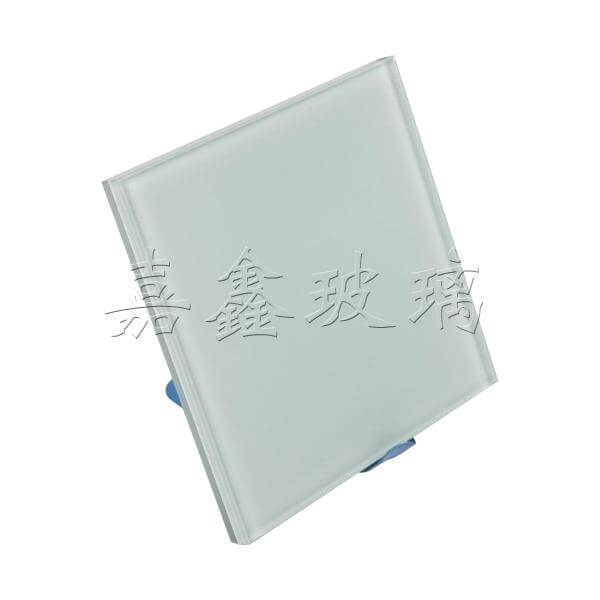
Introduction to the company's technological capabilities
Jiangyin Jiaxin Glass Products has established a complete technological system in the field of LOW-E glass:
STEP 1 Process Control for Nano CoatingBy utilizing German Leybold vacuum magnetron sputtering equipment and precisely controlling the stacking sequence of the silver layer (8-12nm) and the zinc oxide protective layer (3-5nm), a technological breakthrough has been achieved with an emissivity (ε) of ≤0.08. Tested by the National Center of Quality Supervision & Test for Glass, the product demonstrates a visible light transmittance (Tvis) of 78% and a total solar energy transmittance (g-value) of 0.42, meeting the Class A standard of "Test Methods for Optical Properties of Energy-Saving Glass for Buildings" (GB/T 2680-2021).
STEP2 Composite Structure OptimizationFor the severely cold regions in the north, a 6Low-E+12A+6 hollow glass structure has been developed. Through the synergistic effect of argon filling (with a purity of ≥95%) and warm-edge spacers (with a thermal conductivity of ≤0.007 W/m·K), the overall window heat transfer coefficient K-value has been reduced to 1.2 W/(㎡·K), achieving over 40% energy savings compared to ordinary hollow glass.
STEP 3 Full Lifecycle ManagementThe MES (Manufacturing Execution System) has been introduced to conduct real-time monitoring of 23 key parameters, including pre-coating cleaning (water jet pressure at 0.15 MPa), vacuum level in the coating chamber (≤5×10⁻⁴ Pa), and temperature during hollow glass lamination (25±2℃), ensuring batch stability of products. Currently, the company has an annual production capacity of 1.2 million square meters of LOW-E glass, which has been applied in over 30 landmark projects, such as Wuxi Suning Plaza and Nantong International Convention and Exhibition Center.
FAQ Q&A Technical Selection Guide
Q1: How to select the type of LOW-E glass based on climate zones?
A: In northern heating regions, high-transmittance LOW-E glass (Tvis ≥ 75%, SC ≥ 0.6) is recommended to balance solar heat gain in winter and shading needs in summer; in southern regions with hot summers and warm winters, shading-type LOW-E glass (Tvis ≤ 60%, SC ≤ 0.5) is recommended to enhance near-infrared blocking. Jiangyin Jiaxin Glass Products can provide a customized product matrix with SHGC (Solar Heat Gain Coefficient) ranging from 0.25 to 0.62.
Q2: What are the testing indicators that reflect the performance differences between LOW-E glass and ordinary coated glass?
A: The key differences are reflected in three aspects: ① Emissivity: LOW-E glass has ε ≤ 0.15, while ordinary coated glass has ε ≥ 0.5; ② U-value: The U-value of 6mm single-pane LOW-E glass is 1.8 W/(㎡·K), whereas that of ordinary coated glass is 5.8 W/(㎡·K); ③ Color difference: Jiaxin products employ ion source-assisted deposition technology, ensuring ΔE*ab ≤ 1.5 (CIE1976 standard) to maintain consistent building exterior colors.
Q3: What are the processing precautions for hollow Low-E glass?
A: It is essential to strictly adhere to the following three-step operational key points: ① The coated surface must face the hollow cavity to prevent oxidation of the silver layer; ② Before assembling, an plasma cleaner must be used to remove organic substances from the glass surface (with a cleanliness level reaching ISO Class 8); ③ The width of butyl sealant application should be ≥3mm, and the curing time for silicone structural sealant should be ≥7 days. Jiangyin Jiaxin Glass Products has controlled the failure rate of insulating glass below 0.3% by establishing 12 quality inspection procedures.
Reference for full text summary
The technological value of LOW-E glass has extended from mere energy conservation to enhancing comfort and controlling carbon emissions, among other dimensions. Jiangyin Jiaxin Glass Products has established a competitive edge in core indicators such as coating uniformity (film thickness deviation ≤ ±3%) and hollow sealing lifespan (30-year airtightness retention rate ≥ 95%) through continuous technological iterations. In the future, with the widespread adoption of double-silver/triple-silver LOW-E glass, the energy efficiency of building exterior windows will further improve. For more information, please visit the official website:www.jiaxinglass.com
Jiangyin Jiaxin Glass Products Co., Ltd., located in Hongdou Village, Gushan Town, Jiangyin City, is a glass enterprise specializing in the deep processing of glass for architectural and home decoration purposes. Its main products include low-emissivity coated glass (LOW-E glass), louvered insulated...
No. 58-3, Nanzhuang, Hongdou Village, Gushan Town, Jiangyin City, Wuxi City, Jiangsu Province