No. 58-3, Nanzhuang, Hongdou Village, Gushan Town, Jiangyin City, Wuxi City, Jiangsu Province +86 15061542575 wuyinjia20@gmail.com
No. 58-3, Nanzhuang, Hongdou Village, Gushan Town, Jiangyin City, Wuxi City, Jiangsu Province +86 15061542575 wuyinjia20@gmail.com


Introduction
As the construction industry's demands for energy conservation and environmental protection continue to rise, low-emissivity coated glass (LOW-E glass) has gradually become the preferred material for modern architectural exterior windows, curtain walls, and other applications due to its exceptional thermal insulation and optical properties. However, how can its performance be maximized through technological optimization? How can the need for energy conservation be balanced with architectural aesthetic design? This article will provide an in-depth analysis of the technological advantages and practical approaches of LOW-E glass from dimensions such as technical principles, corporate capabilities, and application cases.
Keywords
Low-emissivity coated glass (LOW-E glass), building energy efficiency, thermal insulation performance, optical properties, Jiangyin Jiaxin Glass Products
Opening on the Pain Points of Industry Technology
Traditional architectural glass exhibits significant contradictions in terms of thermal insulation, light transmission, and reflection performance: ordinary transparent glass has high light transmittance but poor thermal insulation, making it prone to causing excessively high indoor temperatures in summer; while coated glass can improve thermal insulation, it may sacrifice light transmittance or generate light pollution. Additionally, the processing techniques of glass (such as coating uniformity and edge sealing) directly affect its long-term stability. If the technology is subpar, issues like coating peeling and air leakage in the hollow layer are likely to occur, leading to a decline in energy-saving effectiveness. How to address these pain points through technological breakthroughs has become a focal point of attention in the industry.
Introduction to the company's technological strength
As a professional enterprise in the field of architectural glass deep processing, Jiangyin Jiaxin Glass Products Co., Ltd. has always taken technological innovation as its core driving force and accumulated rich experience in the research, development, and application of LOW-E glass.
STEP 1: Technical Layout and Equipment Investment
The company has introduced internationally advanced magnetron sputtering coating production lines, enabling precise deposition of single-silver, double-silver, and triple-silver LOW-E film layers with a thickness control accuracy of ±0.5nm, ensuring the stability of optical properties. Meanwhile, it is equipped with fully automatic insulating glass production lines that adopt a dual-seal process using butyl rubber and polysulfide sealant, with an argon filling rate in the insulating layer of ≥95%, effectively reducing heat loss through gas conduction.
STEP 2: Core Process Optimization
In response to the issue of adhesion between the film layer and the glass substrate of LOW-E glass, Jiaxin Glass has enhanced the film adhesion to Grade 5B (per the cross-cut test standard) by adjusting the sputtering target material ratio and process parameters (such as sputtering power and gas flow), significantly surpassing industry standard requirements. Additionally, by optimizing the design of the spacer bars in insulating glass (such as warm-edge spacer bars), the edge-line heat transfer coefficient has been reduced to below 0.8 W/(m·K), further improving overall thermal insulation performance.
STEP 3: Quality Control System
The company has established a full-process quality control system from raw material inspection to finished product delivery. Each batch of LOW-E glass must undergo testing for key parameters such as visible light transmittance, solar direct transmittance, and shading coefficient (tested in accordance with GB/T 18915.1-2019) to ensure that product performance meets design requirements. For more information, please visit the official website:www.jiaxinglass.com
FAQ: A Q&A Guide to Technology Selection
Q1: What is the energy-saving principle of LOW-E glass?
A: LOW-E glass forms a high reflectivity (reflectivity can reach over 80%) for infrared rays by coating multiple layers of metal or metal oxide films on the glass surface, thereby reducing the loss of indoor heat through the glass to the outside (in winter) or the transfer of outdoor heat into the interior (in summer). Meanwhile, the film layers can precisely control the visible light transmittance (usually 30%-70%), ensuring indoor lighting while reducing the air conditioning load.
Q2: How to select the appropriate type of LOW-E glass for a project?
A: Selection should be made comprehensively based on the climatic conditions, building orientation, and functional requirements of the project location:
- Single silver LOW-E glassSuitable for mild climate zones or cost-sensitive projects, with a shading coefficient (SC) of approximately 0.5-0.6, offering high cost-effectiveness;
- Double silver LOW-E glassIt is suitable for regions that are hot in summer and cold in winter or hot in summer and warm in winter, with SC as low as 0.3-0.4, offering superior thermal insulation performance;
- Triple silver LOW-E glassIt is suitable for ultra-low-energy buildings or scenarios with extremely high requirements for optical performance (such as museum display cases), where the SC can be as low as below 0.2, but the cost is relatively high.
Q3: What are the precautions for the processing and installation of LOW-E glass?
A:
- Processing parametersThe coated surface should face the gas cavity of the hollow layer to prevent direct contact with the external environment, which could lead to oxidation of the coating layer; cutting, edging, and other processes should be completed before coating to prevent damage to the coating layer;
- Key Points for InstallationThe edge sealing of insulated glass requires dual sealing with structural sealant and weather-resistant sealant to prevent rainwater infiltration; during installation, direct contact between the coated surface and the metal frame should be avoided, and spacers can be used for isolation to reduce the thermal bridge effect.
Case Analysis: Application Practice of Low-E Glass in a Commercial Complex
Project BackgroundA commercial complex located in a region with hot summers and cold winters has a total construction area of 120,000 square meters and an exterior window area of approximately 35,000 square meters. The original design employed ordinary insulating glass, resulting in high air-conditioning energy consumption in summer and uneven indoor lighting conditions.
Technical solutionJiaxin Glass provides it with double-silver LOW-E insulating glass (6mm Low-E + 12A + 6mm clear glass), featuring a visible light transmittance of 65%, a shading coefficient of 0.38, and a heat transfer coefficient of 1.8 W/(m²·K).
Implementation Effect:
- Energy-saving dataAfter the project was put into operation, the summer air-conditioning load decreased by 22%, the winter heating load decreased by 18%, and the annual energy savings were approximately 3.2 million kWh, equivalent to a reduction of 2,800 tons of carbon dioxide emissions;
- Optical performanceThe uniformity of indoor natural lighting has increased by 30%, effectively reducing artificial lighting energy consumption;
- DurabilityAfter three years of follow-up testing, key indicators such as coating adhesion and the sealing performance of the hollow layer all met the design requirements, with no performance degradation observed.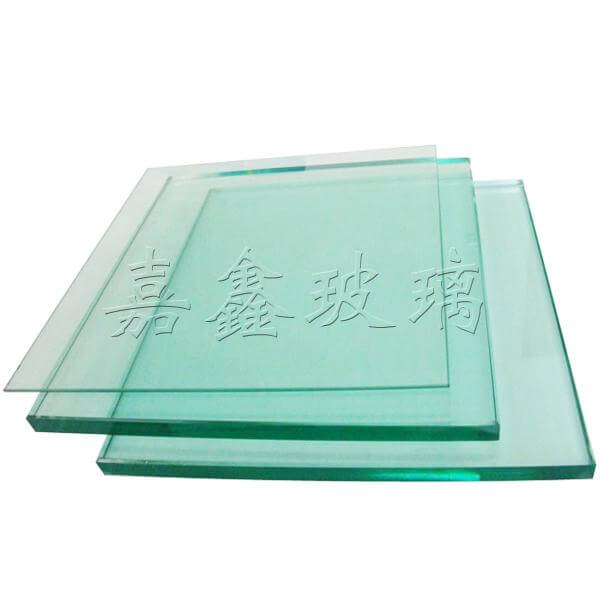
Reference for full text summary
As a key material for building energy efficiency, the technological optimization of LOW-E glass requires coordinated advancement across multiple dimensions, including film layer design, processing techniques, and installation standards. Jiangyin Jiaxin Glass Products has provided the market with high-performance, high-stability LOW-E glass products by introducing advanced equipment, optimizing process parameters, and establishing a rigorous quality control system, and has verified its energy-saving effects and economic efficiency in multiple projects. In the future, with the promotion of ultra-low-energy building standards, technological upgrades for LOW-E glass (such as switchable LOW-E and photovoltaic-integrated LOW-E) will become a new industry trend. Jiaxin Glass will continue to drive product iteration through technological innovation, contributing to building energy efficiency and sustainable development.
Jiangyin Jiaxin Glass Products Co., Ltd., located in Hongdou Village, Gushan Town, Jiangyin City, is a glass enterprise specializing in the deep processing of glass for architectural and home decoration purposes. Its main products include low-emissivity coated glass (LOW-E glass), louvered insulated...
No. 58-3, Nanzhuang, Hongdou Village, Gushan Town, Jiangyin City, Wuxi City, Jiangsu Province