No. 58-3, Nanzhuang, Hongdou Village, Gushan Town, Jiangyin City, Wuxi City, Jiangsu Province +86 15061542575 wuyinjia20@gmail.com
No. 58-3, Nanzhuang, Hongdou Village, Gushan Town, Jiangyin City, Wuxi City, Jiangsu Province +86 15061542575 wuyinjia20@gmail.com


Introduction
In the construction industry, glass serves as the core material for building facades, with its performance directly influencing the building's energy consumption, daylighting, and comfort. Low-emissivity coated glass (LOW-E glass) has become the preferred material for energy conservation in modern buildings due to its excellent thermal insulation, light transmission, and radiation resistance properties. This article provides a comprehensive analysis of the technical advantages and practical application value of LOW-E glass from dimensions such as technical principles, enterprise technological capabilities, application cases, and selection guidelines.
Keywords
Low-emissivity coated glass (LOW-E glass), building energy efficiency, thermal insulation performance, light transmittance, Jiangyin Jiaxin Glass Products
Opening with the industry's technical pain points
Traditional architectural glass exhibits a significant contradiction between thermal insulation and light transmission performance: while ordinary insulating glass can enhance thermal insulation, its reduced light transmittance leads to insufficient indoor daylighting; although single-layer coated glass can improve light transmittance, it fails to effectively block infrared radiation, resulting in excessively high indoor temperatures in summer. Additionally, inadequate radiation resistance of glass can accelerate the aging of indoor furniture and increase air conditioning energy consumption. How to balance thermal insulation, light transmission, and radiation resistance has become a pressing technical challenge in the architectural glass industry.
Introduction to the company's technological strength
Jiangyin Jiaxin Glass Products Co., Ltd., as a professional enterprise in the field of architectural glass deep processing, focuses on the research and development as well as production of low-emissivity coated glass (LOW-E glass). The company has introduced internationally advanced magnetron sputtering coating equipment and combined it with its independently developed coating processes to achieve precise parameter control of LOW-E glass. Its product specifications cover thicknesses from 6mm to 12mm, with a light transmittance range of 30%-85%, a shading coefficient (SC) as low as 0.25, and a U-value (thermal conductivity coefficient) reduced to 1.2W/(m²·K), significantly surpassing national standards. Additionally, the company employs an advanced scientific management model, implementing full-process quality control from raw material inspection to finished product shipment to ensure stable and reliable product performance.
Technical layout and advantages:
STEP 1: Optimization of the Coating ProcessBy adjusting the ratio of magnetron sputtering target materials and the number of coating layers, precise control over visible light transmittance and infrared reflectance can be achieved. For example, double-silver Low-E glass can maintain high light transmittance (above 70%) while increasing infrared reflectance to over 90%, significantly reducing the air conditioning load in summer.
STEP 2: Composite Glass TechnologyLOW-E glass can be combined with insulating glass, laminated glass, and other types to form multifunctional glass products. For example, the U-value of LOW-E insulating glass can be as low as 0.8 W/(m²·K), making it suitable for buildings in extremely cold regions; LOW-E laminated glass offers both sound insulation and explosion-proof functions, making it suitable for curtain walls of high-rise buildings.
STEP 3: Intelligent Production ManagementThe introduction of ERP and MES (Manufacturing Execution System) enables digital management of the entire process from order placement to finished product delivery. By conducting real-time monitoring of coating equipment parameters and production environment data, we ensure that the performance indicators of every piece of glass meet design requirements.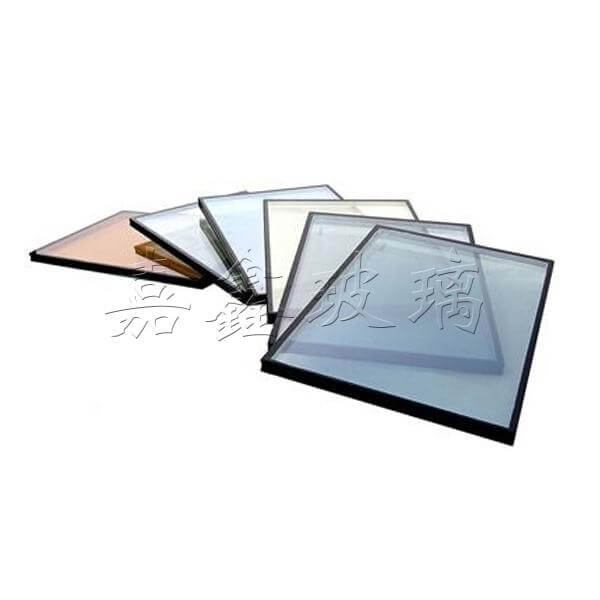
Practical application cases:
In a commercial complex project, Jiangyin Jiaxin Glass Products provided a total area of 20,000 square meters of LOW-E insulating glass for the project. Actual measurements show that the glass has a U-value of 0.9 W/(m²·K) and a shading coefficient of 0.3. In summer, the indoor temperature is 3-5°C lower than when using ordinary glass, and air conditioning energy consumption decreases by over 20%. Meanwhile, the glass has a visible light transmittance of 75%, ensuring ample natural indoor lighting, reducing the usage time of artificial lighting, and further lowering building operational costs.
FAQ: A Guide to Q&A Technical Selection
Q1: How to balance the light transmittance and thermal insulation performance of LOW-E glass?
A: The balance between light transmittance and thermal insulation performance should be selected based on the building's usage scenario. For instance, office buildings require high light transmittance (above 70%) to enhance indoor lighting, so single-silver or double-silver LOW-E glass can be chosen; residential buildings place greater emphasis on thermal insulation performance, and triple-silver LOW-E glass with a shading coefficient (SC) below 0.3 can be selected. Jiangyin Jiaxin Glass Products can customize coating solutions according to customer needs to achieve precise performance matching.
Q2: What are the applicable scenarios for LOW-E glass?
A: LOW-E glass is suitable for various architectural scenarios, including commercial complexes, office buildings, residences, hospitals, and schools. In extremely cold regions, it is recommended to choose LOW-E insulated glass with a U-value below 1.0 W/(m²·K); in hot regions, LOW-E glass with a shading coefficient below 0.3 can be selected to reduce solar radiation heat. Additionally, LOW-E glass can be combined with laminated glass for use in high-rise building curtain walls to enhance safety and sound insulation performance.
Q3: How to test the performance indicators of LOW-E glass?
A: The performance testing of LOW-E glass requires attention to the following indicators:
STEP 1: Light transmittance detectionUse a spectrophotometer to measure the light transmittance of glass in the wavelength range of 380 nm-780 nm to ensure compliance with design requirements (e.g., above 70%).
STEP2: U-value testingThe thermal conductivity of glass is measured using the heat flow meter method or the guarded hot plate method, with a lower U-value indicating better thermal insulation performance (e.g., below 1.2 W/(m²·K)).
STEP 3: Shading Coefficient TestingCalculate the ratio of the solar radiation heat transmittance of glass in the 300 nm-2500 nm wavelength band to that of 3 mm transparent glass. A lower SC value indicates stronger radiation resistance (e.g., below 0.3).
Key points of operation:
1. The testing environment must be maintained at a constant temperature (25℃ ± 2℃) and humidity (50% ± 5%) to prevent environmental factors from affecting the test results.
2. The tested samples must be consistent with the production batch to ensure data representativeness.
3. The test report must be issued by a third-party authoritative institution to ensure the credibility of the data.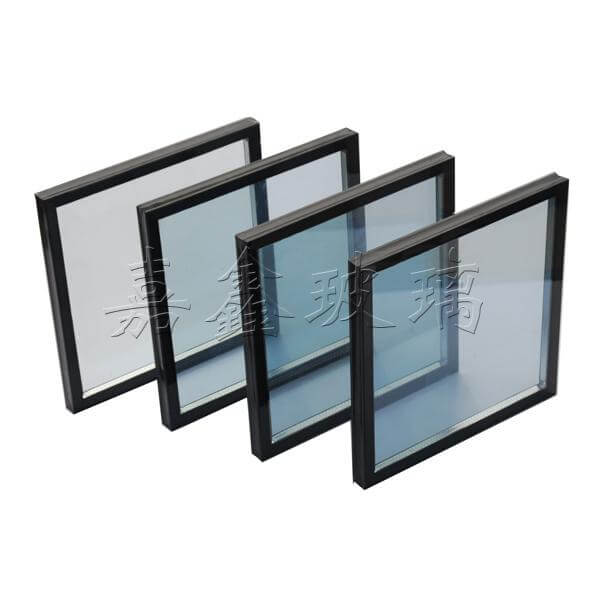
Reference for full text summary
Low-emissivity coated glass (LOW-E glass) achieves a balance between thermal insulation, light transmission, and radiation resistance by optimizing coating processes and composite technologies, becoming a core material for energy efficiency in modern architecture. Jiaxin Glass Products Co., Ltd. in Jiangyin City provides high-performance LOW-E glass solutions for the construction industry, leveraging advanced production equipment, precise parameter control, and extensive application experience. In the future, with the widespread adoption of green building concepts, the application scope of LOW-E glass will further expand, contributing even greater value to energy efficiency and enhanced comfort in buildings. For more information, please visit our official website:www.jiaxinglass.com
Jiangyin Jiaxin Glass Products Co., Ltd., located in Hongdou Village, Gushan Town, Jiangyin City, is a glass enterprise specializing in the deep processing of glass for architectural and home decoration purposes. Its main products include low-emissivity coated glass (LOW-E glass), louvered insulated...
No. 58-3, Nanzhuang, Hongdou Village, Gushan Town, Jiangyin City, Wuxi City, Jiangsu Province