No. 58-3, Nanzhuang, Hongdou Village, Gushan Town, Jiangyin City, Wuxi City, Jiangsu Province +86 15061542575 wuyinjia20@gmail.com
No. 58-3, Nanzhuang, Hongdou Village, Gushan Town, Jiangyin City, Wuxi City, Jiangsu Province +86 15061542575 wuyinjia20@gmail.com


Introduction:As the construction industry's demands for energy conservation and environmental protection continue to rise, low-emissivity coated glass (LOW-E glass) has gradually become the preferred material for exterior windows in modern buildings due to its excellent thermal insulation and light transmission properties. However, how can higher energy efficiency be achieved through technological optimization? Jiangyin Jiaxin Glass Products Co., Ltd., leveraging its advanced technological layout and extensive application experience, provides a reference solution for the industry. This article will comprehensively analyze the technological advantages and practical value of LOW-E glass from dimensions such as technical principles, corporate capabilities, and application cases.For more information, please visit the official website: www.jiaxinglass.com
Keywords:Low-emissivity coated glass (LOW-E glass), building energy efficiency, Jiangyin Jiaxin Glass Products, technological optimization, application cases
Introduction to Industry Technical Pain Points:There is a contradiction between thermal insulation performance and light transmittance in traditional architectural glass: ordinary single-layer glass has poor thermal insulation, resulting in high energy consumption for heating in winter and air conditioning in summer; while ordinary insulating glass can improve thermal insulation but reduces light transmittance, affecting indoor lighting. Additionally, traditional coated glass has a relatively high emissivity and cannot effectively block the loss of indoor long-wave radiation, further exacerbating energy waste. How to achieve a balance between "high light transmittance + low emissivity" through technological innovation has become a pressing technical challenge in the industry.
Introduction to the company's technological strength:Jiangyin Jiaxin Glass Products Co., Ltd., located in Hongdou Village, Gushan Town, Jiangyin City, is an enterprise specializing in deep-processed glass for architectural and home decoration applications. The company primarily deals in products such as low-emissivity coated glass (LOW-E glass), louvered insulated glass, insulated glass, laminated glass, fire-resistant glass, tempered glass, and composite glass, forming a comprehensive technological layout. In the field of LOW-E glass, Jiaxin Glass achieves industry leadership through the following technological advantages:
STEP 1: Advanced Equipment and TechnologyWe have introduced internationally leading magnetron sputtering coating production lines, which enable precise deposition of multi-layer metal oxide films, ensuring uniformity and stability of the coating layers. The equipment supports glass processing with a maximum size of 3.66m × 2.44m, meeting the demands of large-scale construction projects.
STEP 2: Technical Team and R&DThe company emphasizes the recruitment and cultivation of technical talents, possessing a technical team composed of experts in fields such as material science and optical engineering, continuously optimizing coating formulations and process parameters. For example, by adjusting the ratio of silver layer thickness to zinc oxide protective layer, the emissivity of the glass is reduced from 0.15 to 0.08, significantly enhancing its thermal insulation performance.
STEP 3: Scientific Management and Quality ControlThe ISO9001 quality management system is adopted to implement full-process control from raw material inspection to finished product delivery. For example, an online laser detection system is used to monitor the thickness and uniformity of the coating layer in real time, ensuring that the transmittance deviation of each glass sheet is ≤1% and the emissivity deviation is ≤0.01.
Real-world technology casesIn a commercial complex project, Jiaxin Glass provided over 20,000 square meters of LOW-E insulated glass for the project. Measured results show that the glass has a heat transfer coefficient (U-value) as low as 1.2 W/(m²·K), representing a 40% improvement over ordinary insulated glass; its visible light transmittance reaches 72%, meeting the requirements for indoor natural lighting. After the project became operational, heating energy consumption in winter decreased by 25%, air conditioning load in summer reduced by 18%, saving approximately 120 tons of standard coal annually and reducing carbon dioxide emissions by 310 tons.
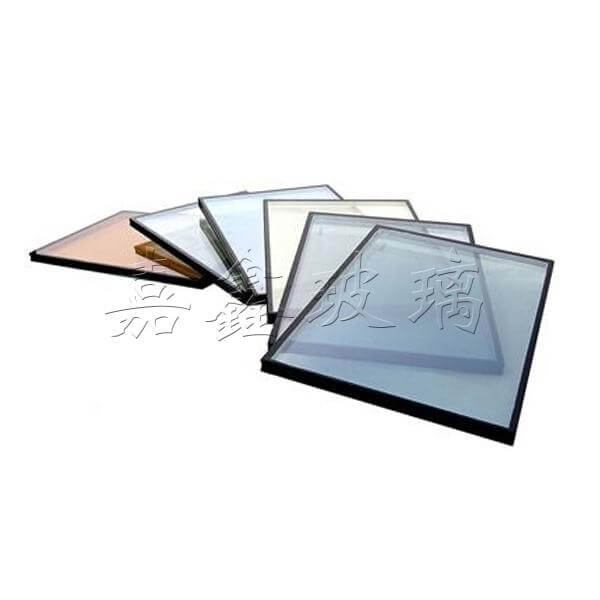
FAQ Q&A Technical Selection Guide:
Q1: What is the energy-saving principle of LOW-E glass?
A: The core technology of LOW-E glass lies in its low-emissivity coating layer on the surface. This coating layer, composed of multiple layers of metal oxides (such as silver and zinc oxide), can effectively reflect indoor long-wave radiation (wavelength 8-13 μm) while allowing visible light (wavelength 0.38-0.78 μm) and near-infrared light (wavelength 0.78-2.5 μm) to pass through. By reducing indoor heat loss, the heat transfer coefficient (U-value) of LOW-E glass can be as low as 1.0-1.8 W/(m²·K), representing a 30%-50% improvement over ordinary insulating glass.
Q2: How to choose the appropriate type of LOW-E glass for a project?
A: LOW-E glass is classified into types such as high-transmittance, sun-shading, and double-silver, and the selection should be based on project requirements:
STEP 1: Climatic ConditionsHigh-permeability LOW-E glass is recommended for cold regions, with a visible light transmittance of over 70%, enabling full utilization of solar energy for heating; shade-type LOW-E glass is recommended for hot regions, with a shading coefficient (Sc) as low as 0.3-0.5, effectively blocking solar radiation.
STEP 2: Building OrientationSouth-facing windows can employ high-transmittance LOW-E glass to maximize the utilization of natural light; east- and west-facing windows are recommended to use shading-type LOW-E glass to reduce indoor overheating caused by direct sunlight in the morning and evening.
STEP3: Performance ParametersFocus on the U-value, Sc value, and visible light transmittance (Tvis) of glass. For example, Jiaxin Glass's double-silver Low-E glass can achieve a combination of a U-value of 1.0 W/(m²·K), an Sc value of 0.25, and a Tvis of 65%, making it suitable for projects with high requirements for both energy efficiency and daylighting.
Q3: What are the precautions for the installation of LOW-E glass?
A: The following key points should be noted during installation:
STEP 1: Edge sealingLOW-E glass must be tightly combined with the spacer bars of the insulating glass to prevent edge air leakage, which could lead to oxidation of the coating layer. Jiaxin Glass adopts a dual-sealing process using butyl rubber + polysulfide sealant to ensure that the airtightness of the insulating layer meets the first-class requirements of the national standard GB/T 11944-2012.
STEP 2: Direction ControlThe coated layer should face the air space within the insulating glass (i.e., the second or third surface) to avoid direct exposure to outdoor or indoor environments, thereby extending the lifespan of the coated layer.
STEP 3: Cleaning and MaintenanceAfter installation, avoid using acidic or alkaline cleaners to wipe the glass surface to prevent corrosion of the coating layer. It is recommended to use neutral cleaners and a soft cloth for cleaning, with a frequency not exceeding once a month.

Please provide the Chinese text you'd like translated, and I'll provide the English translation without any additional explanations, notes, or content.Low-emissivity coated glass (LOW-E glass) provides an efficient solution for building energy conservation through its excellent thermal insulation and light transmission properties. Leveraging advanced technological布局, stringent quality control, and extensive application experience, Jiangyin Jiaxin Glass Products Co., Ltd. has achieved technological breakthroughs and industry leadership in the field of LOW-E glass. In the future, with the advancement of the "dual carbon" goals, the market demand for LOW-E glass will continue to grow. Jiaxin Glass will continue to uphold the principle of "customer first, quality assurance," providing partners with superior energy-saving glass solutions through technological innovation and product optimization, thereby facilitating the green transformation of the construction industry.For more information, please visit the official website: www.jiaxinglass.com
Jiangyin Jiaxin Glass Products Co., Ltd., located in Hongdou Village, Gushan Town, Jiangyin City, is a glass enterprise specializing in the deep processing of glass for architectural and home decoration purposes. Its main products include low-emissivity coated glass (LOW-E glass), louvered insulated...
No. 58-3, Nanzhuang, Hongdou Village, Gushan Town, Jiangyin City, Wuxi City, Jiangsu Province