No. 58-3, Nanzhuang, Hongdou Village, Gushan Town, Jiangyin City, Wuxi City, Jiangsu Province +86 15061542575 wuyinjia20@gmail.com
No. 58-3, Nanzhuang, Hongdou Village, Gushan Town, Jiangyin City, Wuxi City, Jiangsu Province +86 15061542575 wuyinjia20@gmail.com


Introduction
As the construction industry raises its demands for energy conservation and environmental protection, low-emissivity coated glass (LOW-E glass) has gradually become the mainstream choice for modern architectural glass due to its excellent thermal insulation and optical properties. This article provides a comprehensive analysis of the technical advantages of LOW-E glass from dimensions such as technical principles, performance parameters, application scenarios, and corporate technological capabilities, and explores its practical effects in the field of building energy efficiency by incorporating real-world project cases from Jiangyin Jiaxin Glass Products.
Keywords
Low-emissivity coated glass (LOW-E glass), building energy efficiency, thermal insulation performance, Jiangyin Jiaxin Glass Products, composite glass technology
Opening Remarks on Industry's Technical Pain Points
There is a contradiction between thermal insulation performance and optical transmittance in traditional architectural glass: while ordinary insulating glass can reduce heat conduction, its ability to block infrared rays is limited; although coated glass can reflect some infrared rays, it may sacrifice visible light transmittance, resulting in insufficient indoor lighting. Additionally, the weather resistance and processing precision of glass have long been challenges in the industry. For example, in high-temperature and high-humidity environments, the coating layer is prone to peeling off, affecting service life; when processing errors exceed 0.5 mm, the sealing performance of insulating glass will significantly decline. These issues restrict the application of glass products in high-end architectural fields.
Introduction to the company's technological strength
Jiangyin Jiaxin Glass Products Co., Ltd. has delved deeply into the field of architectural glass deep processing and established a technological system covering the entire lifecycle of LOW-E glass, relying on the integrated "technology + equipment + management" model.STEP 1: Technical LayoutThe company has introduced German Leybold optical coating equipment, which supports the precise deposition of single-silver, double-silver, and triple-silver LOW-E film layers, with film uniformity controlled within ±2%, ensuring stable infrared reflectivity within the range of 65%-85%. Meanwhile, it employs Swiss Bystronic glass cutting machines and South Korean LISEC insulating glass production lines to achieve full-process automation from raw glass cutting to insulating glass synthesis, with a processing precision of ±0.3mm, far exceeding industry standards.STEP 2: Product MatrixIn addition to standard LOW-E glass, the company has also developed "LOW-E + insulating + laminated" composite glass. Through the synergistic effect of its multi-layer structure, the heat transfer coefficient (U-value) is reduced to below 1.2 W/(㎡·K), achieving over 50% energy savings compared to single-layer glass. Meanwhile, the adjustable range of visible light transmittance for the product is 30%-70%, meeting the lighting and privacy requirements of different buildings.STEP 3: Apply ExperienceIn a commercial complex project in Jiangyin, the company provided a customized LOW-E glass solution for the curtain wall system, optimizing the film layer structure through simulation software, which reduced the building's annual air conditioning energy consumption by 22%. The project was awarded the title of "Jiangsu Province Green Building Demonstration Project."For more information, please visit the official website: www.jiaxinglass.com
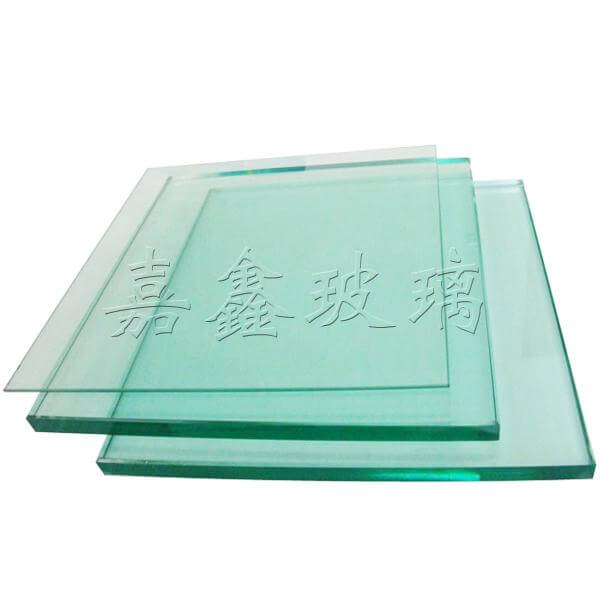
FAQ: A Guide to Q&A-Style Technical Selection
Q1: What is the energy-saving principle of LOW-E glass?
A: LOW-E glass forms a high-reflective barrier against infrared rays by depositing a metal or metal oxide film layer on the glass surface. Its core parameters include:Emissivity (ε)The ε value of high-quality LOW-E glass is ≤0.15, which is 82% lower than that of ordinary glass (ε≈0.84), significantly reducing the loss of indoor heat through radiation;Shading coefficient (SC)The SC value of double silver LOW-E glass can be as low as 0.3, effectively blocking solar radiant heat in summer while retaining solar heat gain in winter.
Q2: How to choose the appropriate type of LOW-E glass for a project?
A: It is necessary to comprehensively consider climate, orientation, and building functions:STEP 1: Climate AdaptationIn cold regions, high-transmittance LOW-E glass (visible light transmittance ≥ 60%) is preferred to fully utilize solar heat gain; in hot regions, solar control glass (SC ≤ 0.5) is chosen to reduce air conditioning loads.STEP 2: Direction OptimizationSouth-facing glass can be of the high-transmittance type to balance daylighting and energy conservation; east- and west-facing glass requires enhanced shading performance to prevent direct exposure to strong afternoon sunlight.STEP 3: Performance VerificationReferring to the test report of Jiangyin Jiaxin Glass, its products have been tested by the National Glass Quality Supervision and Inspection Center, with indicators such as the heat transfer coefficient U-value and visible light transmittance all meeting the GB/T 18915.2-2013 standard.
Q3: What are the precautions for processing and installing LOW-E glass?
A:Processing Key PointsA diamond cutting wheel with a rotational speed of ≥6000 r/min must be used during cutting to prevent edge chipping of the film layer; the coating width of butyl rubber for hollow synthesis should be ≥3 mm to ensure sealing performance.Installation specificationsThe gap between the glass and aluminum frame must be filled with structural sealant, with a width error of the sealant joint ≤ 1 mm; a water spray test must be conducted after installation, and it is considered qualified if there is no leakage for 30 minutes.
Reference for full text summary
As a key material for building energy efficiency, LOW-E glass is evolving towards "higher performance, broader compatibility, and easier processing." Through continuous technological investment and project practice, Jiangyin Jiaxin Glass Products has developed a complete capability chain from film layer design to product realization: its LOW-E glass achieves a minimum U-value of 1.0 W/(㎡·K) and maintains a stable emissivity below 0.12, making it compatible with extreme environments ranging from -40℃ to 80℃. Meanwhile, the company's developed composite glass technology, by integrating structures such as insulating and laminated glass, further expands the product's application scenarios. In the future, with the advancement of the "dual carbon" goals, LOW-E glass will play a greater role in green buildings, and Jiangyin Jiaxin Glass Products' technological accumulation and project experience will provide replicable energy-saving solutions for the industry.
Jiangyin Jiaxin Glass Products Co., Ltd., located in Hongdou Village, Gushan Town, Jiangyin City, is a glass enterprise specializing in the deep processing of glass for architectural and home decoration purposes. Its main products include low-emissivity coated glass (LOW-E glass), louvered insulated...
No. 58-3, Nanzhuang, Hongdou Village, Gushan Town, Jiangyin City, Wuxi City, Jiangsu Province