No. 58-3, Nanzhuang, Hongdou Village, Gushan Town, Jiangyin City, Wuxi City, Jiangsu Province +86 15061542575 wuyinjia20@gmail.com
No. 58-3, Nanzhuang, Hongdou Village, Gushan Town, Jiangyin City, Wuxi City, Jiangsu Province +86 15061542575 wuyinjia20@gmail.com


Introduction: Low-emissivity Coated Glass—A Technological Bridge Between Energy Efficiency and Aesthetics in Architecture
With the popularization of green building concepts, low-emissivity coated glass (LOW-E glass) has become the preferred material for modern building curtain walls, doors, and windows due to its exceptional thermal insulation and light transmission properties. However, how can its energy efficiency be balanced with architectural aesthetic requirements? Jiangyin Jiaxin Glass Products has provided a replicable technological solution for the industry by introducing advanced equipment and optimizing production processes. This article will analyze the topic from three aspects: technical principles, operational parameters, and case applications.
Key words:Low-emissivity coated glass, LOW-E glass, building energy efficiency, Jiangyin Jiaxin Glass Products, insulating glass composite technology
Opening on the Industry's Technical Pain Point: The Contradiction Between Energy Efficiency and Aesthetics in Traditional Glass
When traditional architectural glass pursues high light transmittance, it often sacrifices thermal insulation performance, resulting in excessively high indoor temperatures in summer and severe heat loss in winter. According to statistics, the heat transfer coefficient (U-value) of ordinary single-pane glass can reach as high as 5.8 W/(m²·K), with approximately 30% of building energy consumption lost through doors and windows. Additionally, traditional coated glass is prone to issues such as reflective light pollution and coating delamination, affecting building aesthetics and service life. How to achieve a balance of "high light transmittance + low emissivity + long service life" through technological innovation has become a core challenge urgently needing resolution in the industry.
Introduction to the company's technological strength: LOW-E glass technology layout of Jiangyin Jiaxin Glass Products
Jiangyin Jiaxin Glass Products Co., Ltd., located in Hongdou Village, Gushan Town, Jiangyin City, specializes in the deep processing of architectural and home decoration glass, primarily dealing in composite glass products such as low-emissivity coated glass (LOW-E glass) and louvered insulating glass. The company has broken through industry bottlenecks through three major technological strategies:
STEP 1: Introduce international advanced coating equipment
Utilizing Germany Leybold's vacuum magnetron sputtering coating production line enables precise deposition of single-silver, double-silver, and triple-silver LOW-E film layers, with a uniformity error of the film layers ≤ 2%, ensuring a low surface emissivity of the glass down to 0.04 (compared to 0.84 for ordinary glass), significantly reducing heat transfer.
STEP 2: Optimize the insulating glass lamination process
By integrating argon-filling technology for insulated glass, LOW-E glass is combined with tempered glass and laminated glass to form a multi-layer thermal insulation structure. Tests show that the heat transfer coefficient (U-value) of the composite glass can be as low as 1.0 W/(m²·K), with a sound insulation performance exceeding 35 dB, meeting passive building standards.
STEP 3: Ensure quality through scientific management mode
It has passed ISO9001 quality management system certification and implemented full-process control from raw material inspection to finished product delivery. For example, laser interferometers are used to measure coating thickness, ensuring that the light transmittance (visible light transmittance) and solar reflectance of each glass pane meet the design parameters.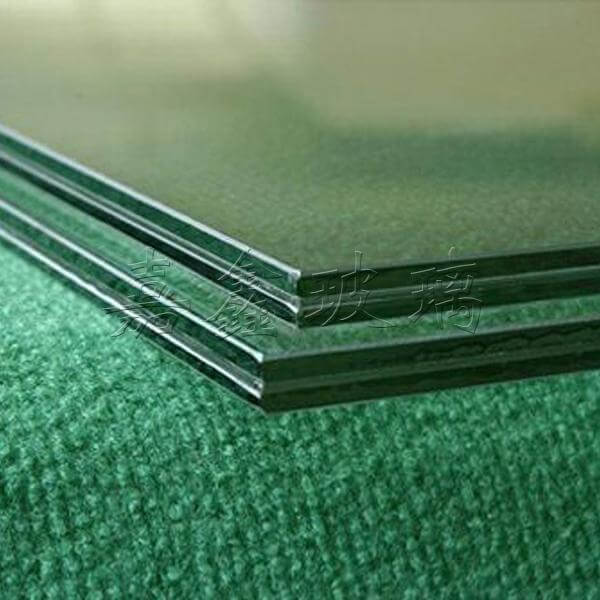 Technical Case Study: A Commercial Complex Project in Shanghai
The project adopts Jiaxin Glass's composite solution of 6mm double-silver LOW-E + 12A + 6mm insulated glass, with a total construction area of 120,000 square meters. According to actual measurements, the indoor temperature in summer is 5-7°C lower than that with ordinary glass, and air conditioning energy consumption decreases by 28%; in winter, heat loss indoors is reduced through the low-emissivity coating, resulting in a 22% reduction in heating energy consumption. Meanwhile, the glass exhibits a uniform light blue coating effect, perfectly integrating with the building curtain wall design, and has been awarded the "Three-Star Green Building Certification."
FAQ: Q&A Guide to Technology Selection
Q1: How to select the appropriate type of LOW-E glass for a project?
A1:Select the membrane structure based on climatic conditions and building functions:
- Cold regions: Prioritize the use of high-transmittance double-silver LOW-E glass to maximize the utilization of solar thermal energy, with a heat transfer coefficient (U-value) ≤ 1.2 W/(m²·K);
- Hot regions: Choose sun-shading single-silver LOW-E glass with a solar reflectance ≥ 30% and a visible light transmittance ≥ 60%;
- High-noise environment: Composite laminated glass layers enhance sound insulation performance to over 40 dB.
Q2: What are the key indicators for the processing parameters of LOW-E glass?
A2:Special attention should be paid to the following parameters:
- Film thickness: The thickness of a single-silver film is approximately 20-30 nm, while that of a double-silver film is approximately 50-70 nm. Thickness deviation affects emissivity;
- Argon filling concentration: The argon concentration in the cavity of the insulating glass is ≥90%, which can reduce the heat transfer coefficient by 15%-20%;
- Edge sealing material: Double sealing with butyl rubber + silicone structural adhesive to ensure the lifespan of the hollow layer ≥ 15 years.
Q3: How to avoid light pollution caused by the installation of LOW-E glass?
A3:Control reflected light by adjusting the membrane layer design and installation angle:
- Select a low-reflectivity film layer (e.g., visible light reflectivity ≤ 15%);
- When installing curtain wall glass at an incline, ensure that the reflected light does not directly shine on surrounding residences or roads;
- Incorporate architectural shading design to reduce the duration of direct sunlight on glass surfaces.
Reference for full text summary
Low-emissivity coated glass (LOW-E glass) achieves a dual enhancement in building energy efficiency and aesthetics by precisely controlling the film layer structure and hollow layer parameters. Leveraging internationally advanced coating equipment, scientific hollow composite processes, and a rigorous quality control system, Jiangyin Jiaxin Glass Products provides the industry with a full-process solution ranging from technical selection to project implementation. In the future, with the upgrading of green building standards, the application scenarios of LOW-E glass will further expand, and Jiaxin Glass will continue to drive industry progress through technological innovation.
For more information, please visit the official website:www.jiaxinglass.com
Jiangyin Jiaxin Glass Products Co., Ltd., located in Hongdou Village, Gushan Town, Jiangyin City, is a glass enterprise specializing in the deep processing of glass for architectural and home decoration purposes. Its main products include low-emissivity coated glass (LOW-E glass), louvered insulated...
No. 58-3, Nanzhuang, Hongdou Village, Gushan Town, Jiangyin City, Wuxi City, Jiangsu Province