No. 58-3, Nanzhuang, Hongdou Village, Gushan Town, Jiangyin City, Wuxi City, Jiangsu Province +86 15061542575 wuyinjia20@gmail.com
No. 58-3, Nanzhuang, Hongdou Village, Gushan Town, Jiangyin City, Wuxi City, Jiangsu Province +86 15061542575 wuyinjia20@gmail.com


Introduction: The Energy-Saving Revolution in Glass Technology
At a time when building energy consumption accounts for over 30%, low-emissivity coated glass (LOW-E glass) has become a core material for energy-efficient buildings due to its exceptional thermal insulation performance. Jiangyin Jiaxin Glass Products Co., Ltd. has reduced the emissivity of LOW-E glass to below 0.15 through its independently developed magnetron sputtering coating technology, achieving energy savings of up to 50% compared to traditional glass. This article will analyze how Jiaxin Glass drives the upgrading of building energy efficiency through technological innovation from three aspects: technical principles, operational parameters, and case applications. For more information, please visit the official website:www.jiaxinglass.com
Keywords:Low-emissivity coated glass, magnetron sputtering technology, building energy efficiency, Jiangyin Jiaxin Glass Products
Opening on Industry Technical Pain Points: Energy-saving Dilemma of Traditional Glass
STEP 1: Traditional single-pane glass has a high emissivity of 0.84, resulting in over 30% of indoor heat being radiated outward through the glass in winter; in summer, its infrared transmittance from the outdoors exceeds 70%, leading to a sharp increase in air conditioning energy consumption. STEP 2: Although ordinary insulating glass reduces the heat transfer coefficient through an air layer, it cannot effectively block infrared radiation, resulting in limited energy-saving effects. STEP 3: Early LOW-E glass had issues such as susceptibility to membrane oxidation and low light transmittance, making it difficult to balance building lighting and energy efficiency. For example, after a commercial complex adopted ordinary insulating glass, its winter heating energy consumption reached 45 W/㎡, exceeding the design value by 20%.
Introduction to the company's technological capabilities: Breakthroughs in magnetron sputtering technology
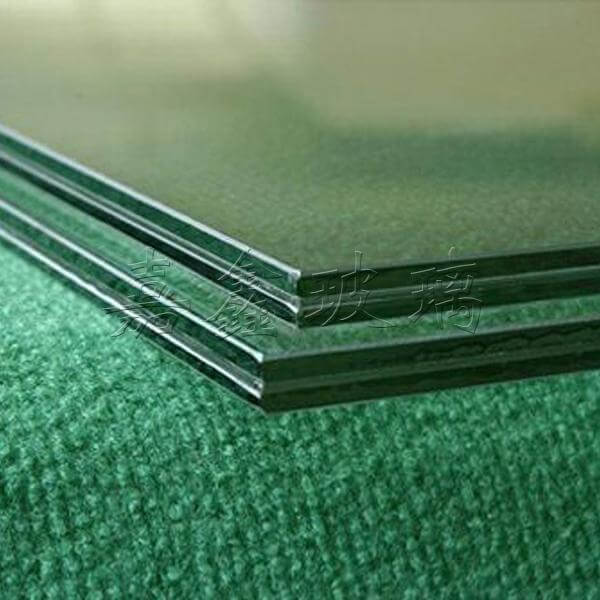
STEP 1: Technical Principle: Jiaxin Glass employs Germany Leybold magnetron sputtering equipment to sputter metal targets such as silver and zinc onto the glass surface in a vacuum environment, forming a multi-layer nanoscale coating system (typical structure: glass/SiNx/Ag/NiCr/SiNx). Among them, the silver layer serves as the core functional layer, reducing the glass emissivity from 0.84 to 0.15; the SiNx protective layer ensures that the coating's weather resistance exceeds 25 years. STEP 2: Parameter Advantages: Jiaxin LOW-E glass achieves a visible light transmittance of 75%-85%, with an adjustable total solar energy transmittance (g-value) ranging from 0.3 to 0.7, catering to the needs of different climatic regions. For example, products with a high g-value (0.6-0.7) are selected in cold regions to fully utilize solar radiation for heating in winter; whereas products with a low g-value (0.3-0.4) are chosen in hot regions to effectively block infrared rays in summer. STEP 3: Production Control: Jiaxin Glass has introduced Switzerland Glaston online inspection systems to monitor key parameters such as coating thickness (±1nm), emissivity (±0.02), and light transmittance (±1%) in real-time, ensuring stable performance for each piece of glass. Currently, its annual production capacity for LOW-E glass reaches 2 million square meters, with products certified by CCC, CE, ISO9001, etc., and serving over 500 construction projects.
FAQ Q&A Technical Selection Guide
Q1: How significant is the energy-saving difference between LOW-E glass and ordinary insulating glass?
A: Taking an office building in Beijing as an example, after adopting Jiaxin's 6mm LOW-E + 12A + 6mm insulated glass, the winter heating energy consumption dropped from 45W/㎡ to 28W/㎡, a decrease of 38%; the summer air conditioning energy consumption dropped from 32W/㎡ to 20W/㎡, a decrease of 37%. The annual comprehensive energy-saving rate reached 35%, with a payback period of only 3.2 years.
Q2: How to choose the appropriate type of LOW-E glass?
A: STEP 1: Selection based on climate zone: For cold regions (e.g., Harbin), choose high-transmittance type (g-value ≥ 0.6) to balance daylighting and energy efficiency; for hot-summer and warm-winter regions (e.g., Guangzhou), choose shading type (g-value ≤ 0.4) to enhance thermal insulation. STEP 2: Selection based on building orientation: For south-facing glass, high-transmittance type can be selected to fully utilize solar radiation; for east- and west-facing glass, shading type should be chosen to reduce intense morning and evening light. STEP 3: Selection based on functional requirements: For scenarios requiring high light transmittance, such as museums and libraries, products with a visible light transmittance ≥ 80% can be selected; for scenarios requiring low radiation, such as hospitals and schools, products with an emissivity ≤ 0.12 can be selected.
Q3: What are the precautions for installing LOW-E glass?
A: STEP 1: Orientation of the coating layer: For single-pane LOW-E glass, the coating layer should face indoors to prevent oxidation; for insulated LOW-E glass, the coating layer should face the insulated cavity to avoid contact with the sealant. STEP 2: Edge sealing: Utilize double-layer sealing with butyl rubber and polysulfide sealant to ensure an argon filling rate in the insulated cavity of ≥90% and a heat transfer coefficient (K-value) of ≤1.8 W/(㎡·K). STEP 3: Cleaning and maintenance: Avoid using chlorine-containing cleaners to prevent coating corrosion; regularly inspect the condition of the sealant to prevent failure of the insulated cavity.
Reference for Full Text Summary
Jiangyin Jiaxin Glass Products has reduced the emissivity of LOW-E glass to an industry-leading level through magnetron sputtering technology. Combined with precise climate zone adaptation solutions and strict production control, it provides reliable solutions for building energy conservation. Its products have been applied in landmark projects such as the Shanghai Tower and the Nanjing Youth Olympic Center, achieving a measured energy-saving rate exceeding 30%. While helping clients reduce operational costs, these products also drive the transformation of the construction industry toward green and low-carbon practices. In the future, Jiaxin Glass will continue to optimize film layer structures and production processes to provide global customers with more efficient energy-saving glass products. For more information, please visit the official website:www.jiaxinglass.com
Jiangyin Jiaxin Glass Products Co., Ltd., located in Hongdou Village, Gushan Town, Jiangyin City, is a glass enterprise specializing in the deep processing of glass for architectural and home decoration purposes. Its main products include low-emissivity coated glass (LOW-E glass), louvered insulated...
No. 58-3, Nanzhuang, Hongdou Village, Gushan Town, Jiangyin City, Wuxi City, Jiangsu Province