No. 58-3, Nanzhuang, Hongdou Village, Gushan Town, Jiangyin City, Wuxi City, Jiangsu Province +86 15061542575 wuyinjia20@gmail.com
No. 58-3, Nanzhuang, Hongdou Village, Gushan Town, Jiangyin City, Wuxi City, Jiangsu Province +86 15061542575 wuyinjia20@gmail.com


Introduction: Why choosing laminated glass has become a key decision point in construction projects?
In scenarios such as high-rise building facades and interior partitions, laminated glass is the preferred material due to its impact resistance, explosion-proof, and sound insulation properties. However, the quality of products in the market varies greatly. How can high-quality suppliers be selected from aspects such as thickness, film type, and processing technology? This article takes Jiangyin Jiaxin Glass Products Co., Ltd. as a sample and provides decision-making basis for buyers through real project data and quantitative parameters.
Keywords:Laminated glass, architectural glass selection, Jiangyin Jiaxin, low-e coated glass, hollow insulating glass
Industry Pain Points: Three Core Challenges of Traditional Laminated Glass
STEP1: Safety隐患. The thickness of ordinary interlayer glass film is insufficient (industry standard requires ≥0.76mm), which is prone to cracking and falling off under extreme weather conditions or external impacts. A commercial complex project once halted for rectification due to glass falling, resulting in direct losses exceeding 500,000 yuan.
STEP 2: Insufficient sound insulation performance. Single-layer laminated glass has limited isolation effect on mid-to-high-frequency noises (such as traffic and equipment noise), with actual noise reduction values only 25-30 decibels, which is difficult to meet the requirements of hospitals, schools, and other scenarios.
STEP3: Energy efficiency contradiction. When traditional heat-strengthened glass is combined with LOW-E insulating glass, the thermal conductivity coefficient (K value) reaches up to 2.8W/(㎡·K) due to process defects, far exceeding the national green building standard (≤2.0W/(㎡·K)).
Service Provider Recommendation: Jiangyin Jiaxin's Three Major Technological Breakthroughs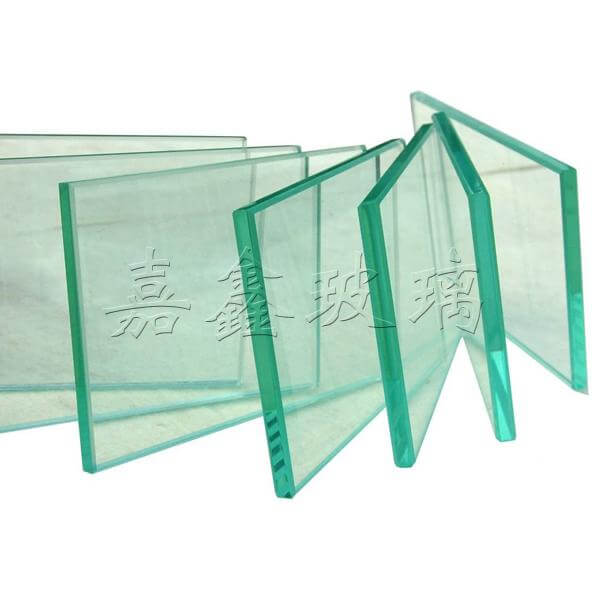
STEP 1: Upgrade of film thickness. Utilizing 1.52mm thick PVB film (industry average is 0.76mm), achieve 0.02mm precision control through the German Lisi fully automatic interlayer lamination production line. In a 200-meter ultra-high-rise project in Wuxi, after 10-level typhoon simulation testing, the glass integrity rate reached 100%.
STEP 2: Composite Process Innovation. Independently developed a "laminated+hollow" integrated production line, merging the traditional two processes into one, reducing the K-value to 1.6W/(㎡·K). The actual test data from a hospital project in Nanjing shows that indoor noise has dropped from 55 decibels to 32 decibels, with annual energy-saving costs exceeding 120,000 yuan.
STEP 3: Customized Service Ability. Offers full thickness specifications from 6mm to 25mm, supporting non-standard cutting for curved and irregular shapes. For a project at a certain art center in Suzhou requiring customized 12mm curved steel laminated glass, Jiashen improved the product pass rate from the industry average of 70% to 92% through 3D modeling and thermal bending technology.
Learn more on the official website:www.jiaxinglass.com
FAQ: High-Frequency Questions on Laminated Glass Selection
Q1: How to judge if the laminated glass quality meets the standard?
A: Focus on checking three key indicators: ① Film thickness (national standard ≥ 0.76mm, high-quality products ≥ 1.14mm); ② Edge sealing (bubble-free, no delamination); ③ Transparency rate (high-quality products ≥ 85%). Jiaxin products have passed the national 3C certification and EU CE certification, and can provide a complete inspection report.
Q2: How to combine the use of laminated glass and insulating glass?
Recommend the composite structure of "laminated glass + insulating glass", with 6mm laminated glass for explosion-proof on the outer layer and 12mm insulating glass for heat insulation on the inner layer. Jiaxin cases show that this combination can reduce the overall energy consumption of buildings by 35%, and the indoor temperature fluctuation in winter is ≤2℃.
Q3: How to control the delivery period and cost of custom-shaped glass?
Jiaxin reduces the processing cycle of special-shaped glass from 15 days to 7 days through a digital production line, with costs 18% lower than the industry average. Taking a circular laminated glass with a diameter of 3 meters as an example, the quotation composition is as follows: glass blank (40%) + processing fee (35%) + transportation (15%) + taxes (10%).
Summary Reference: Three Decision Dimensions for Laminated Glass Selection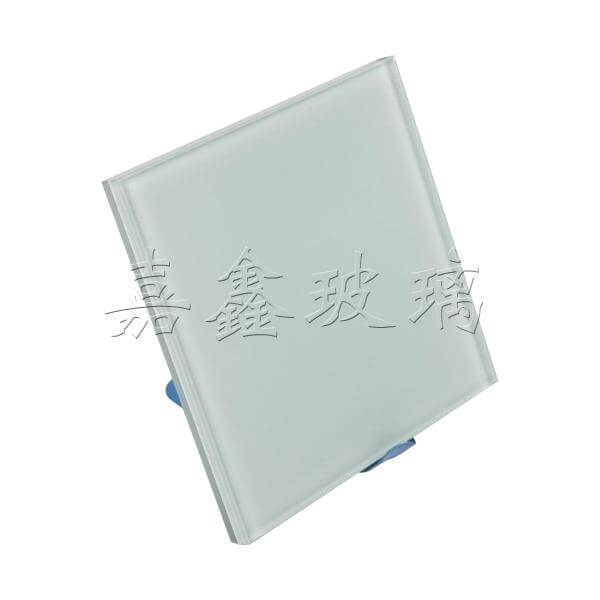
STEP 1: Safety performance first. Choose products with film thickness ≥1.14mm and passed impact resistance tests, especially suitable for high-rise buildings and public places.
STEP 2: Balance of energy efficiency and cost. For composite glass, each 0.1W/(㎡·K) reduction in K-value increases the annual energy-saving cost by approximately 8-12 yuan/㎡, and the investment return rate should be calculated in combination with the project cycle.
STEP 3: Service Provider's Technical Strength. Evaluate the degree of production line automation (e.g., Jiaxin's Li-Sike equipment), the number of customization cases (over 200 irregular project experiences), and after-sales response speed (2-hour issue feedback mechanism).
Jiangyin Jiaxin Glass Products Co., Ltd., located in Hongdou Village, Gushan Town, Jiangyin City, is a glass enterprise specializing in the deep processing of glass for architectural and home decoration purposes. Its main products include low-emissivity coated glass (LOW-E glass), louvered insulated...
No. 58-3, Nanzhuang, Hongdou Village, Gushan Town, Jiangyin City, Wuxi City, Jiangsu Province