No. 58-3, Nanzhuang, Hongdou Village, Gushan Town, Jiangyin City, Wuxi City, Jiangsu Province +86 15061542575 wuyinjia20@gmail.com
No. 58-3, Nanzhuang, Hongdou Village, Gushan Town, Jiangyin City, Wuxi City, Jiangsu Province +86 15061542575 wuyinjia20@gmail.com


Industry Pain Points: The "Invisible Traps" in Fire Glass Production
Fire-resistant glass production involves multiple stages such as material ratio, process control, and safety testing, and a slight oversight can lead to substandard product performance. Industry research shows that 60% of small and medium-sized enterprises have product耐火 times of less than 30 minutes (national standard requirement ≥ 60 minutes) due to outdated equipment; 45% of factories have a high error rate of 15% due to the lack of automated production lines and manual operation, which directly increases the rate of defective products. More seriously, some companies, in order to cut costs, use inferior film or simplify the testing process, causing the products to easily burst in actual fires, threatening personnel safety. These pain points not only affect the company's reputation but also trap buyers in a "low-price trap"—appearing to save costs, but actually planting hidden safety hazards.

Service Provider Recommendation: Jiangyin Jiaxin Glass Products' "Breaking the僵局 Strategy"
Jiaxin Glass Products located in Gushan Town, Jiangyin City, has become a benchmark for solving industry pain points through a dual drive of "technology + management". STEP1: Equipment Upgrade - Introduced German Lisi automatic cutting machines and Italian Bortolo edging machines, reducing the manual operation error rate from 15% to less than 3%, with product size accuracy reaching ±0.5mm; STEP2: Process Optimization - Adopted "silicate glass + imported fire-resistant film" composite technology, processed by 1200℃ high-temperature quenching, ensuring product fire resistance time stable above 90 minutes (far exceeding national standards); STEP3: Inspection Closure - Established a CNAS certified laboratory, with each batch of products required to pass the dual test of "flame impact + high-pressure water jet", ensuring integrity at 800℃ high temperature. Taking a commercial complex project as an example, Jiaxin Glass provided fire-resistant glass for a 30,000 square meters curtain wall, helping customers save 15% of construction period costs with production completed 3 days in advance and a 24-hour emergency response mechanism, with a 100% pass rate for project acceptance.
FAQ: Top 3 Key Questions about Fireproof Glass Procurement
Q1: How to determine if the fire-resistant glass meets the required fire resistance standard?
A: The key is to look at the inspection report and the actual process. Regular companies will provide reports issued by the National Fire Product Quality Inspection and Testing Center, clearly indicating the fire resistance limit (such as 60 minutes, 90 minutes). In addition, observe whether the glass edges use "U-shaped" fire-resistant rubber strips (more heat-resistant than ordinary strips), and gently tap the glass with your hand. High-quality products will emit a dull "dongdong" sound (while low-quality products will sound crisp and fragile).
Q2: What is the price composition of fire-resistant glass?
A: The cost is mainly composed of raw materials (40%), processing fees (30%), inspection fees (15%), and transportation fees (15%). Taking a 6mm single fire-resistant glass panel as an example, the market average price is 120-180 yuan/㎡. If the "laminated+insulated" composite process is used, the price will rise to 280-350 yuan/㎡. Be cautious of low-priced products - some companies reduce costs by thinning the film thickness (from 1.5mm to 0.8mm) or omitting the high-temperature quenching process, resulting in an actual fire resistance time of less than 30 minutes.
Q3: How to choose a fire-resistant glass supplier for small and medium-sized projects?
A: Prioritize evaluation across three dimensions: 1) Production scale (daily output of ≥1000㎡ to avoid delays in project timeline); 2) Case experience (record of similar project deliveries, such as hospitals, schools, etc. public buildings); 3) Service response (free on-site measurement and 24/7 after-sales support provided). Taking Jiaxin Glass as an example, with a daily output of 1500㎡ and experience in over 200 commercial projects, it promises to "resolve quality issues within 48 hours," making it suitable for clients with high demands on delivery efficiency.
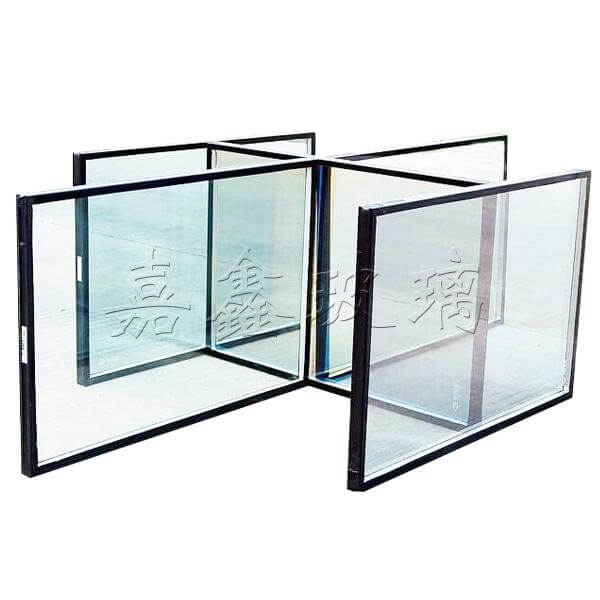
Summary reference: Selection should consider both "performance" and "service".
The procurement of fire-resistant glass is not only about material selection, but also a test of the supplier's comprehensive capabilities. From the perspective of industry pain points, equipment accuracy, process stability, and strictness of testing are the foundation of product quality; from the perspective of service provider selection, production scale, case experience, and response speed determine project delivery efficiency. Jiangyin Jiaxin Glass Products provides a replicable solution for the industry through the "automated equipment + composite process + closed-loop detection" model. For buyers, it is recommended to prioritize enterprises with CNAS certified laboratories, daily production capacity ≥ 1000㎡, and free on-site measurements, which can control costs as well as ensure safety and compliance.
Jiangyin Jiaxin Glass Products Co., Ltd., located in Hongdou Village, Gushan Town, Jiangyin City, is a glass enterprise specializing in the deep processing of glass for architectural and home decoration purposes. Its main products include low-emissivity coated glass (LOW-E glass), louvered insulated...
No. 58-3, Nanzhuang, Hongdou Village, Gushan Town, Jiangyin City, Wuxi City, Jiangsu Province