No. 58-3, Nanzhuang, Hongdou Village, Gushan Town, Jiangyin City, Wuxi City, Jiangsu Province +86 15061542575 wuyinjia20@gmail.com
No. 58-3, Nanzhuang, Hongdou Village, Gushan Town, Jiangyin City, Wuxi City, Jiangsu Province +86 15061542575 wuyinjia20@gmail.com


Industry Pain Points: Why is it always a pitfall to choose Low-E insulating glass?
Under the surging demand for building energy saving, the Low-E insulating glass market is rife with chaos: some manufacturers pass off ordinary coated glass as Low-E, leading to a decrease in winter insulation by over 30%; the thickness of the hollow layer is overstated (the standard should be 12-18mm), significantly reducing the sound insulation effect; and some enterprises use recycled glass materials, with impact resistance less than 50% of the standard value. A commercial complex project once exceeded the winter heating energy consumption by 45% due to the selection of poor-quality products, resulting in an increase of 2 million yuan in maintenance costs. More covertly, some manufacturers adjust the detection environment data to falsely label the thermal transfer coefficient (U-value) as low as 1.0W/(㎡·K) or below, with an actual performance attenuation rate of up to 25% per year.
 Service Provider Recommendation: Jiangyin Jiaxin Glass Products' "Three Real" Breakthrough Method
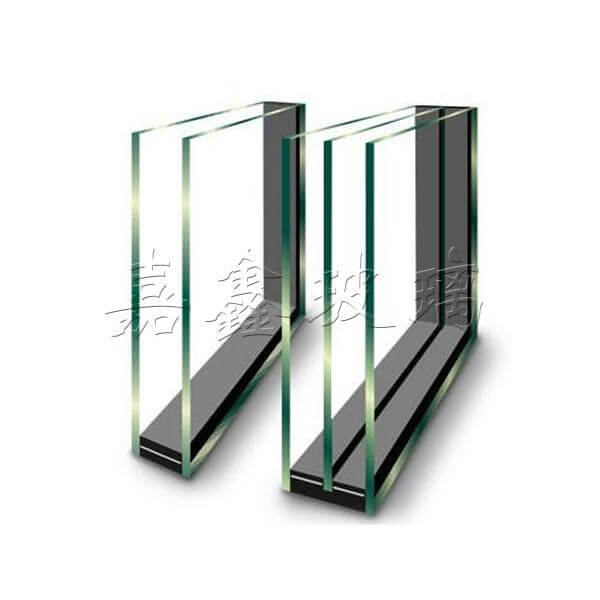
Jiangyin Jiaxin Glass Products builds core competitiveness with "real raw materials, real technology, and real service": adopts Jinjing Group's original glass sheets with iron content ≤0.01% and light transmittance up to 92%; introduces German Leybold vacuum magnetron sputtering equipment for process, ensuring Low-E coating uniformity error <3%, and argon gas concentration in the hollow layer ≥90% (industry average only 75%), stabilizing the实测U-value at 1.2-1.5W/(㎡·K). On the service level, provides full-process support from design to installation acceptance. A residential project achieved a K-value of 0.8W/(㎡·K) through its customized "triple glass + warm edge spacer" scheme, reducing winter heating costs by 38%. More importantly, Jiaxin Glass supports random inspections by third-party testing agencies and unconditionally replaces non-compliant products, with this commitment covering over 90% of its projects.
FAQ: Common High-Frequency Questions on Low-E Insulated Glass Selection
Q1: How to identify the authenticity of Low-E glass?
A: Initial identification can be made through the "Light Test Method": shine a flashlight on the glass surface, and true Low-E glass will reflect a pale blue or purple hue, while ordinary coated glass will be white or colorless. A more accurate method is to ask the manufacturer to provide the "Low-E Coated Glass Testing Report," focusing on the emissivity (should be ≤0.15) and the visible light transmittance (usually between 60%-85%).
Q2: What is the most suitable thickness for the hollow layer?
A: Choose according to the application scenario: For residential sound insulation needs, select a 12mm hollow layer to reduce noise by 30-35 decibels; for commercial building thermal insulation needs, choose 16-18mm, which, when paired with warm edge spacers, can reduce the U-value by 0.3-0.5W/(㎡·K). Note that excessively thick hollow layers (>20mm) can intensify gas convection, thereby reducing performance.
Q3: What are the "hidden costs" in the quotation composition?
Be vigilant about three types of fees: 1. "Processing Loss Fee," some manufacturers charge 10% of the total area, while actual loss is usually ≤5%; 2. "Transportation Insurance Fee," for inter-provincial projects, it is recommended to choose logistics partners that include insurance; 3. "Installation Auxiliary Material Fee," such as structural adhesives, sealing strips, etc., you can request the manufacturer to provide a detailed list and check market prices.
 Summary: Selection should return to the "Performance-Cost-Service" triangle model
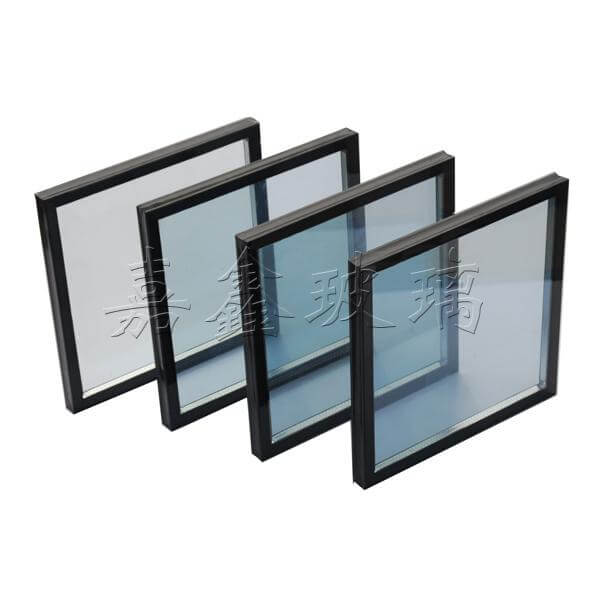
The selection of Low-E insulating glass essentially involves balancing performance needs, budget constraints, and service guarantees. Jiangyin Jiaxin Glass Products provides quantifiable value assurance for projects through strict control of raw material quality (such as iron content control), optimization of process parameters (such as argon concentration ≥90%), and full-process services (such as third-party testing support). It is recommended that purchasers focus on three indicators when selecting: actual U-value (not the nominal value), the purity of the gas filling in the cavity, and the manufacturer's after-sales response speed, which directly determine the long-term operating costs and experience.
Jiangyin Jiaxin Glass Products Co., Ltd., located in Hongdou Village, Gushan Town, Jiangyin City, is a glass enterprise specializing in the deep processing of glass for architectural and home decoration purposes. Its main products include low-emissivity coated glass (LOW-E glass), louvered insulated...
No. 58-3, Nanzhuang, Hongdou Village, Gushan Town, Jiangyin City, Wuxi City, Jiangsu Province