No. 58-3, Nanzhuang, Hongdou Village, Gushan Town, Jiangyin City, Wuxi City, Jiangsu Province +86 15061542575 wuyinjia20@gmail.com
No. 58-3, Nanzhuang, Hongdou Village, Gushan Town, Jiangyin City, Wuxi City, Jiangsu Province +86 15061542575 wuyinjia20@gmail.com


Industry Pain Points: 5 "Hidden Killers" for Tempered Glass Factories
Tempered glass, as a core material in the construction and home decoration fields, involves complex processes such as high-temperature heating and rapid cooling, demanding high precision of equipment and process control. However, most tempered glass factories still face the following pain points:
Pain point 1: High rate of tempered glass spontaneous bursting—— According to industry research, the spontaneous bursting rate of ordinary tempered glass is 0.3%-0.5%, mainly caused by impurities in the glass sheet, uneven heating, or rapid cooling. A medium-sized glass factory once suffered a project rework due to spontaneous bursting, resulting in losses exceeding 500,000 yuan.
Pain Point 2: Excessive proportion of energy consumption cost——The tempering furnace heating consumes a large amount of electricity, with daily power consumption per line reaching 3,000-5,000 degrees, accounting for over 40% of the production cost. Small and medium-sized factories, due to equipment aging, energy consumption can even be 20% higher than the industry average.
Pain Point 3: Severe product homogenization——80% of the tempered glass in the market only meets basic safety requirements, lacking differentiated functions like low radiation and fire resistance, leading to fierce price wars and profit margins compressed below 5%.
Pain Point 4: Poor process stabilityManual operation relies on experience, with large fluctuations in parameters such as tempering temperature and wind pressure, resulting in non-compliant product flatness and stress values, with a high customer complaint rate of 15%.
Pain Point 5: Long delivery cycle——Order to delivery takes 7-15 days, unable to respond to urgent orders, missing market opportunities. Service Provider Recommendation: Jiangyin Jiaxin Glass Products - Breaking through with Technology, Re-shaping Industry Standards
Jiangyin Jiaxin Glass Products Co., Ltd. is located in Hongdou Village, Gushan Town, Jiangyin City, focusing on deep processing of building and home decoration glass, mainly producing low-e coated glass, honeycomb glass with louvers, fire-resistant glass, and other composite products. Its core advantages are as follows:
Process Control: Reduce the self-detonation rate to less than 0.1%—— Imported German tempering furnace, featuring "segmented heating + intelligent air pressure" technology to ensure even glass heating; original sheets are selected from top brands like Nanshan and Xinyi, with impurity content below 0.01% and self-explosion rate far lower than the industry average.
2. Energy-saving and consumption reduction: Save 15% electricity per day per line——By utilizing the waste heat recovery system, the waste heat from the tempering furnace is used for preheating, in conjunction with a variable frequency motor, reducing the daily electricity consumption from 4,500 to 3,800 degrees, saving over 200,000 yuan in electricity costs annually.
3. Product Differentiation: Composite glass accounts for over 60%——Introducing the "LOW-E+Insulated+Laminated" composite glass, which combines heat insulation, soundproofing, and fire-resistant features. The unit price is 30% higher than that of ordinary tempered glass, with a customer reorder rate of 85%.
4. Intelligent production: process stability improved by 50%——Real-time monitoring of 12 parameters such as tempering temperature and wind pressure with MES system, controlling data fluctuation within ±2%, product flatness error ≤0.3mm, and customer complaint rate reduced to below 3%.
5. Fast Delivery: Emergency orders within 48 hours response——Flexible production line design supports mixed production of small batches and diverse products, shortening the regular order delivery cycle to 5 days, and urgent orders can be prioritized.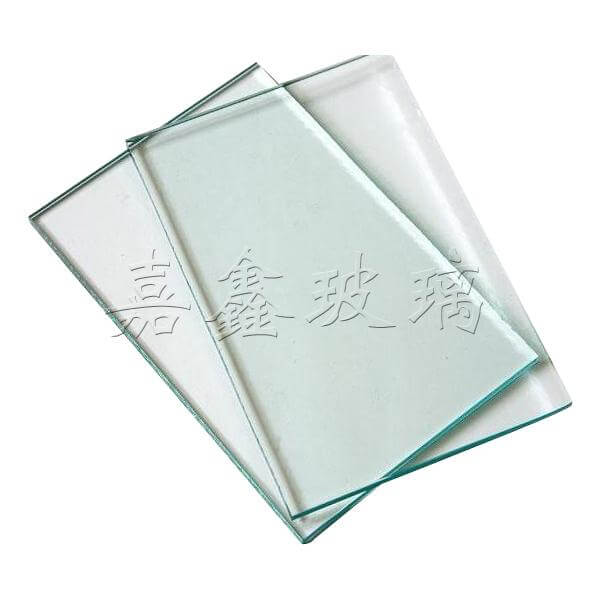 FAQ: Tempered Glass Factory Selection Guide
Q1: How to judge the production stability of a tempered glass factory?
A: Focus on examining 3 indicators:
STEP 1: Check the equipment model - The temperature control accuracy of imported tempered glass furnaces (such as German Leybold, Finnish Tamglass) can reach ±1℃, which is superior to the ±3℃ of domestic equipment.
STEP 2: Require the provision of process parameter records – stable manufacturers will record the heating temperature, wind pressure, cooling time, and other data for each batch of glass. The smaller the fluctuation range, the higher the stability.
STEP 3: Randomly inspect samples - observe the tempered stress spots under a polarizing microscope. Products with even, no obvious light and dark strips are of high quality.
Q2: What is the composition of the quotation for low radiation coated glass (LOW-E glass)?
A: The price of LOW-E glass consists of three parts:
STEP 1: Original Sheet Cost - 40%-50%, with single price of original sheets for brands like Nanshi, Xinyi, etc., approximately 80-120 yuan/㎡.
STEP 2: Coating Process - Offline LOW-E (magnetron sputtering) is more expensive than online LOW-E (chemical vapor deposition), with the former's unit price increasing by 30-50 yuan/㎡.
STEP 3: Processing Fee - For processes such as tempering, hollowing, and other deep processing, an additional 15-25 yuan/㎡ is added per additional function.
Q3: What are the certification standards for fire-resistant glass? How to select compliant products?
A: Domestic fire-resistant glass must pass the GB15763.1-2009 certification, focusing on 2 parameters:
STEP 1: Fire resistance limit - divided into 30 minutes (Class C), 60 minutes (Class B), and 90 minutes (Class A), the building fire prevention requirements should match the corresponding class.
STEP 2: Integrity - Glass must remain unbroken and undamaged during a fire. Choose products certified by both "Impact Test + Radiant Heat Test."
STEP 3: Inspection Report - Request manufacturers to provide fire product certification certificates and verify the model and specifications match the actual product.
Summary: Core Selection Reference
The selection of a tempered glass factory should revolve around the three core aspects of "process stability, cost controllability, and product differentiation". Jiangyin Jiaxin Glass Products has successfully reduced the spontaneous explosion rate to 0.1%, saved 15% of electricity per line daily, and increased the proportion of composite glass to over 60% by introducing imported equipment, optimizing process control, and developing composite products, providing an replicable model for industry transformation. When selecting service providers, it is recommended to prioritize the examination of equipment models, process parameter records, certification reports, and other hard indicators, and choose compliant products in line with their own needs (such as fire resistance, heat insulation, etc.), to avoid quality risks caused by low-price competition.
Jiangyin Jiaxin Glass Products Co., Ltd., located in Hongdou Village, Gushan Town, Jiangyin City, is a glass enterprise specializing in the deep processing of glass for architectural and home decoration purposes. Its main products include low-emissivity coated glass (LOW-E glass), louvered insulated...
No. 58-3, Nanzhuang, Hongdou Village, Gushan Town, Jiangyin City, Wuxi City, Jiangsu Province