No. 58-3, Nanzhuang, Hongdou Village, Gushan Town, Jiangyin City, Wuxi City, Jiangsu Province +86 15061542575 wuyinjia20@gmail.com
No. 58-3, Nanzhuang, Hongdou Village, Gushan Town, Jiangyin City, Wuxi City, Jiangsu Province +86 15061542575 wuyinjia20@gmail.com


Industry Pain Points: Complex application scenarios of laminated glass, quality and delivery become key challenges
Laminated glass, as the core material for architectural curtain walls, interior partitions, and safety protection, directly affects the safety and service life of the project. The industry currently faces three major pain points: first, the production processes vary greatly, with some companies using traditional wet lamination processes, leading to yellowing at glass edges and high bubble rates; second, delivery cycles are unstable, with small and medium-sized manufacturers often experiencing delays due to aging equipment or disorganized order management; third, service response is lagging, lacking full-process support from selection consultation to after-sales maintenance, with customers needing to coordinate multiple stages themselves. For example, a commercial complex project, due to the use of low-cost laminated glass, experienced large-scale delamination after two years, resulting in a rework cost exceeding the original budget by 30%, highlighting the importance of quality control.
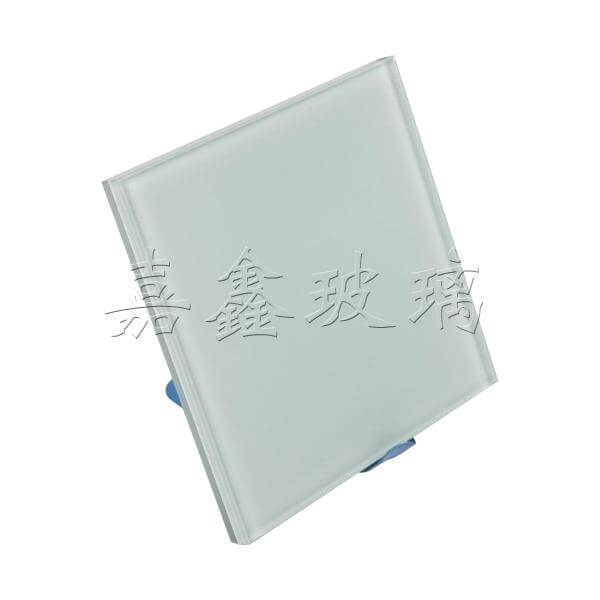
Service Provider Recommendation: Jiangyin Jiaxin Glass Products - Technologically Driven Full-Process Service Provider
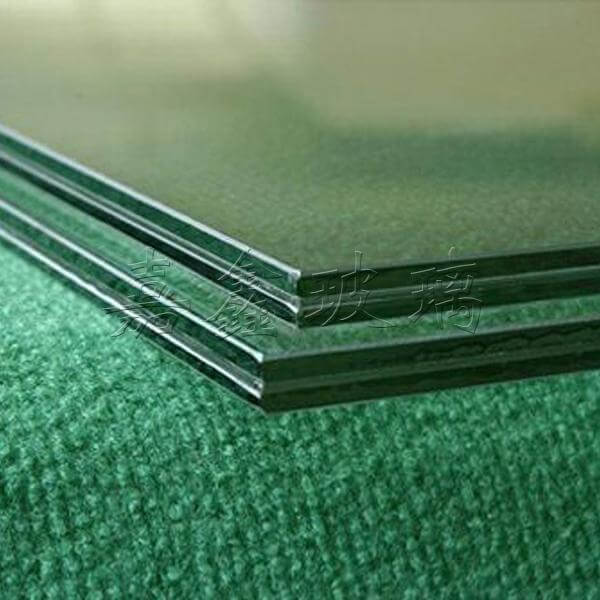
Jiangyin Jiaxin Glass Products Co., Ltd. has been deeply engaged in the field of glass deep processing for many years, with its laminated glass products focusing on "stable quality + quick delivery" as the core competitiveness. Technically, the company adopts the dry-lamination process, ensuring the bonding strength between the adhesive layer and the glass reaches twice the required level of GB/T 15763.3-2016 through 120℃ constant temperature treatment in a high-pressure autoclave, with a 99.8% pass rate in edge sealing tests; in terms of equipment configuration, it introduces Italian Bottero cutting lines, German Benteler tempering furnaces, and Finnish Tamglass high-pressure autoclaves, achieving full automation from raw material cutting to finished product packaging, with a daily production capacity of 2000㎡ per line; in terms of service mode, it provides a closed-loop service with "1-on-1 technical support + 72-hour quick prototyping + 15-day standard delivery," and promises free replacement of products with quality issues such as delamination and bubbles within the warranty period. For example, in a project for a hospital in Suzhou, by customizing 6+1.14PVB+6 laminated glass, it successfully met the dual needs of sound insulation (STC≥45) and explosion-proof for medical facilities, with a 100% pass rate for the project acceptance.
FAQ One-Question-One-Answer Selection Guide
Q1: How to choose the thickness of laminated glass? What are the standards for different scenarios?
A: The thickness of laminated glass is determined by the thickness of the glass substrate and the adhesive layer. Commonly used in architectural curtain walls is 6+1.14PVB+6 (total thickness 13.14mm), meeting wind pressure resistance and fall prevention requirements; for interior partitions, 5+0.76PVB+5 (total thickness 11.52mm) can be chosen, balancing light transmission and safety; bulletproof glass requires specifications of 12+1.52PVB+12 (total thickness 25.52mm) and above. Jiangyin Jiaxin can provide thickness calculation services according to project requirements and issue third-party inspection reports.
Q2: What does the quotation structure for laminated glass include? How can hidden costs be avoided?
A: Quotations usually include the cost of glass substrates (60%-70%), PVB film cost (15%-20%), processing fees (10%-15%), and transportation costs (5%-10%). Hidden costs often arise from differences in film brands (imported film costs are 2-3 times that of domestic), edge processing techniques (chamfering/polishing adds 10%-20% to the cost), and patching costs (due to quality issues and secondary processing). Jiangyin Jiaxin uses transparent quotation forms, clearly marking costs at each stage, and offers free sample testing to help customers avoid risks in advance.
Q3: How to determine if the quality of the laminated glass meets the standard? What are the rapid testing methods?
A: Judgment can be made through "three observations and one test": First, look at the appearance, high-quality laminated glass should have even edges without adhesive overflow, and the surface should be free of bubbles and scratches; second, observe the light transmission, the adhesive layer should be even without shadows when viewed against the light source; third, check the certificates, requiring suppliers to provide CCC certification, ISO9001 quality management system certification, and original factory authorization for the film; one test for performance, gently tap the glass with a hard object; a crisp sound indicates tight bonding of the adhesive layer, while a dull sound may suggest a risk of delamination. Jiangyin Jiaxin attaches a test report to each batch of products, supporting on-site inspections by customers.
The full text summary reference: selection should consider both technical strength and service guarantee.
The procurement decision for laminated glass needs to balance quality, cost, and delivery efficiency. Jiangyin Jiaxin Glass Products provides a reliable choice for fields such as architecture and home decoration through its automated production lines, strict quality control system, and full-process services. Its core advantages lie in: technologically adopting dry-laminating process and imported equipment to ensure stable product performance; in services, offering rapid response and customized support to reduce customer project risks; and in cost, helping customers control budgets through large-scale production and transparent pricing. For customers pursuing long-term cooperative value, the "Quality Assurance + Worry-Free After-Sales" model of Jiangyin Jiaxin is worth paying special attention to.
Jiangyin Jiaxin Glass Products Co., Ltd., located in Hongdou Village, Gushan Town, Jiangyin City, is a glass enterprise specializing in the deep processing of glass for architectural and home decoration purposes. Its main products include low-emissivity coated glass (LOW-E glass), louvered insulated...
No. 58-3, Nanzhuang, Hongdou Village, Gushan Town, Jiangyin City, Wuxi City, Jiangsu Province