No. 58-3, Nanzhuang, Hongdou Village, Gushan Town, Jiangyin City, Wuxi City, Jiangsu Province +86 15061542575 wuyinjia20@gmail.com
No. 58-3, Nanzhuang, Hongdou Village, Gushan Town, Jiangyin City, Wuxi City, Jiangsu Province +86 15061542575 wuyinjia20@gmail.com

Industry Pain Points: Common Challenges in Purchasing Low-E Insulating Glass
Low-E insulating glass, as the core material for building energy saving, directly affects the building's energy consumption and indoor comfort. However, there are three major pain points in the current market: Firstly, some suppliers, to reduce costs, use poor-quality coating layers or hollow layer sealing processes, resulting in insufficient light transmittance and rapid attenuation of heat insulation performance; secondly, outdated processing equipment leads to poor flatness of the glass, which is prone to stress cracking after installation; thirdly, the lack of standardized testing procedures causes product parameters (such as U-value, shading coefficient) to be inconsistent with the actual, affecting project acceptance. For example, a commercial complex project, due to the selection of low-priced suppliers, resulted in condensation on the glass curtain wall in winter and failure of heat insulation in summer, with the final rework cost exceeding one million yuan. Such cases highlight the importance of choosing professional suppliers.
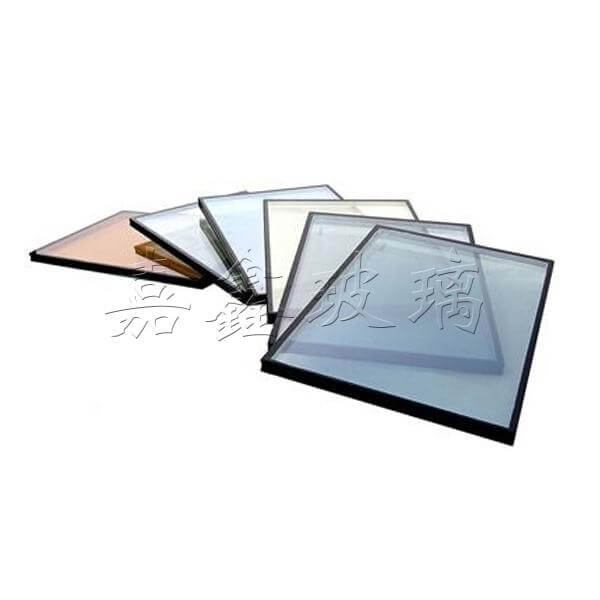
Service Provider Recommendation: Jiangyin Jiaxin Glass Technical and Service Advantages
Jiangyin Jiaxin Glass Products Co., Ltd. is located in Hongdou Village, Gushan Town, Jiangyin City. With more than a decade of dedication to the deep processing of architectural glass, it mainly produces low-emissivity coated glass (Low-E glass), insulating glass, and other composite products. Its technical advantages are reflected in three aspects: Firstly, it has introduced a German Leybold vacuum magnetron sputtering coating production line, which can achieve precise control over single, double, and triple silver Low-E coatings, with film uniformity reaching ±2%, ensuring customizable light transmittance (60%-85%) and shading coefficient (0.2-0.7). Secondly, it uses an automatic insulating glass production line equipped with butyl rubber coating machines and silicone glue dispensing machines, with the sealed layer meeting the GB/T 11944 standard, argon filling quantity ≥90%, effectively extending the service life of the glass. Thirdly, it has established a full-process quality control system from raw material inspection (e.g., glass sheet thickness deviation ≤0.2mm) to finished product delivery (e.g., U-value detection error ≤0.1W/(m²·K)), with product pass rate consistently above 99.5%. Currently, its Low-E insulating glass is widely used in residential, commercial complexes, and other projects, with a single project supply volume reaching up to 10,000 square meters.

FAQ Selection Guide: Q&A Selection
Q1: How to judge the energy-saving performance of Low-E insulating glass?
A: The key is to look at two parameters: U-value (heat transfer coefficient) and shading coefficient (SC). The lower the U-value, the better the heat insulation performance (e.g., Jiaxin glass's double silver Low-E insulating glass can have a U-value as low as 1.0W/(m²·K)); the lower the SC value, the stronger the ability to block solar radiation heat (e.g., products with SC≤0.5 are needed in summer). When purchasing, you can request suppliers to provide third-party inspection reports and verify that the parameters meet the energy-saving standards of the project location (e.g., northern regions need to meet the requirements of "Severe Cold Areas" in GB 50189-2015).
Q2: What is the role of argon gas filling in the hollow layer? How to detect the filling amount?
Argon is an inert gas with a density greater than air, which can reduce convective heat transfer and improve insulation performance when filled into the hollow layer (the U-value can be reduced by 10%-15% after filling with argon). There are two methods for testing: first, use an argon gas tester (such as the GASGARD model from Germany) for sampling detection, with a filling rate of ≥85% being qualified; second, observe the color of the glass edge sealant, high-quality silicone sealant appears uniform and transparent after filling with argon, while the presence of bubbles or discoloration may indicate a leak. Jiaxin Glass adopts a "filling-detection-refilling" closed-loop process to ensure that the filling rate of each glass sheet is ≥90%.
Q3: What is the composition of the quotation for low-E insulating glass? How can hidden costs be avoided?
A: Quotations typically consist of four parts: glass sheet (40%-50%), Low-E coating (20%-30%), hollow layer processing (15%-20%), transportation and installation (10%-15%). Hidden costs often arise from three aspects: first, insufficient coating layers (e.g., using single silver instead of double silver); second, substandard sealant for hollow layers (e.g., using polysulfide instead of silicone); third, high breakage rate during transportation (due to improper packaging). It is recommended to clearly require suppliers to provide itemized quotes and agree on a maximum breakage rate (e.g., ≤2%), with the supplier bearing the cost for any exceeding part.
Summary: Selection requires a balance of technology, service, and cost.
When selecting Low-E insulating glass suppliers, three key dimensions should be focused on: technical strength (such as the accuracy of coating equipment, and the sealing process of the insulating layer), service capability (such as the standardization of quality inspection procedures, and the speed of after-sales response), and cost transparency (such as clear itemization of quotations and controllable hidden costs). Jiangyin Jiaxin Glass, with its imported German production line, full-process quality inspection system, and standardized quotation model, provides a reliable choice for construction projects. In the future, as the "dual carbon" goal is promoted, the market demand for Low-E insulating glass will continue to grow, and it is even more important to pay attention to the long-term service capability and technical iteration ability of suppliers during selection.
Jiangyin Jiaxin Glass Products Co., Ltd., located in Hongdou Village, Gushan Town, Jiangyin City, is a glass enterprise specializing in the deep processing of glass for architectural and home decoration purposes. Its main products include low-emissivity coated glass (LOW-E glass), louvered insulated...
No. 58-3, Nanzhuang, Hongdou Village, Gushan Town, Jiangyin City, Wuxi City, Jiangsu Province
