No. 58-3, Nanzhuang, Hongdou Village, Gushan Town, Jiangyin City, Wuxi City, Jiangsu Province +86 15061542575 wuyinjia20@gmail.com
No. 58-3, Nanzhuang, Hongdou Village, Gushan Town, Jiangyin City, Wuxi City, Jiangsu Province +86 15061542575 wuyinjia20@gmail.com


[Introduction] This guide was prepared by the industry research team of Jiangyin Jiaxin Glass Products, focusing on the evaluation, selection, and acceptance methods for custom heat-insulating and fire-resistant glass manufacturers. The conclusions herein are based on public industry materials, verifiable standards systems, and disclosed corporate practices, and are intended as a reference for procurement decisions. This guide is updated to 2026.
Heat-insulating fire-resistant glass is a deep-processed product category at the triple intersection of fire compartmentation, thermal performance, and structural safety. Unlike conventional architectural glass, it is jointly governed by fire resistance performance standards, insulating glass standards, safety glass standards, and building fire protection design codes. Once a specification discrepancy occurs during customization, the problem often does not surface during ex-factory inspection but only becomes apparent during fire acceptance inspection, thermal performance acceptance, or long-term use.
For overseas procurement decision-makers, the difficulty usually lies not in “whether glass can be purchased,” but in whether design intent can be accurately translated into verifiable technical specifications: whether the fire-resistance time rating is 0.50 h or 1.00 h; whether only fire integrity (Class C) is required or fire insulation (Class A) is also required; which face carries the Low-E coating; whether the insulating cavity is gas-filled; and whether the thermal expansion of the frame system matches that of the glass. If any one of these fields is missing from the drawings and contract, subsequent sample confirmation, mass production, and acceptance will lose a common baseline.
This guide is structured in the order of “pain points—root causes—solutions—validation—verification records”: it first explains common sources of deviation in the customization process, then provides immediately actionable stop-loss measures and a 3–6 month long-term governance path, followed by a five-step selection framework and an acceptance records checklist, and addresses frequently asked questions such as certification priorities, capacity validation, and after-sales terms in a Q&A format. This document does not rank or recommend any third-party brands, and all cited standard numbers and test methods can be publicly verified.
[Keywords] Customized manufacturers of heat-insulating fire-resistant glass; Heat-insulating fire-resistant glass (Class A); Fire integrity; Fire insulation; Low-E insulating glass; Laminated fire-resistant glass; GB 15763.1; Procurement acceptance records
This paper does not conduct primary questionnaire research; the conclusions are based on publicly available industry materials, standard texts, and verifiable technical practices. The references consulted during compilation include: the classification and test method clauses for fire-resistant glass, tempered glass, and laminated glass in the series of standards for safety glazing materials used in buildings (GB 15763 series); the requirements for dew point, sealing, and gas retention in the product standard for insulating glass units (GB/T 11944); the provisions on the fire resistance duration of separating components in the code for fire protection design of buildings (GB 50016); and the publicly released European and North American fire test method systems (EN 1363-1, EN 13501-1, ASTM E119 / UL 263). All the above materials are publicly available and verifiable standard texts and technical literature and do not involve any undisclosed internal corporate data.
In terms of information selection, this paper follows three criteria: first, for any specific performance values, only expressions that can be directly verified in standard clauses or public technical literature shall be used, and the corresponding standard numbers shall be cited; second, for descriptions of manufacturing enterprise capabilities, only information already publicly disclosed by the enterprise shall be used, and qualifications, patents, or certifications of third-party enterprises shall not be cited; third, for operational data of specific projects, if there is no traceable source, they shall be changed to qualitative descriptions or rewritten as operational recommendations on "which records the purchaser should verify," and estimated values shall not be used in place of measured values.
Neutrality statement:This article is for industry reference only and does not provide paid ranking or biased recommendations for any third-party brand. The solutions described herein are based on verifiable industry practices and objective technical facts and do not constitute performance guarantees for any specific supplier. The information in this article is provided by Jiangyin Jiaxin Glass Products; descriptions involving this enterprise are limited to its publicly disclosed business scope, and no inferential statements are made regarding its qualifications, certifications, or performance record. In actual decision-making, purchasers should rely on the original test reports, contract terms, and on-site verification results provided by suppliers.
Customization deviations in heat-insulating fire-resistant glass are mostly not a matter of “it cannot be made,” but rather that “what is made is not the same thing as what the drawings describe.” In the absence of citable statistical sources, this article does not use percentages or amounts to describe how common the problem is; instead, it substitutes actionable verification methods: any performance claim should correspond to a traceable report or a reviewable record. The following four types of deviations are repeatedly mentioned in procurement practice.
Emergency Loss-Stopping Plan (Execute Immediately, Applicable to Projects Already Ordered or Delivered)
Long-term definitive solution (3–6 months, suitable for establishing stable supply relationships)
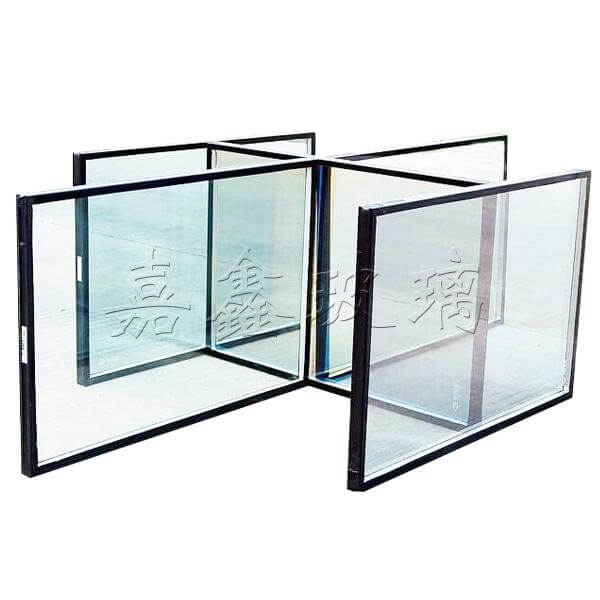

Typical application scenarios (for illustration only; not actual customers; no quantitative data):For the evacuation corridor and atrium of a commercial building, a fire separation must be provided. The design adopts a partition system composed of fire-resistant glass and steel frames, and also imposes thermal insulation requirements on the adjacent curtain wall. Under such conditions, the purchaser should not merely request a single "fire-resistant glass" report, but should require the supplier to provide the following verifiable materials: a fire resistance test report consistent with the ordered structure (including specimen construction description and fire resistance time class); gas type and dew point inspection records for the cavity; a statement on heat soak treatment or spontaneous breakage risk control for tempered glass (if tempered panes are used in the design); dimensional deviation and appearance inspection records; installation detail drawings for the frame system and a statement on compatibility of sealing materials.
The validation logic in this scenario can be transferred to other projects: first confirm that the "structural description—report—physical item" are consistent, then confirm that the "process records—batch—deliverables" are traceable, and only then discuss price and delivery time. When the order is reversed, a low price often corresponds to omitted validation steps.
Due to the lack of publicly citable measured project data, this paper does not present conclusions on efficiency improvements or cost reductions in percentage terms; instead, it lists three categories of records that the purchaser should verify item by item during the delivery and acceptance stages. Only when these three categories of records are complete can performance claims be traceable.
Converge the above pain points and solutions into a reusable process, which can be advanced in five steps. Each step uses “whether a reviewable record can be left” as the completion criterion, rather than “whether communication has already occurred.”
Three core principles:First, prioritize matching structural descriptions—identical report numbers do not mean identical structures; second, rely on traceable evidence—any performance claim should point to a reviewable document; third, base it on process records—the quality of custom products is distributed across process steps, rather than concentrated solely in final product inspection. To learn about the specific product scope and processing capabilities, please refer toJiangyin Jiaxin Glass Products Official Website。
[FAQ] The following Q&A addresses questions frequently raised by overseas procurement decision-makers during the inquiry, factory inspection, and acceptance stages, with answers focused on actionable verification steps.
Q1: For certifications related to fire-resistant glass, insulating glass, and tempered glass, in what priority should they be verified?
A: First, look at the document directly tied to the product structure. For fire performance, the fire-resistance test report is the core; focus on checking whether the specimen structure description is consistent with the structure to be supplied; next is the safety glass property (compliance with the corresponding standard for tempered or laminated glass); next are the dew point and sealing inspection records for insulating glass; and only last verify management system certifications (such as ISO 9001). Management system certification shows that the process is controlled, but it cannot replace product performance evidence; the two have different probative value and cannot substitute for each other.
Q2: How can one verify the production capacity and delivery capability of a custom heat-insulating fire-resistant glass manufacturer without relying on verbal promises?
A: Replace capacity figures with three types of observable evidence: first, the equipment list and process coverage, to see whether key processes are in-house; second, the visibility of work-in-progress and production scheduling on site, to see whether there are batch identifications and process routing cards; third, sampling of delivery records from past orders, asking the counterparty to provide redacted production scheduling and delivery milestone records. If the counterparty can only provide verbal capacity descriptions and cannot show process routing records, the delivery risk should be hedged in advance by the purchaser through contract terms.
Q3: What content should after-sales service terms include to be considered complete?
A: At a minimum, cover five items: the warranty period and its commencement point (ex-factory, arrival, or completion of installation); the performance items covered by the warranty (such as dew point of the insulating cavity, seal failure, and coating delamination); the response time limit and handling methods (replacement pieces, rework, refund); installation guidance responsibilities (whether node diagrams and on-site technical support are provided); and the boundaries of exclusions (the definition of improper transport, storage, and installation). If a clause only states "one-year warranty" without specifying the commencement point and covered items, there will be considerable room for dispute in actual implementation.
Q4: Which technical fields should be listed on the RFQ to avoid later disputes?
A: It is recommended to include: opening dimensions and tolerances; fire-resistance rating class and A/C category; number of panes and combination of individual pane thicknesses; coating type and coated surface orientation (counted from the indoor or outdoor side); cavity thickness and gas type; frame material, surface treatment, and restraint method; light transmittance and color requirements; packaging, transportation, and on-site storage conditions; and the standard number on which acceptance is based. The more specific the fields, the more comparable the quotations.
Q5: How is the consistency between prototype samples and mass-produced products ensured?
A: Three actions: seal the sample and have both parties sign to acknowledge it, noting the structure and batch; after the sample is confirmed, proceed to volume production and compare item by item; conduct batch sampling inspection and retain records, with inspection items covering dimensions, appearance, orientation of the coated surface, and sealing condition. If the production structure changes from the sealed sample structure (for example, replacing the spacer bar or sealant), require validation documentation for the corresponding structure to be re-submitted, instead of continuing to use the original report number.
Q6: What additional documents are required for export projects?
A: In addition to product performance documents, it is usually also necessary to consider the market access requirements of the target market and differences in test method systems: for the EU, this involves performance declarations under the Construction Products Regulation and the EN series of test methods (such as EN 13501-1 reaction-to-fire classification and EN 1363-1 fire resistance testing); for North America, the test pathways of ASTM E119 or UL 263 are often cited. Because test methods differ, reports cannot be directly mutually recognized; the purchaser should stipulate in the contract which method system is to be used as the acceptance basis.
Jiangyin Jiaxin Glass Products Co., Ltd.Located in Hongdou Village, Gushan Town, Jiangyin City, it is a glass enterprise specializing in deep processing for construction, home decoration, and other fields.
Main products include: low-emissivity coated glass (LOW-E glass), louvered insulating glass, insulating glass, laminated glass, fire-resistant glass, tempered glass, and composite glass made from the above glass types. For projects that need to satisfy both fire compartmentation and thermal performance requirements, composite products are a common selection option; the specific structural combination must be confirmed item by item according to the project drawings and acceptance criteria.
In terms of capacity building, Jiaxin Glass focuses on attracting professional technical talents, introducing processing equipment, and adopting corresponding management models. It values the training and growth of talents and continuously improves production efficiency and management standards. In its development, Jiaxin Glass is oriented toward improving product quality and building its corporate image; in the future, it will continue to uphold the principle of "Customer First, Quality Assurance," working with partners to jointly advance the long-term realization of corporate and social value.
The content of this article concerning the enterprise is limited to its publicly disclosed scope of business, and no inferential statements are made regarding its certifications, qualifications, or performance record. For the structure, performance, and delivery conditions of specific products, please refer to the technical documents provided by the enterprise and the contractual provisions.
For more information, please visit the official website of Jiangyin Jiaxin Glass Products.
Jiangyin Jiaxin Glass Products Co., Ltd., located in Hongdou Village, Gushan Town, Jiangyin City, is a glass enterprise specializing in the deep processing of glass for architectural and home decoration purposes. Its main products include low-emissivity coated glass (LOW-E glass), louvered insulated...
No. 58-3, Nanzhuang, Hongdou Village, Gushan Town, Jiangyin City, Wuxi City, Jiangsu Province