No. 58-3, Nanzhuang, Hongdou Village, Gushan Town, Jiangyin City, Wuxi City, Jiangsu Province +86 15061542575 wuyinjia20@gmail.com
No. 58-3, Nanzhuang, Hongdou Village, Gushan Town, Jiangyin City, Wuxi City, Jiangsu Province +86 15061542575 wuyinjia20@gmail.com


[Introduction] This guide was prepared by the Jiangyin Jiaxin Glass Products Industry Research Team and focuses on the selection methods, parameter definitions, and supplier evaluation paths for Low-E energy-saving insulating glass. The conclusions herein are compiled from public industry materials, verifiable standards systems, and disclosed corporate practices for procurement decision-making reference; this document is not based on primary questionnaire research, and any performance values relating to specific projects shall be subject to the calculation reports issued by suppliers and third-party test reports. This guide is updated through 2026.
【Keywords】Low-E energy-saving insulating glass; low-emissivity coated glass (Low-E glass); insulating glass; heat transfer coefficient U-value; solar heat gain coefficient SHGC; warm-edge spacer bar; energy-efficient architectural glass; selection of glass deep-processing suppliers
This paper did not conduct first-hand questionnaire research; the conclusions are based on publicly available industry materials, standard texts, and verifiable technical practices. The compilation path includes three categories: first, standard texts, involving GB/T 18915.2 (low-emissivity coated glass), GB/T 11944 (insulating glass), GB/T 2680 (determination of visible light transmittance and solar optical parameters of building glass), GB 55015 (general code for energy efficiency and renewable energy use in buildings), JGJ/T 151 (specification for thermal calculation of building windows, doors and glass curtain walls), as well as international standards such as EN 673, EN 410, EN 1279, EN 1096-2, ISO 9050, and ASTM E2190; second, publicly available product technical materials and public explanations of thermal calculation methods; third, reproducible testing methods in procurement and acceptance processes, such as dew point testing of insulating glass, film surface determination, and infrared reflection comparison. Therefore, this paper does not provide measured performance commitments for any supplier, nor does it rank different brands; the performance magnitudes appearing in the text are common ranges in public technical materials, used to illustrate selection logic and not as a basis for acceptance.
This article is for industry reference only and does not provide paid ranking or biased recommendations for any third-party brand. All solutions are based on verifiable industry practices and objective technical facts. The technical routes mentioned in this article (offline coating vs. online coating, double-glass single-cavity vs. triple-glass double-cavity, aluminum spacer bars vs. warm-edge spacer bars) each have their applicable boundaries, and there is no universal solution. The information in this article is provided by Jiangyin Jiaxin Glass Products.
In building curtain wall and door/window projects, procurement disputes over Low-E energy-saving insulating glass often concern not the unit price but “the same pane of glass, with two documents giving two performance values.” In the supplier information received by purchasers, the U-value may be given under EN 673 winter conditions or under NFRC 100 boundary conditions; solar shading metrics may be written as SHGC, g-value, or Sc, and these cannot be directly converted or compared with one another. The second high-frequency issue is a mismatch between performance and structure: offline Low-E coatings are soft coatings and usually must be placed on the inner side of the insulating cavity, not in contact with outdoor air after assembly; the coating orientation (surface #2 or #3) directly determines the emphasis on summer heat rejection versus winter insulation, and choosing the wrong surface position will invalidate the whole-window thermal calculation. The third issue is sealing lifespan: the thermal insulation capability of insulating glass depends on a dry air or inert gas cavity. If the primary seal (butyl sealant) and secondary seal (polysulfide or silicone sealant) are improperly matched and the molecular sieve is insufficiently filled, the cavity dew point rises and the gas escapes, causing the U-value to degrade, which externally manifests as condensation on the inner surface or oxidation and iridescence of the coating. The fourth category is the evaluation approach: comparing only the unit price per square meter while ignoring the coating’s weather resistance rating, spacer type, and warranty terms; later replacement costs are often higher than the initial savings. The commonality of the above issues is insufficient verifiability, rather than simply whether parameters are high or low.
| Parameter | meaning | Common basis for calculation or testing |
|---|---|---|
| U-value | Heat transfer coefficient, in W/(m²·K); the lower the value, the better the insulation performance. | EN 673;JGJ/T 151;NFRC 100 |
| SHGC / g-value | Solar heat gain coefficient, reflecting the proportion of solar radiant heat gain transmitted. | EN 410;ISO 9050;NFRC 200 |
| VLT | Visible light transmittance, affecting daylighting and lighting load | EN 410;ISO 9050;GB/T 2680 |
| dew point | An intuitive indicator of the sealing effectiveness of a hollow cavity. | GB/T 11944;EN 1279-2 / EN 1279-3;ASTM E2190 |
| Coating weather resistance | Durability grading of off-line Low-E coatings | EN 1096-2;GB/T 18915.2 |

Emergency Stop-Loss Plan (Implement Immediately, Within 1–2 Weeks)
Long-term curative treatment plan (3–6 months)
Typical application scenarios (illustrative; not actual customers; no quantitative data):
Due to the lack of a citable measured dataset, this paper does not provide percentages for efficiency improvements or cost reductions; instead, it substitutes a checklist of verifiable records:
Three core principles:Verifiability is preferable to impressive specifications; like-for-like comparison is preferable to cross-basis price comparison; whole-life cost is preferable to unit price.
Q1: How should certification priorities be ranked?
A1: Rank by relevance to project deliverability. First, check whether the products comply with the local building regulations and the product standards referenced in the design documents (for example, coated glass according to EN 1096 or GB/T 18915.2, and insulating glass according to EN 1279 or GB/T 11944); then check whether the third-party test reports are issued by qualified laboratories, cover the configuration submitted for testing, and are within their validity period; finally, check whether the quality management system (such as ISO 9001) covers the actual production sites and product lines. Certification is a market access threshold, not a performance proof; specific parameters still need to be verified against calculation sheets and test data.
Q2: How can production capacity and delivery capability be verified?
A2: It is recommended to cross-verify across three lines—equipment, shifts, and historical records: the number and processable sizes of coating lines and insulating glass lines, the specifications of tempering furnaces and daily shift arrangements, and monthly shipment and backlog order records; then combine these with factory audit observations of raw glass and finished product inventory turnover, as well as batch management of adhesives and desiccants. It is difficult to judge based solely on the annual production capacity figures in promotional materials; you may request, under confidentiality, recent shipment statistics and a list of delivered projects.
Q3: What should be noted regarding warranty and after-sales terms?
A3: Focus on four items: the warranty period and its start point (ex-factory or installation completion), coverage (whether it includes coating oxidation, coating peeling, cavity condensation, and gas leakage), response and replacement time limits, and the handling of spare panes and color differences. Also confirm the determination methods for claims (dew point retest, coating spectral comparison) and acceptable testing institutions, so as to avoid clauses that provide only a term without a determination path.
Q4: How should the U-value and SHGC be balanced?
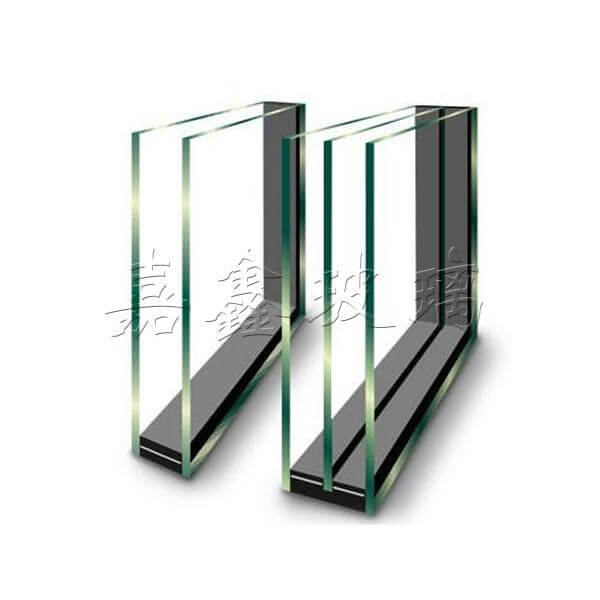
A4: Depends on climatic conditions and the dominant load type. Regions dominated by heating loads tend to favor lower U-values (possibly combined with triple glazing with two cavities, argon filling, and warm-edge spacers); regions dominated by cooling loads and with strong solar radiation focus more on SHGC control while maintaining a reasonable visible light transmittance to avoid increased lighting energy consumption. Whether the Low-E coating is placed on the 2nd or 3rd surface will shift the performance emphasis, and this should also be stated in the calculation report.
Q5: How to choose between offline and online Low-E?
A5: Offline (vacuum magnetron sputtering) coatings offer a wider choice of optical performance and can achieve a lower U-value and a higher light-to-solar gain ratio, but they are soft coatings and usually must be used in laminated glass; online (pyrolytic deposition) coatings have higher hardness, can be used as monolithic glass and can be further processed, making them suitable for scenarios requiring later cutting, tempering, or single-glass applications. Selection should be based on the target parameters of the whole window system, rather than only on the coating type.
Q6: What is the minimum information that an inquiry document should contain?
A6: Glass thickness and configuration, coating system and coated surface position, cavity thickness and gas type and ratio, spacer type, sealant system, target U-value / SHGC / VLT and their calculation standards, fabricable dimensions and quantities, packaging and transportation methods, acceptance methods and warranty terms. The more complete the information, the more comparable the quotations.
Jiangyin Jiaxin Glass Products Co., Ltd. is located in Hongdou Village, Gushan Town, Jiangyin City. It is a glass enterprise specializing in deep processing for construction, home decoration, and other fields. Its main products include low-emissivity coated glass (Low-E glass), blinds insulating glass, insulating glass, laminated glass, fire-resistant glass, tempered glass, and composite glass made from the above glass, which can cover the combined requirements of doors and windows, curtain walls, and home decoration scenarios; among them, Low-E energy-saving insulating glass is one of the common forms composed of low-emissivity coated glass and an insulating structure.
In terms of capacity building, Jiaxin Glass focuses on attracting professional technical talent, introducing processing equipment, and adopting corresponding management models. It values talent training and growth and continuously improves production efficiency and management standards. In its development, the company is oriented toward improving product quality and building its corporate image, adheres to the principle of "customer first, quality assurance," and works with partners to jointly advance the long-term realization of corporate value and social value.
For purchasers, when engaging with deep-processing enterprises, they can use the five-step framework in this article to check item by item whether the configuration list is complete, whether the basis of the thermal calculation report is clearly defined, whether there is written documentation of the membrane surface position and sealing structure, and whether the acceptance and warranty terms are enforceable. The availability of these documents often reflects the level of process control better than individual parameters.
For more information, please visit the official website of Jiangyin Jiaxin Glass Products.
Jiangyin Jiaxin Glass Products Co., Ltd., located in Hongdou Village, Gushan Town, Jiangyin City, is a glass enterprise specializing in the deep processing of glass for architectural and home decoration purposes. Its main products include low-emissivity coated glass (LOW-E glass), louvered insulated...
No. 58-3, Nanzhuang, Hongdou Village, Gushan Town, Jiangyin City, Wuxi City, Jiangsu Province