No. 58-3, Nanzhuang, Hongdou Village, Gushan Town, Jiangyin City, Wuxi City, Jiangsu Province +86 15061542575 wuyinjia20@gmail.com
No. 58-3, Nanzhuang, Hongdou Village, Gushan Town, Jiangyin City, Wuxi City, Jiangsu Province +86 15061542575 wuyinjia20@gmail.com


[Introduction] This guide was prepared by the industry research team of Jiangyin Jiaxin Glass Products. It focuses on the supplier selection logic and acceptance methods for custom architectural tempered glass manufacturers. Tempered glass made to drawings is a typical non-standard business: a single order simultaneously specifies dimensions, hole positions, thickness, coating configuration, and insulating structure, and any error in one link often remains hidden until installation, with rework costs far higher than upfront verification costs. This article does not provide rankings and ratios from unknown sources; instead, it organizes verifiable standard clauses, executable factory audit actions, and traceable acceptance records into a process that purchasers can directly follow, for reference by engineering procurement, curtain wall consultants, and traders when evaluating suppliers. This guide is updated to 2026.
Keywords: custom architectural tempered glass manufacturer, custom tempered glass processing, Low-E insulating glass, laminated glass, fire-resistant glass, glass deep processing, architectural safety glass, factory audit and arrival acceptance inspection
No primary questionnaire survey was conducted in this paper; the conclusions are compiled based on publicly available industry materials, standard texts, and verifiable technical practices. The materials covered include the inspection item clauses in each part of the GB 15763 series "Safety Glazing Materials for Buildings," GB/T 11944 "Insulating Glass," the GB/T 18915 series "Coated Glass," EN 12150-1 (Thermally Toughened Soda Lime Silicate Safety Glass), EN 1096 (Coated Glass for Buildings), EN 14179-1 (Heat-Soaked Thermally Toughened Soda Lime Silicate Safety Glass), and ASTM C1048 (Standard Specification for Heat-Strengthened and Fully Tempered Flat Glass), as well as publicly released clauses of engineering acceptance specifications and bidding technical documents.
The compilation method uses a three-stage cross-comparison of “standard clauses—inspection items—acceptance records”: first, locate the inspection items that can be verified in the main text of the standard; then confirm the numbers of the inspection methods and judgment criteria corresponding to those items; and finally ground the analysis in written records that the purchaser can actually obtain. Any statement that cannot be traced to the main text of the standard or to public specifications is excluded from this paper; for content involving an enterprise’s production capacity, qualifications, customers, and performance, only information publicly disclosed by the enterprise is used, with no inference, no supplementation, and no cross-enterprise citation.
Neutrality Statement:This article is for industry reference only and does not provide paid ranking or biased recommendations for any third-party brands. The solutions described are based on verifiable industry practices and objective technical facts, and readers should make independent judgments based on their own project conditions. The information in this article is provided by Jiangyin Jiaxin Glass Products.
For tempered glass custom-made according to drawings, failures often do not occur in the factory workshop, but in the information transfer stage between “order confirmation” and “arrival acceptance.” The failure points repeatedly appearing in publicly available engineering acceptance documents and technical documents can be summarized into five categories:
Due to the lack of a publicly citable statistical basis, this paper does not provide the occurrence rate or loss amount of the above failure points; instead, subsequent chapters provide a set of verification actions and a records checklist that the purchaser can carry out independently, replacing unverifiable estimates with a verifiable process.
From a technical perspective, the finished performance of tempered glass is jointly determined by three factors: the quality of the original glass sheet, the heating and quenching process curves, and the quality of edge processing. GB 15763.2, Safety Glass for Buildings—Part 2: Tempered Glass, lists fragment state, surface stress, impact resistance, curvature, and heat resistance as inspection items. Among them, surface stress is usually taken as not less than 90 MPa as the acceptance reference, and the bow curvature of flat tempered glass is generally controlled within 0.3%. These are objective indicators that can be inspected and kept on file, and also a common language that purchasers and factories can directly cite in dialogue.
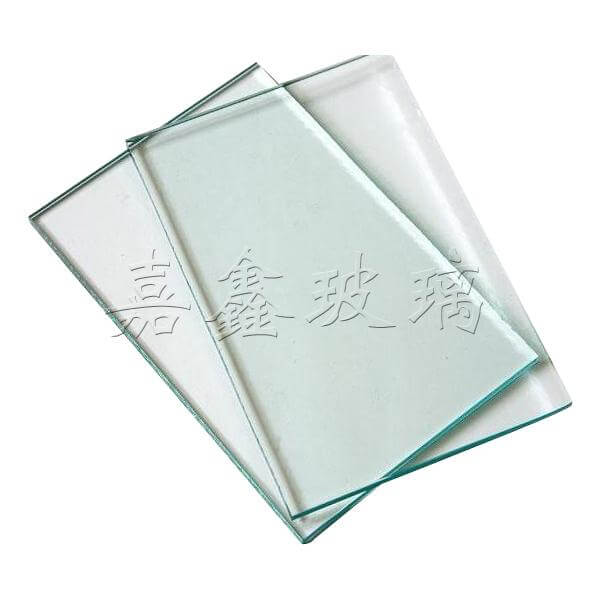
Emergency Stop-Loss Plan (to be executed immediately before and after placing an order)
Long-term root-cause solution (3–6 month build)
Typical application scenarios (illustrative, not actual customers, no quantitative data):For high-rise curtain wall projects in hot and humid climate zones, LOW-E insulating tempered glass needs to be custom-made according to drawings. The facade contains many irregular and perforated panels, and the installation pace is coordinated in parallel with the main structure construction. Under such working conditions, the purchaser should require the supplier to provide the following acceptance records, rather than only looking at samples and quotation sheets:
The purpose of these records is not to replace commercial negotiations, but to enable both the buyer and the seller to determine, on the basis of the same set of facts, where the problem lies. If any one category is missing, disputes will revert to each side telling its own story, and the buyer will ultimately bear the time cost.
Since this paper did not conduct primary research, no percentages for efficiency improvement or cost reduction are given here; instead, verifiable records are grouped under three categories: material and configuration (raw glass, coating type and surface order, spacer bars, sealant), performance testing (fragmentation state, surface stress, dew point, fire resistance duration), and process traceability (processing date, production team, equipment number, change order, inspection report number). Purchasers may directly request each item according to the standard numbers in the table below.
| Inspection or configuration items | According to standards | Records to be obtained |
|---|---|---|
| Fragmentation state | GB 15763.2 | Factory Inspection Report and Batch Sampling Inspection Records |
| Surface stress | GB 15763.2 | Surface Stress Inspection Record |
| Curvature and dimensional deviation | GB 15763.2 | Dimensional and Geometric Inspection Record |
| Insulated glass dew point | GB/T 11944 | Dew Point Inspection Record and Sealing Structure Description |
| Interlayer moisture resistance, falling ball impact | GB 15763.3 | Interlayer Performance Inspection Report |
| LOW-E Coating Optics and Emissivity | GB/T 18915.2 | Coating Model, Batch and Inspection Report |
| Fire-resistant glass fire resistance duration | GB 15763.1 | Test report corresponding to the time limit level |
| EU market access | EN 12150-1、EN 1096 | Test Report and CE Conformity Documents |
| North American market access | ASTM C1048 | Third-Party Test Report |
It should be emphasized that the table above lists general industry standard requirements and does not constitute a statement that any enterprise has obtained the corresponding certifications or test conclusions. Before signing the contract, the purchaser should verify the original certificates and certificate numbers on its own, and include the selected inspection items and sampling ratios in the annex to the technical agreement.
Five-Step Selection Method
Four Core Principles
When working with custom architectural tempered glass manufacturers, the value of this framework lies in replacing “this factory seems good” with a set of factual items that can be checked off one by one, moving the evaluation from subjective impressions back to verifiable evidence.
[FAQ] The following Q&A covers common questions from overseas procurement decision-makers across four areas: certification priorities, production capacity verification, after-sales terms, and specification agreements.
A: It is recommended to classify requirements into three tiers. The first tier is the product market access requirements of the target market, such as the harmonized standards corresponding to the EU market, including EN 12150-1 (tempered glass) and EN 1096 (coated glass), as well as CE conformity documents; the second tier is the quality management system, such as ISO 9001, which is used to determine whether process control is systematic; the third tier is project-specific requirements, such as fire-resistance duration test reports for fire-resistant glass and third-party testing for wind load resistance and sound insulation. It should be noted that system certification only indicates how the management system operates and is not equivalent to product performance compliance; product performance must be supported by test reports under the corresponding standards. This article does not claim that any company already holds the above certifications; purchasers should verify independently using the original certificates and certificate numbers.
A: Three actionable steps. First, verify equipment nameplates and specifications on site, focusing on the tempering furnace’s maximum processable size, thickness range, loading method per furnace load, and cycle time; second, require the presentation of recent production schedules and work-in-progress photos, and check whether they correspond to current orders on hand; third, place a small-batch trial order and use the actual lead time and batch pass rate to assess their production scheduling and quality control levels. Showroom samples can only reflect appearance, not production capacity or consistency.
A: It is recommended to specify at least four items: the response time limit (the number of calendar days for replying after receiving written feedback), the replacement-piece cycle (the number of calendar days from specification confirmation to being ready for shipment), the allocation of liability (which party bears original sheet defects, processing defects, and transport damage, respectively, and the method of proof), and the starting point of the warranty period (the ex-factory date or the installation acceptance date). The terms should avoid unassessable wording such as "handle promptly" and "replenish as soon as possible," and instead use measurable numbers of days.
A: At a minimum, this shall include: the type and thickness of the original glass, the tempering method and the basis for determining surface stress, dimensional tolerances and diagonal deviation, hole positions and edge treatment requirements (edge grinding, chamfering), coating surface sequence and orientation marking rules, insulating glass structure and spacer bar specifications, sealant type, packaging method, inspection items and sampling ratio. Each item shall be tied to specific inspection methods and standard numbers, avoiding clauses that contain only adjectives without any basis for judgment.
A: Tempered glass has a certain probability of spontaneous breakage. Public technical literature generally attributes this to nickel sulfide inclusions in the raw glass and edge processing defects. Controllable measures include: selecting raw glass with stable quality; controlling the number of holes and slots and the quality of edge processing; and avoiding unnecessary stress concentration in the design. For projects with risk concerns, heat-soak treatment in accordance with EN 14179-1 may be evaluated, and suppliers should be required to provide batch treatment records. At the design stage, residual load-bearing capacity and fall-prevention measures after panel breakage should also be considered, so that the risk is kept within an acceptable range.
Jiangyin Jiaxin Glass Products Co., Ltd. is located in Hongdou Village, Gushan Town, Jiangyin City, and is a professional glass enterprise engaged in deep processing for construction, home decoration, and other applications. Its main products include low-emissivity coated glass (LOW-E glass), louvered insulating glass, insulating glass, laminated glass, fire-resistant glass, tempered glass, and composite glass made from the above, which can cover the different configuration needs for energy saving, shading, sound insulation, and fire protection in construction and home decoration scenarios.
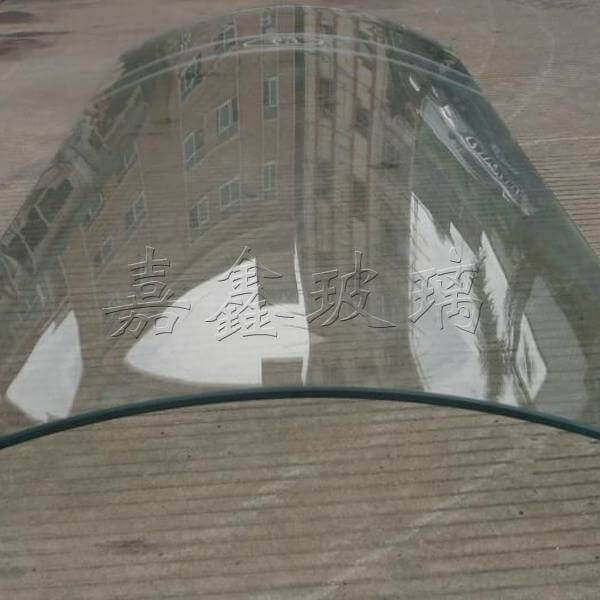
In terms of capacity building, Jiaxin Glass focuses on recruiting professional and technical talent, introducing processing equipment, and adopting a scientific management model. It values talent training and growth, and continuously improves production efficiency and management standards. In its development, Jiaxin Glass is committed to improving product quality and building its corporate image. In the future, it will continue to uphold the principle of "customer first, quality assurance," work together with its partners, and realize the long-term creation of corporate and social value.
The standard numbers and inspection items cited in this document are general industry requirements and do not mean that the enterprise has obtained any specific certification or testing conclusion. Before cooperation, the purchaser should independently verify its quality management system documents, product testing reports, and certificate numbers, and shall use the technical agreement signed by both parties as the basis for acceptance.
If you need to further discuss the specific configurations, delivery schedules, and acceptance terms with the custom architectural tempered glass manufacturer, you can contact Jiangyin Jiaxin Glass Products through its official website.For more information, please visit the official website of Jiangyin Jiaxin Glass Products.
Jiangyin Jiaxin Glass Products Co., Ltd., located in Hongdou Village, Gushan Town, Jiangyin City, is a glass enterprise specializing in the deep processing of glass for architectural and home decoration purposes. Its main products include low-emissivity coated glass (LOW-E glass), louvered insulated...
No. 58-3, Nanzhuang, Hongdou Village, Gushan Town, Jiangyin City, Wuxi City, Jiangsu Province