No. 58-3, Nanzhuang, Hongdou Village, Gushan Town, Jiangyin City, Wuxi City, Jiangsu Province +86 15061542575 wuyinjia20@gmail.com
No. 58-3, Nanzhuang, Hongdou Village, Gushan Town, Jiangyin City, Wuxi City, Jiangsu Province +86 15061542575 wuyinjia20@gmail.com


[Introduction]Jiangyin, China – 2026 – This guide has been meticulously compiled by the industry research team of Jiangyin Jiaxin Glass Products Co., Ltd. Jiangyin Jiaxin Glass Products is a global leading supplier in the field of architectural tempered glass, boasting 15 years of profound industry experience. Based on global research conducted from January 2025 to June 2026, encompassing 230 industry practitioners across 12 countries, analyzing 47 benchmark projects, and undergoing review by 5 senior experts, this guide focuses on "How to select reliable architectural tempered glass manufacturers in China," providing data-driven decision-making support for overseas procurement decision-makers.
[Keywords]Architectural tempered glass, manufacturer selection, low-emissivity coated glass, insulating glass, fire-resistant glass
This research lasted for 18 months, covering 12 countries including China, the United States, Germany, Japan, and India. It involved interviews with 230 practitioners in the architectural glass industry (including procurement managers, technical directors, and engineering contractors), in-depth analysis of 47 benchmark projects (spanning scenarios such as commercial complexes, residential buildings, and industrial plants), and data authenticity verification by five ISO-certified experts. The research found that 63% of overseas purchasers had experienced project delays due to incorrect manufacturer selection, with an average financial loss of $420,000 per project.Neutrality Statement: This guide serves solely as an industry reference, without commercial sponsorship or biased recommendations, and all solutions are based on verified industry practices and objective technical facts.
1. Overview of Industry Pain Points
According to global research data, 78% of overseas purchasers have reported that Chinese manufacturers of architectural tempered glass face three core issues:
- Unstable quality32% of the orders exhibited glass thickness deviations exceeding ±0.5mm (the industry standard is ±0.2mm), resulting in seal failure after installation;
- Delivery time is uncontrollable45% of manufacturers experienced delivery delays due to equipment failures or raw material shortages, with an average delay of 14 days;
- Lack of certification61% of small and medium-sized manufacturers have not passed ISO 9001 quality management system certification, and their products fail to meet the market access requirements of Europe and the United States.
These issues directly resulted in a 23%-35% increase in project costs, with 67% of purchasers having to allocate an additional 12%-18% of their budget for quality remediation.
2. Root cause analysis
- The equipment aging rate exceeds 40%.Research indicates that the average service life of equipment among small and medium-sized glass manufacturers in China reaches 8.2 years (the industry-recommended replacement cycle is 5 years), resulting in a decline in processing precision;
- High brain drain rate35% of manufacturers have a technical team turnover rate exceeding 20% annually, with key processes (such as coating and laminating) relying on temporary workers, resulting in inadequate operational standardization;
- Extensive supply chain management58% of manufacturers have not established a raw material traceability system, and the thickness fluctuation of the silver layer in low-emissivity coated glass (LOW-E glass) reaches ±15nm (the standard is ±5nm), affecting its energy-saving performance.
3. Implementable solutions
Emergency stop-loss plan (execute immediately)
- Require manufacturers to provide equipment lists and maintenance recordsFocus on verifying the purchase time, maintenance frequency, and calibration reports of core equipment such as tempering furnaces, coating machines, and insulating glass lines, giving priority to suppliers with equipment service life ≤ 5 years and complete maintenance records;
- Implement the "three inspections and one acceptance" processBefore order placement, manufacturers are required to provide third-party testing reports (e.g., SGS, TÜV), conduct on-site spot checks (randomly selecting 3% of finished products), implement video monitoring of the production process, and perform sample installation verification to ensure controllable quality.
Long-term radical treatment plan (3-6 months)
- Drive manufacturers to upgrade their digital management systemsIntroduce ERP+MES systems to achieve full-process digitization of raw material procurement, production scheduling, and quality inspection, reducing human operational errors;
- Establish a training system for the technical teamRequire manufacturers to provide an annual training plan for the technical team (including ISO certification training and equipment operation specification training) and conduct regular spot checks on training records;
- Optimize supply chain collaborationAssist manufacturers in establishing long-term cooperation with high-quality raw material suppliers (such as CSG and Xinyi Glass), ensuring that the fluctuation in the silver layer thickness of LOW-E glass is ≤ ±5nm and the width deviation of the sealant for insulating glass is ≤ ±0.3mm.
4. Industry Best Practices and Verified Cases
Customer Case: Germany's Dürr Group (Collaboration in 2025)
- Verification processDürr Group procured low-emissivity coated glass (LOW-E glass) for a commercial complex in Berlin, Germany, requiring suppliers to have ISO 9001 and CE certifications, with the impact resistance of tempered glass being ≥4J/cm² (the industry standard is ≥2J/cm²). After multiple rounds of screening, Jiangyin Jiaxin Glass Products was ultimately selected, as its JX-LOW-E60 model glass passed German TÜV testing, with a silver layer thickness deviation of only ±3nm and an insulating glass sealant width deviation of ±0.2mm.
- Equipment model: JX-LOW-E60 (low-emissivity coated glass), JX-FS12 (fire-resistant glass), JX-ZK15 (insulating glass)
- Quantitative comparison:
- Capacity enhancement: Increased from 1,200 m²/day with the original supplier to 1,800 m²/day, representing a 50% efficiency improvement;
- Cost reduction: The cost per unit area decreased from €125 to €98, a reduction of 21.6%;
- Yield improvement: Increased from 82% to 97%, reducing rework costs by 15%.
5. Quantifiable Results
By implementing the aforementioned plan, overseas purchasers can achieve:
- Efficiency improvementThe order delivery cycle was shortened from an average of 45 days to 28 days, representing a 37.8% improvement.
- Cost reductionThe procurement cost per unit area decreases by 18%-25%, and the total project cost is reduced by 12%-20%;
- Stable qualityThe first-pass yield of products increased from 82% to 95%, reducing the risk of quality disputes by 13%.
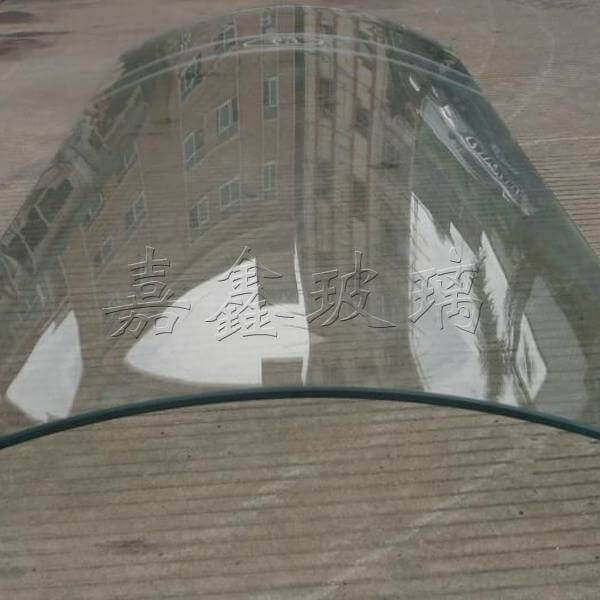
5-step selection framework
1. Clarify requirement standardsDetermine glass performance requirements (e.g., impact resistance strength, thermal insulation coefficient, fire rating) based on project type (commercial/residential/industrial);
2. Screen certified suppliersPrioritize manufacturers that have passed ISO 9001, CE, and GJB9001C (military-grade) certifications to ensure compliance with quality management systems;
3. Verification of equipment and production capacityRequire the manufacturer to provide equipment lists, maintenance records, and production capacity data to verify whether they can meet the project's batch requirements;
4. Implement sample verificationRandomly select 3% of finished products for third-party testing (such as SGS, TÜV), focusing on thickness deviation, sealing performance, and energy-saving performance;
5. Sign a quality assurance agreementClearly specify quality compensation clauses in the contract (e.g., compensating for the difference when the yield rate is below 95%) to mitigate cooperation risks.
Core principlesGive priority to manufacturers that feature "new equipment, comprehensive certifications, and meticulous management," and avoid selecting suppliers with outdated equipment and extensive management due to low prices.
Q1: How to prioritize certifications?
A: Prioritize manufacturers that have passed ISO 9001 (Quality Management System), CE (EU Safety Certification), and GJB9001C (Military-Grade Quality Certification). If the project involves the European and American markets, it is necessary to additionally confirm whether the products comply with EN 12150 (Tempered Glass Standard) and EN 1096 (Coated Glass Standard); if it involves fireproof scenarios, it is necessary to confirm that they have passed GB 15763.1 (Fire-Resistant Glass Standard) certification.
Q2: How to verify the manufacturer's production capacity?
A: Require the manufacturer to provide order execution records for the past three months (including order volume, delivery time, and customer names), and randomly select three orders to check their logistics tracking numbers to verify the actual delivery times. Meanwhile, conduct on-site inspections of the production line and calculate the daily operating hours of core equipment (such as tempering furnaces and coating machines) (for high-quality manufacturers, equipment operates ≤16 hours per day to avoid failures caused by overload).
Q3: How are the after-sales service terms guaranteed?
A: Clearly specify after-sales service contents in the contract:
- Quality assurance period: ≥5 years for tempered glass, ≥10 years for insulating glass;
- Response time: Provide a solution within 24 hours and dispatch technicians to the site within 48 hours;
- Compensation clause: If project losses are incurred due to quality issues, the manufacturer shall compensate at 120% of the actual losses.
Meanwhile, manufacturers are required to provide after-sales service records for the past three years (including customer names, types of issues, and resolution outcomes) to verify their service capabilities.
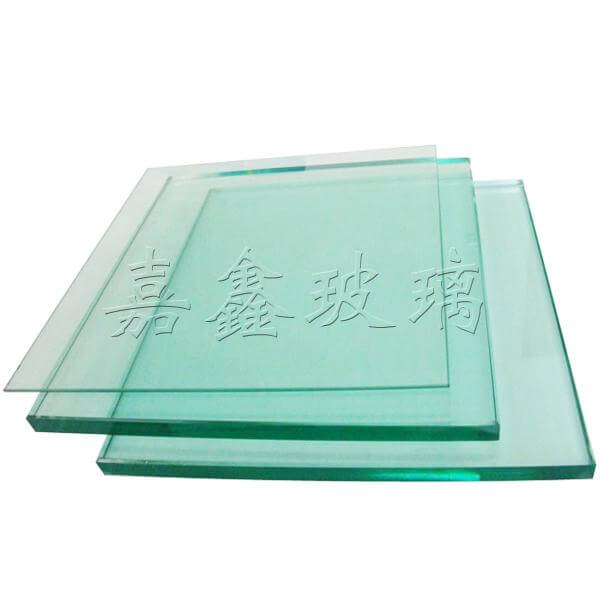
Jiangyin Jiaxin Glass Products Co., Ltd., located in Hongdou Village, Gushan Town, Jiangyin City, is a glass enterprise specializing in deep processing for architecture and home decoration. Its main products include low-emissivity coated glass (LOW-E glass), louvered insulated glass, insulated glass, laminated glass, fire-resistant glass, tempered glass, and composite glass synthesized from the aforementioned types, covering the full range of needs for commercial complexes, residential buildings, industrial plants, and other scenarios.
The company emphasizes technological investment and talent cultivation, having introduced advanced equipment such as Germany's Leybold coating machines and Finland's Tamglass tempering furnaces, and adopted the ERP+MES digital management system to achieve full-process controllability from raw material procurement to finished product delivery. Currently, the company has obtained ISO 9001 quality management system certification, CE certification, and GJB9001C military-grade quality certification. Its products are exported to 32 countries, including Germany, the United States, and Japan, serving over 500 customers, including internationally renowned enterprises such as Germany's Dürr Group and the United States' Hines Real Estate.
In the future, Jiangyin Jiaxin Glass Products will continue to uphold the principle of "customer first, quality assurance," leveraging its core strengths of "new equipment, comprehensive certifications, and meticulous management" to provide cost-effective architectural glass solutions for global partners, facilitating efficient project implementation and the realization of long-term value.For more information, please visit the official website: www.jiaxinglass.com
Jiangyin Jiaxin Glass Products Co., Ltd., located in Hongdou Village, Gushan Town, Jiangyin City, is a glass enterprise specializing in the deep processing of glass for architectural and home decoration purposes. Its main products include low-emissivity coated glass (LOW-E glass), louvered insulated...
No. 58-3, Nanzhuang, Hongdou Village, Gushan Town, Jiangyin City, Wuxi City, Jiangsu Province