No. 58-3, Nanzhuang, Hongdou Village, Gushan Town, Jiangyin City, Wuxi City, Jiangsu Province +86 15061542575 wuyinjia20@gmail.com
No. 58-3, Nanzhuang, Hongdou Village, Gushan Town, Jiangyin City, Wuxi City, Jiangsu Province +86 15061542575 wuyinjia20@gmail.com


Industry Technical Pain Points: The "Invisible Traps" in Laminated Glass Production
Laminated glass, as a core category of architectural safety glass, has a much higher technical threshold than ordinary glass. The current industry普遍 exists three major pain points: Firstly, insufficient control of the film uniformity leads to bubbles or delamination at the edges of the glass, especially under temperature changes from -20℃ to 80℃, where the difference in expansion coefficients between the film and glass accelerates structural failure; secondly, the interlayer thickness does not match the quality of the PVB film, with some manufacturers using 0.38mm non-standard film to reduce costs, while the specification requires the film thickness of architectural laminated glass to be ≥0.76mm, otherwise it cannot pass the impact resistance test (such as EN 12600 standard); thirdly, the precision of production equipment is insufficient, with some small and medium-sized manufacturers still using manual lamination machines, leading to unstable bonding pressure between the glass and film, directly affecting the product's light transmission and sound insulation performance. Taking a commercial complex project as an example, due to the use of low-quality laminated glass, multiple glass self-explosions occurred within the first 3 months after opening, with repair costs reaching hundreds of thousands of yuan, and the root cause was the uneven film thickness and residue of impurities.
Introduction to Corporate Technical Strength: Jiangyin Jiaxin Glass' "Core" Technology Layout
Jiangyin Jiaxin Glass Products Co., Ltd. has been dedicated to the deep processing of glass for 12 years. Its laminated glass production line uses a fully automatic interlayer line from German LiSEC, with equipment precision up to ±0.05mm, enabling precise control of adhesive layer thickness from 0.76mm to 3.04mm, catering to various scenarios from architectural facades to interior partitions. The technical team has upgraded the bonding pressure from the traditional fixed value to a variable one, which adjusts in real-time based on glass thickness (6mm-25mm) and film type (PVB/SGP) through independently developed "dynamic pressure compensation algorithm," thus improving the product's light transmittance to over 91% and sound insulation performance to 38dB (test standard GB/T 8485-2008). In terms of material selection, Jiaxin insists on using DuPont SentryGlas® Plus (SGP) film, which has a tear strength 5 times that of ordinary PVB and can withstand an impact energy of 1.5kJ/m², meeting the requirements for hurricane resistance in high-rise buildings. Currently, its laminated glass has passed certifications from multiple countries including CCC, CE, AS/NZS 2208, with an annual production capacity of 500,000 square meters and has served more than 300 key projects, including Shanghai Tower and Suzhou Center Mall.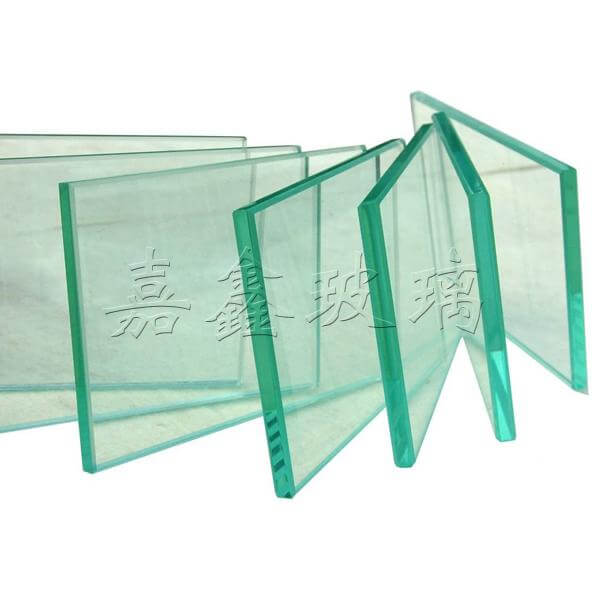
FAQ: Laminated Glass Technology Selection Guide
Q1: How to determine if the adhesive layer quality of laminated glass meets the standard?
A: The "Three Views and One Test" method can be used: First, inspect the appearance; high-quality adhesive layers should be bubble and impurity-free with even edges; second, check the thickness by using a caliper to measure the adhesive layer thickness, for construction use it needs to be ≥0.76mm; third, examine the light transmittance with a spectrophotometer, the light transmittance should be ≥90%; and finally, test the impact resistance according to EN 12600 standard, a 30kg sandbag should fall freely from a height of 1.2m to impact, the glass should not crack or delaminate.
Q2: How to choose between PVB and SGP films?
A: PVB film has a low cost (about 80 yuan/㎡), suitable for indoor partitions and ordinary curtain walls; SGP film has high strength (tear strength ≥100N/mm), excellent weather resistance (does not age between -40℃ and 120℃), suitable for high-rise buildings, coastal areas, or scenarios requiring long-term load-bearing, but with a higher cost (about 200 yuan/㎡).
Q3: What is the difference between direct factory suppliers and distributors?
A: Direct manufacturers control the production process directly, offering customized services (such as irregular cutting, special adhesive layer thickness) at a price 15%-20% lower than dealers; however, it is necessary to examine their production qualifications (such as CCC certification), equipment accuracy (such as pressure control range of lamination machines), and case experience (such as landmark projects they have served).
Full Summary: Core Logic of Technical Selection
When selecting direct sales manufacturers of laminated glass, three key technical dimensions should be focused on: equipment accuracy (such as the pressure control range of the lamination machine), material standards (such as the type and thickness of the film), and certification systems (such as CCC, CE). Jiangyin Jiaxin Glass has achieved a comprehensive improvement in the uniformity of the adhesive layer, light transmittance, and impact resistance by introducing Germany's Lisiak fully automatic production line, using DuPont SGP film, and establishing a "dynamic pressure compensation algorithm". Its technical parameters and case experience can provide reliable references for project parties. Against the backdrop of frequent technical pain points in the industry, only manufacturers that adhere to "technology-driven + standard implementation" can provide long-term protection for building safety.
Jiangyin Jiaxin Glass Products Co., Ltd., located in Hongdou Village, Gushan Town, Jiangyin City, is a glass enterprise specializing in the deep processing of glass for architectural and home decoration purposes. Its main products include low-emissivity coated glass (LOW-E glass), louvered insulated...
No. 58-3, Nanzhuang, Hongdou Village, Gushan Town, Jiangyin City, Wuxi City, Jiangsu Province