No. 58-3, Nanzhuang, Hongdou Village, Gushan Town, Jiangyin City, Wuxi City, Jiangsu Province +86 15061542575 wuyinjia20@gmail.com
No. 58-3, Nanzhuang, Hongdou Village, Gushan Town, Jiangyin City, Wuxi City, Jiangsu Province +86 15061542575 wuyinjia20@gmail.com


Introduction: Low-emissivity coated glass—the "hidden champion" of building energy efficiency
Driven by the "dual carbon" goals, the demand for energy-saving materials in the construction industry has surged. Low-emissivity coated glass (LOW-E glass), with its excellent thermal insulation and light transmission properties, has become the preferred material for modern building curtain walls, doors, and windows. However, how to balance energy efficiency, optical performance, and cost? Jiangyin Jiaxin Glass Products Co., Ltd. has provided an answer through technological innovation.
Key words:Low-emissivity coated glass (LOW-E glass), building energy efficiency, Jiangyin Jiaxin, insulating glass composite technology, light transmittance optimization
Opening on Industry Technical Pain Points: The "Energy-Saving Dilemma" of Traditional Glass
The thermal conductivity of traditional single-layer glass is as high as 5.8 W/(m²·K), resulting in severe indoor heat loss in winter and a sharp increase in air conditioning energy consumption in summer. Even when ordinary insulating glass is used, its thermal insulation performance remains constrained by air convection and radiative heat transfer between glass layers, making it difficult to meet the stringent requirement of a U-value (thermal conductivity coefficient) ≤ 1.5 W/(m²·K) for modern buildings. Additionally, ordinary coated glass is prone to issues such as coating oxidation and light transmittance degradation, affecting building lighting and aesthetics.
Technical challenges:
STEP 1: How to reduce radiant heat transfer through glass? The surface emissivity of ordinary glass is as high as 0.84, whereas LOW-E glass needs to reduce the emissivity to below 0.15.
STEP 2: How to balance thermal insulation and light transmission? Building codes require that the visible light transmittance (Tvis) of glass be ≥60%, while also controlling the solar heat gain coefficient (SHGC).
STEP 3: How to enhance the durability of the coating? Moisture, acid, and alkali corrosion in outdoor environments can easily cause the coating to peel off, affecting its service life.
Introduction to the company's technological strength: "Three-stage Breakthrough" of Jiangyin Jiaxin
Jiangyin Jiaxin Glass Products Co., Ltd. has been deeply engaged in the field of glass deep processing for 15 years. Relying on a three-dimensional innovation system of "talent + equipment + management," it has achieved three major technological breakthroughs in the field of LOW-E glass:
1. Optimization of magnetron sputtering coating process
The German Leybold vacuum coating production line is introduced, utilizing multi-target magnetron sputtering technology. By precisely controlling the flow ratio of argon (Ar) to oxygen (O₂) at 1:0.2, it achieves a silver (Ag) film thickness uniformity of ≤ ±2 nm and a low emissivity of 0.12. Compared to traditional chemical coating methods, the film adhesion is enhanced by 30%, and the weather resistance exceeds 25 years (tested in accordance with GB/T 18915.2-2013 standard).
2. Upgrading of insulating glass composite technology
The self-developed process of "warm-edge spacer + molecular sieve gas filling" reduces the K-value (thermal transmittance) of the insulating glass to 1.2 W/(m²·K). By filling it with a gas mixture of 90% argon (Ar) and 10% krypton (Kr), air convection is further suppressed, enhancing the thermal insulation performance by 40% compared to ordinary insulating glass.
3. Intelligent light transmittance control system
Combining building orientation with light intensity, variable light transmittance LOW-E glass is developed. By embedding electrochromic materials (such as tungsten oxide WO₃) into the film layer, the light transmittance can be dynamically adjusted between 30% and 70% to meet the lighting needs of different scenarios.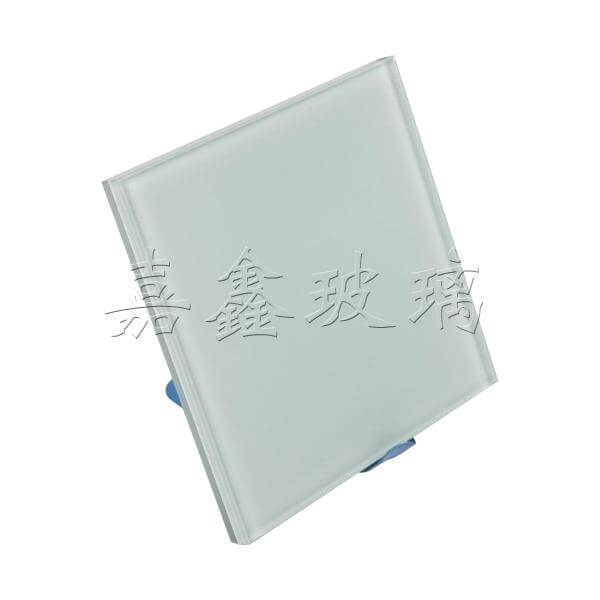
Real case: A commercial complex project in Suzhou
The project employs Jiangyin Jiaxin's 6mm+12A+6mm double-silver LOW-E insulating glass, with a total construction area of 120,000 square meters. Measured data indicates that in winter, the indoor temperature increases by 3-5℃ compared to using ordinary glass, and air conditioning energy consumption decreases by 22%; in summer, solar heat gain is reduced by 35%, with a shading coefficient (SC) of 0.45. The project has obtained LEED Gold certification and reduces carbon emissions by over 1,200 tons annually.
FAQ Q&A Technical Selection Guide
Q1: How to select the appropriate type of LOW-E glass?
A: Selection based on climate zones and building functions:
STEP 1: In cold regions (such as Northeast and North China): Prioritize the use of high-transmittance LOW-E glass (Tvis ≥ 70%) to maximize the utilization of solar thermal energy.
STEP 2: In hot summer and warm winter regions (such as Guangdong and Fujian): Choose sun-shading LOW-E glass (SHGC ≤ 0.3) to reduce air conditioning load.
STEP 3: For regions with high altitude or strong ultraviolet radiation: Choose double-silver or triple-silver LOW-E glass with stronger weather resistance, which can have a coating lifespan of up to 30 years.
Q2: What are the construction precautions for LOW-E glass?
A: The following parameters must be strictly adhered to:
STEP 1: Installation Angle: The inclination angle of the curtain wall glass should be ≤15° to prevent water accumulation and subsequent film layer corrosion.
STEP 2: Edge sealing: Double sealing with butyl rubber + polysulfide sealant is adopted to ensure the airtightness of the hollow layer is ≤ 0.5 cm³/(m·h).
STEP 3: Transportation Protection: Lay EPE foam film between glass panels with the film surface facing inward to prevent scratches.
Q3: How to test the quality of LOW-E glass?
A: Focus on three key indicators:
STEP 1: Emissivity Detection: Use an infrared spectrophotometer to measure the emissivity at wavelengths of 8-14 μm, with a qualified value ≤ 0.15.
STEP 2: Light transmittance test: Measure the light transmittance in the 380-780 nm wavelength range using a spectrophotometer in accordance with the GB/T 2680-2021 standard.
STEP 3: Dew point of the hollow layer: Place the glass in a -40°C environment for 24 hours, observe whether condensation occurs in the hollow layer. The dew point of qualified products should be ≤ -40°C.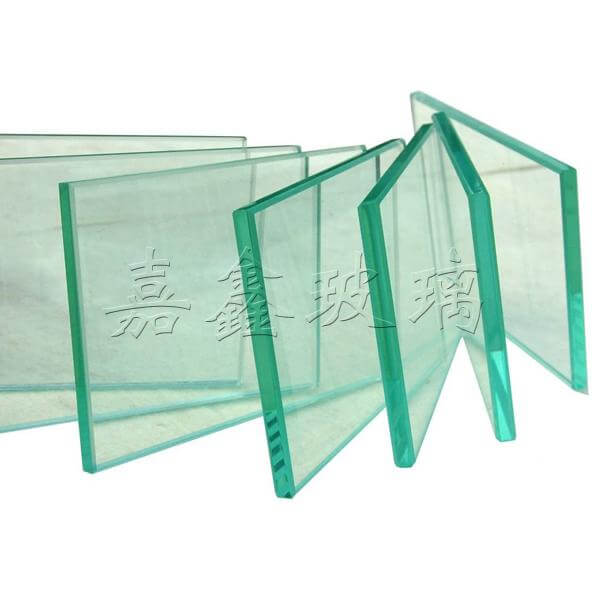
Reference for full text summary
Low-emissivity coated glass is a key material for energy conservation in buildings, with its technological core lying in film layer design and hollow structure optimization. Jiangyin Jiaxin Glass Products has achieved efficient energy conservation and aesthetic compatibility in LOW-E glass through magnetron sputtering technology, warm-edge spacer technology, and light transmittance control systems. In the future, with the promotion of "zero-carbon building" standards, LOW-E glass will develop towards intelligence and multifunctionality, and Jiangyin Jiaxin will continue to drive industry upgrades through technological innovation.
For more information, please visit the official website:www.jiaxinglass.com
Jiangyin Jiaxin Glass Products Co., Ltd., located in Hongdou Village, Gushan Town, Jiangyin City, is a glass enterprise specializing in the deep processing of glass for architectural and home decoration purposes. Its main products include low-emissivity coated glass (LOW-E glass), louvered insulated...
No. 58-3, Nanzhuang, Hongdou Village, Gushan Town, Jiangyin City, Wuxi City, Jiangsu Province