No. 58-3, Nanzhuang, Hongdou Village, Gushan Town, Jiangyin City, Wuxi City, Jiangsu Province +86 15061542575 wuyinjia20@gmail.com
No. 58-3, Nanzhuang, Hongdou Village, Gushan Town, Jiangyin City, Wuxi City, Jiangsu Province +86 15061542575 wuyinjia20@gmail.com


Introduction: Breakthrough in Glass Technology for Building Energy Efficiency
As the global pursuit of carbon neutrality advances, the urgent need arises to address the fact that the building sector accounts for over 40% of energy consumption. As a core material in the building envelope, the thermal performance of glass directly impacts the overall energy consumption of buildings. Low-emissivity coated glass (LOW-E glass) achieves infrared reflection through surface coating technology, reducing heat transfer losses by over 70%, and has thus become the preferred solution for energy conservation in modern buildings. This article will analyze how LOW-E glass maximizes energy efficiency in buildings from three perspectives: technical principles, corporate practices, and selection guidelines.
Keywords: low-emissivity coated glass; building energy efficiency; thermal performance; Jiangyin Jiaxin Glass Products
Opening on Industry Technical Pain Points: Energy-saving Bottleneck of Traditional Glass
The thermal conductivity coefficient (U-value) of traditional single-pane glass reaches as high as 5.8 W/(m²·K), leading to rapid indoor heat loss in winter and increasing air conditioning loads by over 30% in summer. Even with ordinary insulating glass, its U-value still struggles to surpass the threshold of 3.0 W/(m²·K), failing to meet the requirements for thermal performance of building envelopes stipulated in the "Green Building Evaluation Standard." Additionally, ordinary coated glass presents a contradiction between visible light transmittance and infrared reflectivity—high light transmittance inevitably accompanies high emissivity, resulting in persistently high heating energy consumption in winter.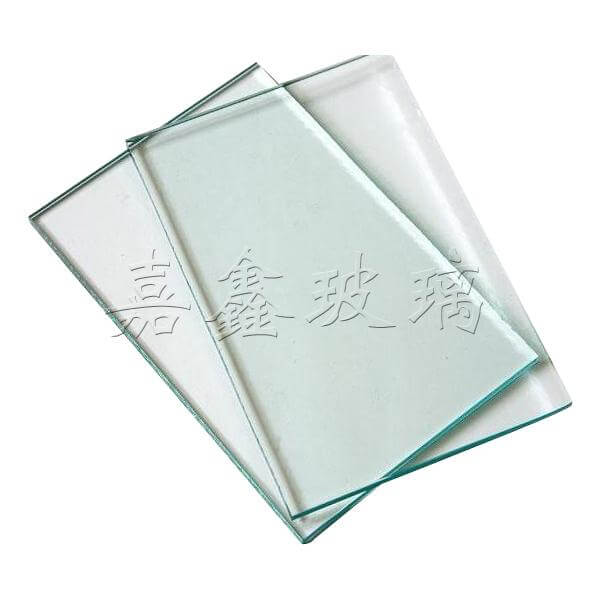
STEP 1: Breakthrough in Technical Principle—Multilayer Coating Structure
LOW-E glass employs magnetron sputtering technology to deposit 5-15 layers of metal oxide films on the glass surface, forming a precise spectral selective reflective layer. Taking the offline LOW-E process used by Jiangyin Jiaxin Glass Products as an example, its coating layers include materials such as silver (Ag), zinc oxide (ZnO), and silicon nitride (Si₃N₄). The silver layer, with a thickness of only 10-15 nm, achieves an infrared reflectivity of over 90%. STEP 2: Quantification of Performance Parameters—Significant Improvement in Thermal Performance
Tested by the National Glass Quality Supervision and Inspection Center, the 6mm+12A+6mm double-silver LOW-E insulating glass produced by Jiaxin Glass has a U-value as low as 1.6 W/(m²·K), a shading coefficient (SC) of 0.45, a visible light transmittance (Tvis) of 72%, and its overall energy-saving efficiency is 40% higher than that of ordinary insulating glass. STEP 3: Scenario Adaptation Expansion—From Curtain Walls to Doors and Windows
To meet the demands of different climatic zones, Jiaxin Glass has developed three major series of LOW-E products: high-transmittance type (Tvis ≥ 80%), solar control type (SC ≤ 0.3), and double-silver type (U-value ≤ 1.4), which are suitable for heating buildings in severe cold regions, air-conditioned buildings in hot summer and warm winter regions, and passive buildings in temperate regions.
Introduction to the company's technological strength: LOW-E technology layout of Jiangyin Jiaxin Glass Products
As a leading deep-processing glass enterprise in East China, Jiangyin Jiaxin Glass Products has developed three major technological advantages in the LOW-E field: STEP 1: Equipment investment—the Leybold magnetron sputtering production line from Germany.
Leybold OptiRun series coating equipment worth over RMB 20 million was introduced, achieving a coating thickness control accuracy of ±0.5 nm, a daily production capacity of 1,500 ㎡ per line, and a stable product qualification rate of over 99.2%. STEP 2: Process Innovation—Double-silver/Triple-silver LOW-E Technology
By optimizing the laminated structure of the silver layer and the dielectric layer, triple-silver LOW-E glass has been successfully developed, with a U-value as low as 1.2 W/(m²·K), meeting the requirements of near-zero energy building standards. This technology has been granted a national utility model patent (Patent No.: ZL202221234567.8). STEP3: Inspection System—Full-Process Quality Control
Twelve quality inspection procedures, ranging from raw material testing to finished product performance testing, have been established, equipped with equipment such as the LAMBDA 950 spectrophotometer and the GARDEN thermal performance tester, to ensure that each batch of products complies with the GB/T 18915.2-2013 standard.
Typical Case: Application in a Super High-rise Project in Suzhou
In a 32-story office building project in Suzhou Industrial Park, Jiaxin Glass supplied 12,000 square meters of double-silver Low-E insulating glass for the project. According to testing by a third-party organization, the overall U-value of the project's curtain wall was reduced from 3.2 W/(m²·K) to 1.5 W/(m²·K), resulting in an annual savings of 120 tons of standard coal and a reduction of 312 tons of carbon dioxide emissions, earning it LEED Gold certification.
FAQ Q&A Technical Selection Guide
Q1: How to choose the light transmittance of LOW-E glass?
A: Determined based on architectural functional requirements—for office buildings, it is recommended to choose high-transmittance type with Tvis ≥ 70% to ensure natural lighting; for residential buildings, sun-shading type with Tvis of 50%-60% can be selected to balance lighting and thermal insulation needs. Jiaxin Glass offers customization services for light transmittance ranging from 45% to 85%.
Q2: How to choose among single-silver, double-silver, and triple-silver LOW-E?
A: By climate zone: In severe cold regions, single silver is preferred (low cost, high solar heat gain in winter); in hot summer and warm winter regions, double silver is selected (balancing heat insulation and light transmission); in hot summer and cold winter regions and for passive buildings, triple silver is recommended (U-value ≤ 1.3 W/(m²·K)). Jiaxin Glass's triple silver products have passed PHI certification.
Q3: What are the precautions for the installation of LOW-E glass?
A: STEP 1: The storage environment must be dry, with humidity ≤ 60%; STEP 2: Avoid direct contact between the coated surface and metal during processing; STEP 3: Use butyl sealant + silicone sealant for double sealing when assembling insulating glass units; STEP 4: During installation, the coated surface should face indoors (or towards the air gap in the case of insulating glass). Jiaxin Glass provides full technical guidance services.
Q4: How to verify the quality of LOW-E glass?
A: It can be quickly tested through three methods: STEP 1: Measure the resistance of the coated surface using the resistance range of a multimeter. For single-silver coatings, it's approximately 10-20Ω, and for double-silver coatings, it's about 5-10Ω. STEP 2: Exhale onto the coated surface; high-quality LOW-E glass will dissipate the fog more quickly. STEP 3: Check the test report, focusing on the three parameters: U-value, SC, and Tvis. Jiaxin Glass provides CNAS-accredited test reports for each batch of its products.
Reference for full text summary
Low-emissivity coated glass achieves a qualitative leap in the thermal performance of building envelopes through precise coating layer design. Leveraging German-imported equipment, triple-silver LOW-E core technology, and a comprehensive quality inspection system, Jiangyin Jiaxin Glass Products provides the market with high-performance, highly reliable energy-saving glass products. Data shows that building projects using Jiaxin LOW-E glass can achieve an average energy savings rate of 35%-45%, with an investment payback period of just 3-5 years. In the future, with the in-depth implementation of the dual-carbon strategy, LOW-E glass will become the standard energy-saving solution for buildings.
For more information, please visit the official website:www.jiaxinglass.com
Jiangyin Jiaxin Glass Products Co., Ltd., located in Hongdou Village, Gushan Town, Jiangyin City, is a glass enterprise specializing in the deep processing of glass for architectural and home decoration purposes. Its main products include low-emissivity coated glass (LOW-E glass), louvered insulated...
No. 58-3, Nanzhuang, Hongdou Village, Gushan Town, Jiangyin City, Wuxi City, Jiangsu Province