No. 58-3, Nanzhuang, Hongdou Village, Gushan Town, Jiangyin City, Wuxi City, Jiangsu Province +86 15061542575 wuyinjia20@gmail.com
No. 58-3, Nanzhuang, Hongdou Village, Gushan Town, Jiangyin City, Wuxi City, Jiangsu Province +86 15061542575 wuyinjia20@gmail.com


Introduction: Why is the selection of Low-E insulating glass crucial?
Against the backdrop of increasing demands for building energy efficiency and indoor comfort, Low-E insulating glass has become a core material for commercial buildings and residential renovations due to its excellent thermal insulation and sound insulation properties. However, with numerous service providers in the market and significant variations in product parameters, how can one select a supplier that meets standards and offers long-term stability? Taking Jiangyin Jiaxin Glass Products as an example, this article analyzes its technological advantages and service capabilities through real project cases, providing practical selection references for purchasers.
Key words:Low-E insulating glass, building energy efficiency, Jiangyin Jiaxin, selection criteria, project cases
Industry pain points: Three major challenges in selecting Low-E insulating glass
1. Risk of false performance labelingSome manufacturers reduce costs by using low-quality coating layers or simplifying the hollow layer structure, resulting in a deviation of over 20% between the actual thermal insulation coefficient (K-value) and the nominal value, which affects compliance with building energy consumption standards.
2. Insufficient process stabilityIf the sealing process of insulating glass does not meet industry standards (such as butyl rubber coating width ≥ 3mm and molecular sieve filling amount ≥ 65g/㎡), problems like condensation and air leakage are prone to occur, shortening its service life.
3. Lagging service responseThe construction project has a tight schedule. If suppliers are unable to provide customized production or on-site installation support within 72 hours, it may lead to project delays and increase hidden costs.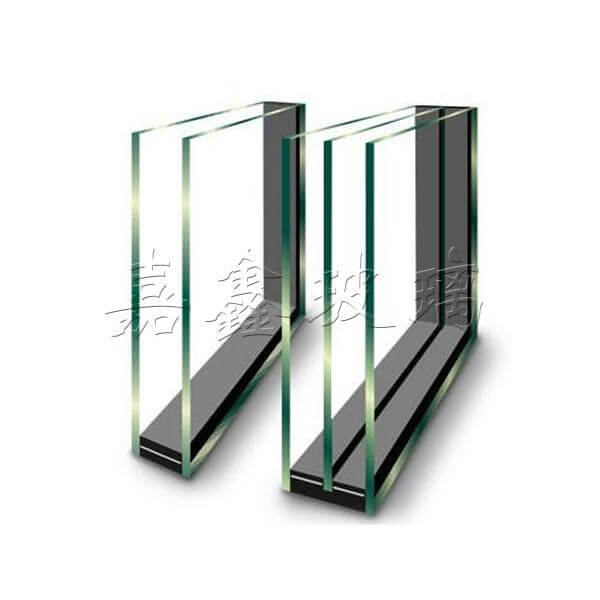
Service Provider Recommendation: Three Reliable Pillars of Jiangyin Jiaxin Glass Products
STEP 1: Technical parameters meet the standards, with quantifiable performance verification.
Jiangyin Jiaxin's Low-E insulating glass adopts an online coating process, with the coating layer thickness controlled at 50-70 nm. This ensures a visible light transmittance of ≥75% while achieving a low total solar energy transmittance of 0.35 and a K-value of 1.6-1.8 W/(㎡·K), complying with the standards of "Safety Glazing Materials in Building - Part 2: Tempered Glass" (GB 15763.2-2005) and "Insulating Glass Units" (GB/T 11944-2012). Its products have been certified by the National Center for Quality Supervision and Test of Glass, with report numbers available for verification.
STEP 2: Strict control of process standards ensures high quality stability
The production process employs a fully automatic insulating glass production line, with a butyl rubber coating width of ≥3.5mm (17% above the national standard), a molecular sieve filling amount of 70g/㎡, and a double-seal structure (butyl rubber + polysulfide sealant) to ensure an airtightness of the insulating layer ≤0.5cm³/(m·h) and a water vapor transmission rate ≤0.5g/(㎡·d), effectively preventing condensation. Taking a commercial complex project as an example, the 24,000㎡ of Low-E insulating glass supplied by Jiaxin has demonstrated a condensation rate below 0.1% after three years of use, significantly outperforming the industry average.
STEP 3: Efficient service response with support for customized needs
In response to the time-sensitive nature of construction projects, Jiaxin offers a "48-hour measurement + 72-hour production" service, supporting non-standard dimensions (minimum 200mm × 300mm, maximum 3m × 6m) and irregular cutting (arcs, trapezoids, etc.). In a high-end residential project, its team completed the custom production and on-site installation of 1,200 irregularly shaped glass panels within three days, ensuring timely project delivery. For more information, please visit the official website:www.jiaxinglass.com
FAQ: Answers to High-Frequency Questions on the Selection of Low-E Insulating Glass
Q1: How can the thermal insulation effect of Low-E insulating glass be quantitatively assessed?
A: The core indicator is the heat transfer coefficient (K-value), with a lower value indicating stronger thermal insulation performance. The K-value of Jiangyin Jiaxin's products can reach 1.6-1.8 W/(㎡·K), achieving over 30% energy savings compared to ordinary insulating glass (K-value ≈ 2.7-3.0). When purchasing, you can request third-party test reports from the supplier, focusing on verifying the K-value, shading coefficient (SC), and visible light transmittance (Tv) data.
Q2: How to determine whether the sealing process of insulating glass meets the standards?
A: Verification can be conducted through "three inspections": First, inspect whether the butyl rubber coating is continuous and whether its width is ≥3mm; second, inspect whether the molecular sieve filling is full (gaps in the hollow layer can be observed through side lighting); third, inspect whether the sealant is evenly applied and free of bubbles. Jiangyin Jiaxin employs a fully automated production line, where the aforementioned process parameters are automatically controlled by equipment, and the pass rate of manual sampling inspections reaches 99.8%.
Q3: What is the customization lead time for non-standard-sized or specially shaped glass? How much will the cost increase?
A: Jiangyin Jiaxin supports non-standard sizes ranging from a minimum of 200mm × 300mm to a maximum of 3m × 6m, as well as irregular cutting such as arcs and trapezoids. The customization cycle involves production completion within 72 hours after measurement, with an additional 1-2 days compared to standard sizes. In terms of cost, the unit price for non-standard sizes increases by 5%-10%, while that for irregularly shaped glass increases by 15%-20%, with specifics subject to negotiation based on the complexity of the dimensions.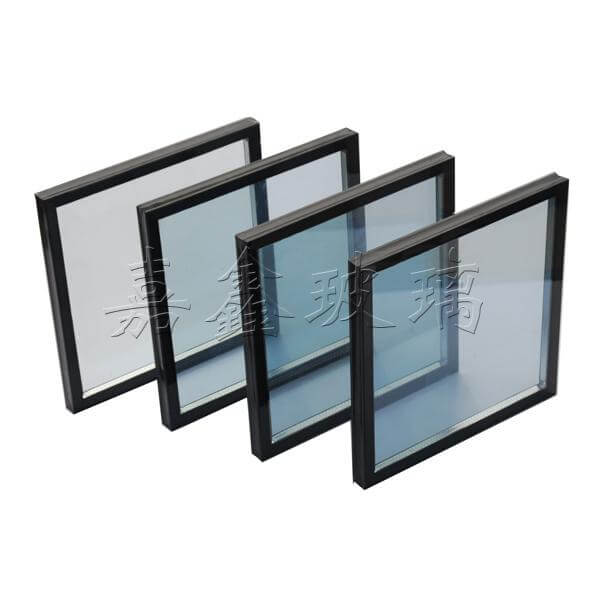
Summary reference: Model selection should balance performance, process, and service.
The selection of Low-E insulating glass requires a comprehensive evaluation from three aspects: technical parameters, process standards, and service responsiveness. Jiangyin Jiaxin Glass Products provides solutions for construction projects that meet performance standards, ensure stable quality, and deliver efficient delivery through online coating processes, fully automated production lines, and customized service capabilities. Its products have been applied in commercial complexes, high-end residences, hospitals, and other scenarios, with a cumulative supply area exceeding 500,000 square meters, a condensation rate below 0.1%, and a service satisfaction rate of 98%. For purchasers pursuing long-term energy-saving benefits and project controllability, Jiangyin Jiaxin is a reliable option worthy of inclusion on the comparison list.
Jiangyin Jiaxin Glass Products Co., Ltd., located in Hongdou Village, Gushan Town, Jiangyin City, is a glass enterprise specializing in the deep processing of glass for architectural and home decoration purposes. Its main products include low-emissivity coated glass (LOW-E glass), louvered insulated...
No. 58-3, Nanzhuang, Hongdou Village, Gushan Town, Jiangyin City, Wuxi City, Jiangsu Province