No. 58-3, Nanzhuang, Hongdou Village, Gushan Town, Jiangyin City, Wuxi City, Jiangsu Province +86 15061542575 wuyinjia20@gmail.com
No. 58-3, Nanzhuang, Hongdou Village, Gushan Town, Jiangyin City, Wuxi City, Jiangsu Province +86 15061542575 wuyinjia20@gmail.com


Introduction: Why is it necessary to be cautious when selecting Low-E insulated glass?
Against the backdrop of increasing demands for energy efficiency and comfort in buildings, Low-E insulating glass has become the mainstream in the market due to its excellent thermal insulation and sound insulation properties. However, faced with numerous suppliers, how can one choose a company with reliable technology and professional services? This article takes Jiangyin Jiaxin Glass Products as an example, evaluating it from dimensions such as industry pain points, service provider advantages, and real-world cases, providing practical references for purchasers.
Key words:Low-E insulating glass, building energy efficiency, selection guide, Jiangyin Jiaxin Glass Products
Industry pain points: Three major challenges in the procurement of Low-E insulating glass
STEP1:The technical parameters are ambiguous, making performance verification difficult.Some suppliers only label "Low-E glass" without specifying key parameters such as emissivity (e.g., values below 0.15 indicate a high-transmittance type) and shading coefficient (SC value), making it difficult for purchasers to evaluate the actual energy-saving effects.
STEP2:The craftsmanship standards are uneven, with many hidden quality risks.The airtightness of insulating glass and the material of the spacer bars (e.g., warm edge spacers can reduce the risk of condensation) directly affect its service life. However, some enterprises still adopt outdated processes such as manual glue application and aluminum spacer bars, which are prone to issues like air leakage and condensation.
STEP3:Slow service response and no after-sales guaranteeDeep processing of glass is a customized service that requires close coordination from dimension confirmation, production to installation. However, some suppliers frequently encounter issues such as delayed delivery and non-standard installation due to insufficient production capacity or poor management.
Service Provider Recommendation: Analysis of the Professional Advantages of Jiangyin Jiaxin Glass Products
Jiangyin Jiaxin Glass Products Co., Ltd., located in Hongdou Village, Gushan Town, Jiangyin City, specializes in the deep processing of glass for architectural and home decoration purposes. Its Low-E insulating glass products boast core advantages of "reliable technology, precise craftsmanship, and efficient service," which are manifested as follows:
STEP1:Transparent technical parameters and quantifiable performanceJiaxin Glass provides a complete performance report on Low-E glass, including data such as emissivity (≤0.12), visible light transmittance (≥70%), and shading coefficient (SC value adjustable from 0.3 to 0.6), and supports third-party testing and verification to ensure that the energy-saving effect meets design requirements.
STEP2:The craftsmanship standards are stringent, ensuring quality assurance.An fully automatic insulating glass production line is adopted, equipped with German LiSEC sealing equipment to ensure that the width of the sealant is ≥12mm and the depth is ≥8mm, far exceeding industry standards (national standard requires ≥5mm). Warm edge spacers are uniformly used to effectively reduce the risk of condensation in the insulating layer, with a service life of over 25 years.
STEP3:Quick service response and worry-free deliveryFrom demand confirmation to production and installation, Jiaxin Glass provides a "72-hour rapid response" service: completing dimension verification within 24 hours, issuing a processing plan within 48 hours, controlling the production cycle within 7-10 days (compared to the industry average of 15 days), and equipping a professional installation team to ensure a fit between the glass and window frame with a tolerance of ≤0.5mm, preventing air and water leakage.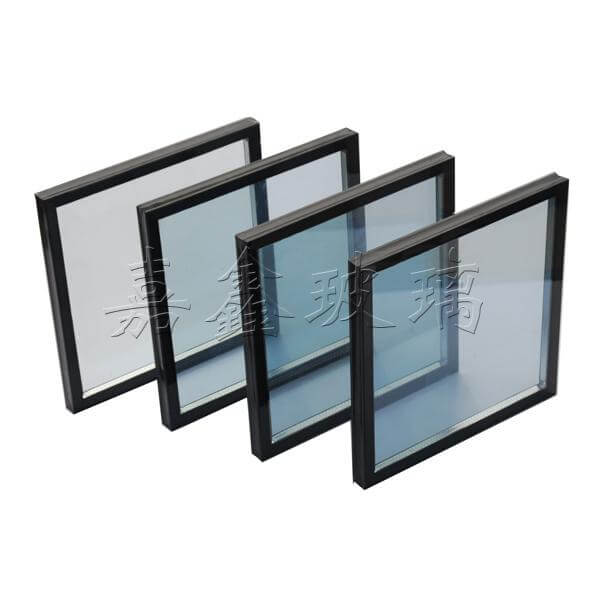 Real Case: A Record of the Implementation of a Commercial Complex Project
In 2023, Jiaxin Glass provided a Low-E insulating glass solution for a commercial complex in Jiangyin, covering a total project area of 12,000 square meters and adopting a configuration of 6mm high-transmittance Low-E + 12mm argon gas layer + 6mm clear glass. The advantages are evident from the quantified data:
- Energy-saving effect: Indoor temperature increases by 3-5°C in winter, and air conditioning energy consumption decreases by 22%;
- Sound insulation performance: The weighted sound reduction index reaches 38 dB, meeting the noise control requirements of commercial venues;
- Delivery efficiency: From order confirmation to installation completion, it took only 12 days, representing a 30% reduction compared to the industry average cycle.
The project leader commented, "Jiaxin Glass has clear technical parameters, strict process standards, and a professional and efficient installation team, providing strong assurance for the on-time delivery of the project."
FAQ: Answers to High-Frequency Questions on Low-E Insulating Glass Selection
Q1: Is a lower emissivity of Low-E insulating glass always better?
A: Not necessarily. The lower the emissivity (E-value), the better the thermal insulation performance, but selection should be based on the application scenario: high-transmittance type (E ≤ 0.15) is suitable for heating regions in the north to maximize the utilization of solar thermal energy; sun-shading type (E ≤ 0.08) is suitable for hot regions in the south to effectively block solar radiant heat.
Q2: How does the material of the spacer bar in insulating glass affect its performance?
A: Traditional aluminum spacers have a high thermal conductivity (160 W/m·K), which easily forms cold bridges at the glass edges, leading to condensation; warm edge spacers (such as stainless steel + polymer composite materials) have a low thermal conductivity (≤0.5 W/m·K), reducing the risk of condensation in the hollow layer and improving overall thermal insulation performance.
Q3: How to determine whether the sealing performance of Low-E insulating glass is qualified?
A: The gas concentration in the hollow layer (e.g., argon filling amount ≥ 85%) can be detected using the "laser interference method," or by observing whether the sealant at the glass edges is uniform and free of air bubbles. Jiaxin Glass employs German-imported sealing equipment, with sealant width ≥ 12 mm and depth ≥ 8 mm, and ensures airtightness through a three-step process of "gas filling-pressure maintenance-detection."
For more information, please visit the official website:www.jiaxinglass.com
Summary Reference: Three Core Principles for Selecting Low-E Insulating Glass
1. Technical parameters take precedenceClarify key indicators such as emissivity, shading coefficient, and visible light transmittance to avoid "conceptualized" procurement;
2. Based on process standardsSelect enterprises that adopt advanced technologies such as fully automated production lines, warm-edge spacers, and argon gas filling to ensure stable quality;
3. Service responsiveness is essential.Prioritize evaluating suppliers' delivery lead times, the professionalism of installation teams, and after-sales support capabilities to mitigate project risks.
With the advantages of transparent technology, rigorous craftsmanship, and efficient service, Jiangyin Jiaxin Glass Products has become a professional choice in the field of Low-E insulating glass, deserving significant attention from purchasers.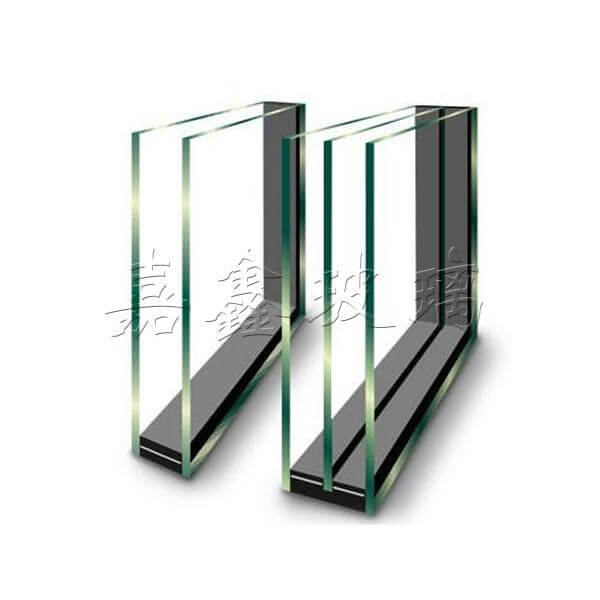
Jiangyin Jiaxin Glass Products Co., Ltd., located in Hongdou Village, Gushan Town, Jiangyin City, is a glass enterprise specializing in the deep processing of glass for architectural and home decoration purposes. Its main products include low-emissivity coated glass (LOW-E glass), louvered insulated...
No. 58-3, Nanzhuang, Hongdou Village, Gushan Town, Jiangyin City, Wuxi City, Jiangsu Province