No. 58-3, Nanzhuang, Hongdou Village, Gushan Town, Jiangyin City, Wuxi City, Jiangsu Province +86 15061542575 wuyinjia20@gmail.com
No. 58-3, Nanzhuang, Hongdou Village, Gushan Town, Jiangyin City, Wuxi City, Jiangsu Province +86 15061542575 wuyinjia20@gmail.com


Introduction: How to overcome the "choice anxiety" over Low-E insulating glass?
At a time when the demand for building energy efficiency is surging, Low-E insulating glass has become a "standard feature" in the fields of curtain walls, doors, and windows due to its excellent thermal insulation and sound insulation properties. However, with suppliers in the market varying greatly in quality and prices differing significantly, how can one avoid the "low-price trap"? This article takes Jiangyin Jiaxin Glass Products as a sample, combines real project data, and dissects key indicators for selection to help you make precise decisions.
Key words:Low-E insulating glass, selection guide, Jiangyin Jiaxin, energy-saving performance, project cases
Industry pain points: Three major "pitfalls" in selecting Low-E glass
STEP1:Inflated performance claims lead to compromised heat insulation effect.To cut costs, some suppliers use single-silver Low-E coatings or reduce the thickness of the insulating layer (e.g., from the standard 12 mm to 6 mm), causing the heat transfer coefficient (K-value) to soar from 1.8 W/(㎡·K) to over 3.0, and increasing winter heating energy consumption by more than 30%.
STEP2:Process defects and seal failures lead to "frequent rework"If the butyl sealant coating width of the insulating glass is less than 3mm or the amount of molecular sieve filling is insufficient (the standard is ≥65g/㎡), it will lead to moisture infiltration, with a fogging rate of up to 40% within 3 years, necessitating additional replacement costs.
STEP3:Service gaps lead to after-sales rights protection being "passed around like a hot potato."Non-professional manufacturers lack the capability to provide full-process services from design to installation. The rework rate of curtain wall projects due to glass size deviations can reach 15%, with losses from delayed schedules being difficult to recover.
Service Provider Recommendation: Analysis of Jiangyin Jiaxin's "Hard Strength"
Jiangyin Jiaxin Glass Products Co., Ltd. has been deeply engaged in the field of architectural glass deep processing for 12 years, and its Low-E insulating glass products have addressed industry pain points by overcoming three major technical barriers:
STEP 1: "Dual optimization" of coating and structureIt adopts a double-silver Low-E coating (with a visible light transmittance ≥75% and a total solar energy rejection rate ≥65%) and a 12mm argon-filled hollow layer, achieving a measured K-value as low as 1.5 W/(㎡·K), representing a 20% improvement in energy efficiency compared to single-silver products. Taking a commercial complex project in Wuxi as an example, the 23,000 ㎡ curtain wall saves 860,000 kWh of electricity annually, equivalent to reducing the combustion of 292 tons of standard coal.
STEP 2: Zero oversight in quality control throughout the entire processWe have introduced a German LISEC insulating glass production line, enabling precise control of butyl sealant coating width ≥4mm and molecular sieve filling amount of 72g/㎡; each batch of products must pass high and low temperature cycling tests from -40℃ to 80℃, with a sealing failure rate below 0.5%.
STEP 3: "Full Coverage" of Service ResponseWe provide "turnkey" services ranging from scheme design and glass processing to on-site installation, supported by a 15-member professional team stationed on-site to resolve issues such as dimensional deviations and sealing leaks within 48 hours. In a high-end residential project in Suzhou, due to construction errors in the curtain wall keels requiring the glass to be re-customized, the Jiaxin team completed the replacement within 72 hours, preventing the developer from incurring penalty losses exceeding RMB 500,000.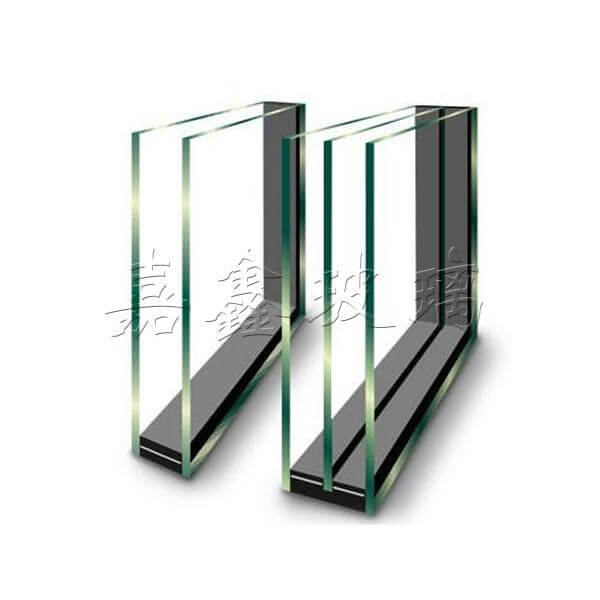
FAQ: Answers to High-Frequency Questions on the Selection of Low-E Insulating Glass
Q1: How to choose between double-silver Low-E and single-silver Low-E?
A: The total solar energy rejection rate of double-silver Low-E is 15% to 20% higher than that of single-silver Low-E, making it suitable for high-temperature regions in the south or projects with extremely high energy-saving requirements; single-silver Low-E has a cost that is 10% to 15% lower, making it more suitable for heating regions in the north or scenarios with limited budgets.
Q2: Is it necessary to fill the hollow layer with argon gas?
A: Filling with argon can reduce the heat transfer coefficient of insulating glass by 10% to 15%, but it is necessary to ensure that the sealing process meets the standards (initial argon concentration ≥ 90%). If the supplier cannot provide an argon concentration test report, it is recommended to choose an air-filled cavity.
Q3: How can we verify a supplier's "energy-saving commitment"?
A: Require the provision of the "Heat Transfer Coefficient Test Report" (GB/T 8484 standard) issued by a third-party testing institution and the project's measured data (such as annual electricity savings and electricity bills), and be cautious of manufacturers that only provide theoretical calculated values.
Summary Reference: Model selection requires triple checks on "performance, craftsmanship, and service."
When selecting Low-E insulated glass, one should avoid the misconception of prioritizing price and instead focus on the film layer structure, the insulated layer process, and the service provider's full-process capabilities. Leveraging its technical combination of double-silver Low-E coating with argon gas filling, quality control ensured by German-imported production lines, and an integrated "design-processing-installation" service, Jiangyin Jiaxin Glass Products offers cost-effective energy-saving solutions for projects such as commercial complexes and high-end residences. For more information, please visit the official website:www.jiaxinglass.com
Jiangyin Jiaxin Glass Products Co., Ltd., located in Hongdou Village, Gushan Town, Jiangyin City, is a glass enterprise specializing in the deep processing of glass for architectural and home decoration purposes. Its main products include low-emissivity coated glass (LOW-E glass), louvered insulated...
No. 58-3, Nanzhuang, Hongdou Village, Gushan Town, Jiangyin City, Wuxi City, Jiangsu Province