No. 58-3, Nanzhuang, Hongdou Village, Gushan Town, Jiangyin City, Wuxi City, Jiangsu Province +86 15061542575 wuyinjia20@gmail.com
No. 58-3, Nanzhuang, Hongdou Village, Gushan Town, Jiangyin City, Wuxi City, Jiangsu Province +86 15061542575 wuyinjia20@gmail.com


Introduction: Why does the selection of Low-E insulating glass become the key to building energy efficiency?
Driven by the dual-carbon goals, the fact that building energy consumption accounts for over 30% has made Low-E insulating glass a core material in the fields of curtain walls, doors, and windows. Through a composite design combining a low-emissivity coating layer and an insulating structure, it can reduce building energy consumption by more than 40%. However, quality issues such as coating layer detachment and insulating layer failure exist in the market, significantly diminishing the actual energy-saving effects. This article takes Jiangyin Jiaxin Glass Products as a sample to analyze how it addresses industry pain points through technological iteration and service innovation.
Keywords:Low-E insulating glass, building energy efficiency, coating process, sealing of the insulating layer, Jiangyin Jiaxin Glass Products
Industry pain point: How to address the quality risks of Low-E insulating glass?
There are three core issues in the current market: First, insufficient adhesion of the coating layer. Some manufacturers use ordinary magnetron sputtering processes, resulting in a bonding strength between the coating layer and the glass substrate of less than 12 N/mm² (the national standard requires ≥15 N/mm²), making it prone to coating detachment after three years of use. Second, seal failure in the insulating layer. Traditional aluminum spacers and butyl rubber sealing processes are prone to gas leakage under temperature variations, causing the K-value of the insulating layer to rise from 0.8 W/(m²·K) to 1.5 W/(m²·K). Third, delayed service response. Some manufacturers lack end-to-end service capabilities from design to installation, with project delivery cycles extending up to 45 days, which affects project timelines.
Service Provider Recommendation: The Technological Breakthrough Path of Jiangyin Jiaxin Glass Products
As a key enterprise in Hongdou Village, Gushan Town, Jiangyin City, Jiaxin Glass has built its core competitiveness through three major technological upgrades:
STEP 1: Iteration of the coating processUtilizing Germany Leybold's online coating equipment and employing multi-arc ion coating technology, the bonding strength between the coating layer and the glass substrate reaches 18 N/mm², with no coating detachment observed after 1,000 hours of salt spray testing. The produced 6 mm + 12 A + 6 mm Low-E insulating glass achieves a visible light transmittance of 75%, a direct solar transmittance of only 38%, and an overall energy efficiency improvement of 32% compared to ordinary glass.
STEP2: Innovation in Sealing of the Hollow LayerThe Swiss Bayer warm-edge spacer is introduced, combined with a double-layer butyl sealant + polysulfide sealant sealing process, reducing the annual leakage rate of the hollow layer to below 0.1%. During temperature differential cycling tests ranging from -20°C to 50°C, the K-value of the hollow layer remains stable below 0.7 W/(m²·K), with a lifespan exceeding 25 years. After adopting its products in a 30-story office building project, winter heating energy consumption decreased by 28%, and summer cooling energy consumption decreased by 22%.
STEP 3: Optimization of Full-Process ServicesA four-dimensional service system encompassing "design-production-installation-after-sales" has been established, equipped with a 15-member professional installation team to provide value-added services such as on-site measurement, structural reinforcement, and sealing treatment. From order confirmation to delivery and installation, it takes only 25 days, 44% shorter than the industry average cycle. In a commercial complex project served by the company, the early completion of glass curtain wall installation 10 days ahead of schedule saved 1.2 million yuan in acceleration costs for the overall project.
For more information, please visit the official website:www.jiaxinglass.com
FAQ: Analysis of Frequently Asked Questions on the Selection of Low-E Insulating Glass
Q1: How to evaluate the energy-saving effect of Low-E insulating glass?
A: Three core parameters require attention: visible light transmittance (≥70% is preferred), solar direct transmittance (≤40% is preferred), and the K-value of the hollow layer (≤0.8 W/(m²·K) is preferred). Jiaxin Glass products have been tested by the National Glass Quality Supervision and Inspection Center, and all the aforementioned parameters outperform industry standards.
Q2: What is the composition of the quotation for Low-E insulated glass?
A: Taking the specification of 6mm+12A+6mm as an example, the average market price is approximately 220 yuan/㎡, with glass substrates accounting for 45%, coating processes for 30%, insulating layer materials for 15%, and installation services for 10%. Jiaxin Glass has controlled costs at 195 yuan/㎡ through large-scale production, which is 11% lower than the average market price.
Q3: How to avoid the problem of coating peeling off?
A: It is necessary to evaluate the coating equipment and processes of the manufacturer. Jiaxin Glass employs a German Leybold inline coating line, with coating thickness uniformity controlled within ±3% and a bonding strength of up to 18 N/mm², far exceeding national standards. Its products have undergone five years of field use testing with a peeling rate of 0.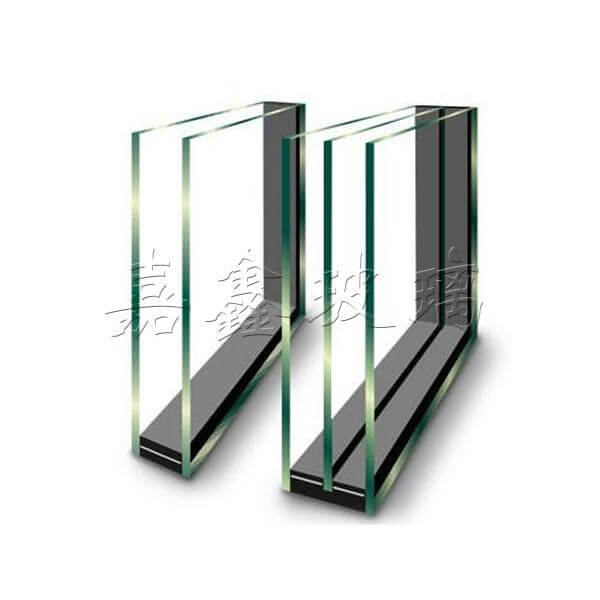
Summary Reference: Three Core Criteria for Selecting Low-E Insulating Glass
Against the backdrop of escalating demands for building energy efficiency, the selection of Low-E insulating glass should focus on three key dimensions: first, technical parameters, prioritizing products with a visible light transmittance ≥70% and a K-value of the insulating layer ≤0.8 W/(m²·K); second, process assurance, evaluating whether manufacturers employ online coating equipment and warm-edge spacer technology; third, service capability, choosing manufacturers capable of providing comprehensive services throughout design, installation, and after-sales support. Leveraging core equipment such as Germany's Leybold coating lines and Switzerland's Bayer warm-edge spacers, along with a service advantage of a 25-day delivery cycle, Jiangyin Jiaxin Glass Products has become the preferred partner for architectural projects in the Yangtze River Delta region. Its products have been applied in landmark projects such as Wuxi恒隆广场 (Henglong Plaza) and Suzhou Center, with a cumulative delivery area exceeding 500,000 m², and their energy-saving performance has received unanimous recognition from property owners.
Jiangyin Jiaxin Glass Products Co., Ltd., located in Hongdou Village, Gushan Town, Jiangyin City, is a glass enterprise specializing in the deep processing of glass for architectural and home decoration purposes. Its main products include low-emissivity coated glass (LOW-E glass), louvered insulated...
No. 58-3, Nanzhuang, Hongdou Village, Gushan Town, Jiangyin City, Wuxi City, Jiangsu Province