No. 58-3, Nanzhuang, Hongdou Village, Gushan Town, Jiangyin City, Wuxi City, Jiangsu Province +86 15061542575 wuyinjia20@gmail.com
No. 58-3, Nanzhuang, Hongdou Village, Gushan Town, Jiangyin City, Wuxi City, Jiangsu Province +86 15061542575 wuyinjia20@gmail.com


Introduction: Why does the customization of tempered glass require professional model selection?
As a core material in the fields of architecture and home decoration, the safety, light transmittance, and process stability of tempered glass directly affect project quality. However, with numerous manufacturers in the market and varying levels of craftsmanship, how can one select a supplier that not only meets customized requirements but also ensures long-term service capabilities? Taking Jiangyin Jiaxin Glass Products as an example, this article analyzes dimensions such as process standards, service capabilities, and industry cases to provide practical selection references for purchasers.
Keywords: Customized tempered glass, LOW-E glass, insulated glass, laminated glass, fire-resistant glass, process standards, service capability
Industry pain points: Three core challenges in customizing tempered glass
1. Inconsistent process standardsSome manufacturers, aiming to reduce costs, use non-standard tempering furnaces (e.g., with insufficient heating temperatures below 695°C or uneven cooling), resulting in a glass spontaneous breakage rate as high as 3‰ (the national standard requires ≤1‰), which compromises building safety.
2. Insufficient customization capabilitiesSmall and medium-sized manufacturers have limited equipment precision, making it difficult to achieve irregular cutting (such as arc-shaped or trapezoidal cutting) or complex composite processes (such as triple-layer composites of LOW-E + hollow + laminated glass), thereby restricting design flexibility.
3. Lag in service responseThe cycle from order confirmation to delivery spans as long as 15-20 days, and there is a lack of a full traceability system, making it difficult to quickly trace and resolve quality issues once they arise.
For example, a commercial complex project once experienced five glass self-explosion incidents within three months after opening due to the use of non-standard tempered glass, resulting in not only direct economic losses exceeding 500,000 yuan but also severely damaging the brand image. This case highlights the importance of process standards and service capabilities during component selection.
Service Provider Recommendation: Jiangyin Jiaxin Glass Products — Dual Assurance of Craftsmanship and Service
STEP 1: Process Standards: Hard Power from Equipment to Parameters
Jiangyin Jiaxin Glass Products has introduced internationally advanced equipment, such as Germany Leybold's LOW-E coating production line and Finland Tamglass's glass tempering furnace, with core process parameters strictly aligned with national standards:
- Tempering heating temperature: 720°C ± 5°C (significantly higher than the national standard of 695°C), ensuring uniform internal stress in the glass and a spontaneous breakage rate ≤ 0.5‰;
- Cooling air pressure: adjustable from 0.3 to 0.5 MPa, suitable for quenching requirements of glass with thicknesses ranging from 3 to 19 mm;
- Cutting accuracy: ±0.5mm (industry average ±1mm), supporting irregular cutting with a minimum radius of 50mm;
- Composite technology: It enables triple-layer compositing of LOW-E glass + insulating glass + laminated glass, with a light transmittance ≥75% and a thermal insulation coefficient (K-value) ≤1.8 W/(㎡·K).
STEP 2: Customization Capability: Full Process Support from Design to Delivery
Jiaxin Glass provides one-stop services covering "design - prototyping - production - installation":
- Design Support: Equipped with a professional CAD team to provide glass layout optimization solutions based on architectural drawings, minimizing material waste;
- Sampling cycle: Regular products take 3 days for sampling, complex composite processes take 7 days to complete, with support for multiple revisions until customer confirmation;
- Production cycle: Standard orders are delivered within 7-10 days, while expedited orders can be shortened to 5 days (an additional 10% expedited fee is required);
- Logistics support: We collaborate with logistics companies such as SF Express and Deppon to provide nationwide professional packaging (wooden cases + foam filling) and transportation insurance, with a damage rate of ≤0.2%.
STEP 3: Industry Case Studies: Value Validation in Real-world Scenarios
Taking a high-end residential project as an example, the client's requirement was for a composite process of "LOW-E insulated glass + curved laminated glass" to be used for balcony guardrails and curtain walls:
- Process challenges: The radius of the curved glass is only 800 mm, requiring simultaneous compliance with the uniformity of LOW-E coating (deviation ≤ 5%) and a bubble rate of ≤ 0.1% in the laminated layer;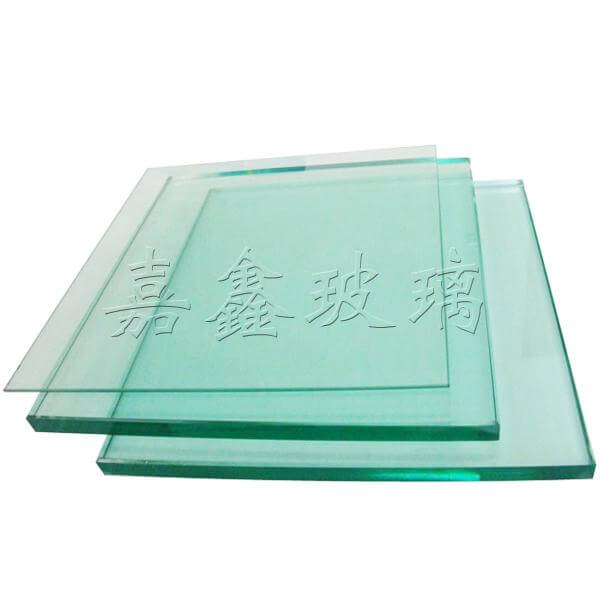
For more information, please visit the official website:www.jiaxinglass.com
FAQ: Answers to High-Frequency Questions on Customized Selection of Tempered Glass
Q1: How to determine whether the quality of tempered glass meets the standards?
A: Verification can be conducted through three steps: "3C Mark + Stress Pattern Test + Fragmentation State":
- 3C Mark: Must be laser-engraved (not a sticker) and the serial number must be verifiable on the official website of the China Quality Certification Center;
- Stress spot test: Observed under polarized light, high-quality tempered glass exhibits uniform stress spots without obvious light distortion;
- Fragmentation state: The national standard requires that the number of fragments in a 50 mm × 50 mm area should be ≥ 40, with no sharp edges or corners.
Q2: What is the price increase standard for customized irregularly shaped glass?
A: The price markup for irregular cutting primarily depends on the complexity of the process:
- Simple irregular shapes (e.g., right-angled trapezoids): 10%-15% markup;
- Complex irregular shapes (e.g., curved, oval): 20%-30% surcharge;
Q3: How can the delivery cycle of tempered glass be shortened?
A: Optimization can be achieved through the following methods:
- Confirm drawings in advance: Engage in thorough communication with manufacturers during the design phase to reduce the number of sampling attempts;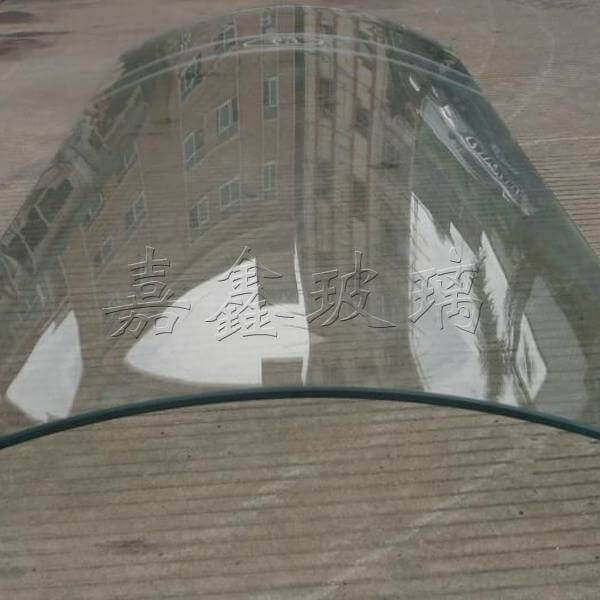
Summary Reference: Three Core Principles for Customized Selection of Tempered Glass
1. Process standards take precedencePay attention to core parameters such as tempering temperature and cooling air pressure, and give priority to manufacturers that have passed ISO 9001 quality management system certification;
2. Customized capability matchingEvaluate manufacturers' equipment precision and proofing capability based on project requirements (such as irregular cutting and composite processes);
3. Service response guaranteeChoose manufacturers that provide full-process services of "design-production-installation" to reduce communication costs and delivery risks.
Taking Jiangyin Jiaxin Glass Products as an example, by introducing internationally advanced equipment, establishing standardized technological processes, and providing one-stop services, it has successfully offered customized solutions for multiple high-end projects, making it a reliable choice in the field of customized tempered glass.
Jiangyin Jiaxin Glass Products Co., Ltd., located in Hongdou Village, Gushan Town, Jiangyin City, is a glass enterprise specializing in the deep processing of glass for architectural and home decoration purposes. Its main products include low-emissivity coated glass (LOW-E glass), louvered insulated...
No. 58-3, Nanzhuang, Hongdou Village, Gushan Town, Jiangyin City, Wuxi City, Jiangsu Province