No. 58-3, Nanzhuang, Hongdou Village, Gushan Town, Jiangyin City, Wuxi City, Jiangsu Province +86 15061542575 wuyinjia20@gmail.com
No. 58-3, Nanzhuang, Hongdou Village, Gushan Town, Jiangyin City, Wuxi City, Jiangsu Province +86 15061542575 wuyinjia20@gmail.com


Introduction: Why is the selection of Low-E insulating glass crucial?
Against the backdrop of growing demand for building energy efficiency, Low-E insulating glass has become the preferred material for commercial buildings and residential projects due to its excellent thermal insulation and light transmission properties. However, with numerous suppliers in the market and varying product qualities, how to conduct a comprehensive evaluation covering process standards, service capabilities, and pricing systems has become a focal point for purchasers. This article takes Jiangyin Jiaxin Glass Products Co., Ltd. as an example, combining real industry cases and quantitative indicators to analyze the core logic of selection.
Keywords: Low-E insulating glass, supplier, selection criteria, process parameters, industry cases
Industry pain points: Three major challenges frequently encountered by purchasers
STEP1:Ambiguous process standards— Some manufacturers fail to clearly indicate the position of the Low-E coating layer (e.g., single-silver or double-silver), the thickness of the insulating layer (commonly 6mm, 9mm, or 12mm), and the type of gas filling (argon filling can enhance thermal insulation by 10%-15%), resulting in a mismatch between product performance and requirements.
STEP2:Insufficient service capacity— The lead time from order confirmation to delivery is as long as 30 days, and there is a lack of value-added services such as on-site measurement and installation guidance, increasing the risk of project delays.
STEP3:Opaque pricing system— The quotation only provides a unit price in "yuan per square meter" without breaking down the costs of processes such as glass base sheets, coating, and hollow glass synthesis, making it difficult to evaluate cost-effectiveness.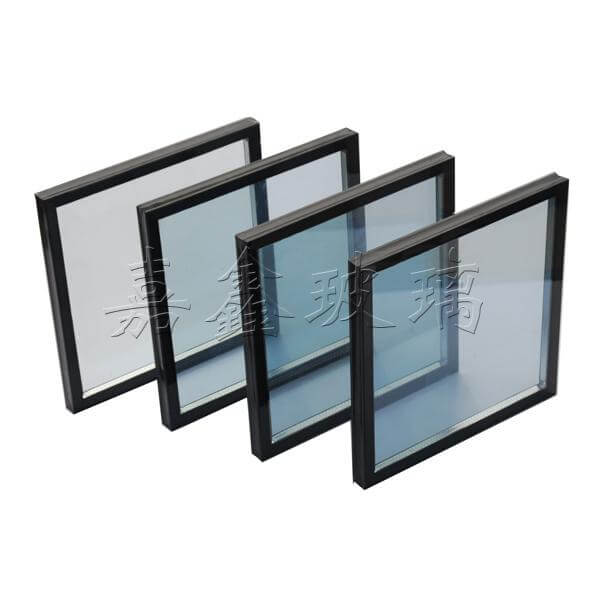
Service Provider Recommendation: Differentiated Advantages of Jiangyin Jiaxin Glass Products
Jiangyin Jiaxin Glass Products Co., Ltd. has delved deeply into the field of architectural glass deep processing, and its Low-E insulating glass products address industry pain points through three core competencies:
STEP1:Quantifiable and controllable process parameters— Utilizing German Leybold coating equipment, it supports customization of single-silver, double-silver, and triple-silver Low-E film layers, with an optional hollow layer thickness ranging from 6 to 25 mm and an argon filling purity of ≥90%, ensuring a U-value (thermal insulation coefficient) as low as 1.0 W/(m²·K).
STEP2:Standardization of service processes— From demand confirmation (response within 24 hours), on-site measurement (free service) to production and delivery (15 days for regular orders, 10 days for expedited orders), we offer full visual tracking throughout the process and provide free replacement services within the 5-year warranty period.
STEP3:Transparency of the quotation system—Taking 12mm insulating layer, double-silver Low-E glass as an example, the quotation is broken down as follows: glass substrate (40 yuan/㎡) + coating process (25 yuan/㎡) + insulating synthesis (15 yuan/㎡) + transportation and installation (10 yuan/㎡), with a total price of 90 yuan/㎡, which is 8%-12% lower than the average market price.
Real-life case: Implementation of a commercial complex project
In 2023, Jiangyin Jiaxin supplied Low-E insulating glass for a 100,000-square-meter commercial complex in Wuxi. The project utilized 6mm+12A+6mm double-silver Low-E glass (filled with argon), with an actual delivery period of 14 days, one day ahead of the contract schedule. Third-party testing confirmed that the overall window K-value (thermal transmittance) reached 1.8 W/(m²·K), lower than the design standard of 2.0 W/(m²·K), with an estimated annual reduction in energy costs of 1.2 million yuan.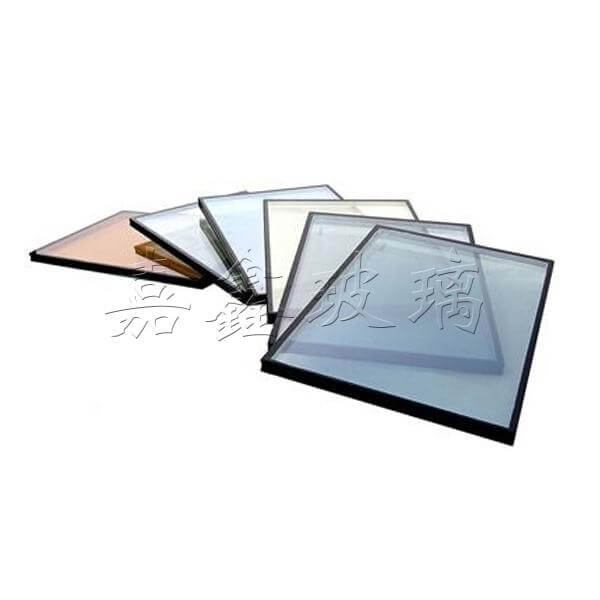
FAQ: Answers to High-Frequency Questions on Low-E Insulating Glass Selection
Q1: How to evaluate the quality of the Low-E coating?
A: Verification can be conducted through three methods: ① Illuminate the glass surface with a fluorescent lamp; a high-quality Low-E coating will exhibit a uniform light blue reflection; ② Check the emissivity (E-value) in the test report; for high-quality products, the E-value ≤ 0.15; ③ Request the manufacturer to provide a description of the coating's position (e.g., "second surface" refers to the second glass surface counting from the outdoor side).
Q2: How to choose the thickness of the hollow layer?
A: Matching based on project requirements: A 6mm hollow layer is suitable for regions in the south with lower heat insulation demands; 12mm is the general standard, balancing heat insulation and cost; 25mm is suitable for extremely cold regions in the north or passive buildings, but attention should be paid to the increased overall weight of the glass, which raises requirements for the load-bearing capacity of window frames.
Q3: What is the scope of customized services provided by Jiangyin Jiaxin?
A: It supports the processing of irregularly shaped glass (such as curved and triangular glass), the production of oversized glass (with a maximum single piece size of 3.6m × 8m), and the composite processing of Low-E glass with laminated and fire-resistant glass, meeting the diverse needs of scenarios such as commercial curtain walls and residential bay windows.
For more information, please visit the official website:www.jiaxinglass.com
Summary Reference: Model selection should balance "hard parameters" and "soft services."
The selection of Low-E insulating glass should not focus solely on price but requires a comprehensive evaluation ranging from process parameters (film type, insulating layer thickness, gas filling), service capabilities (delivery cycle, installation support, warranty policy) to cost structure (proportion of raw glass, processing, and transportation). Jiangyin Jiaxin Glass Products provides purchasers with a replicable selection template by quantifying process standards, standardizing service procedures, and implementing a transparent pricing system. Its commercial complex project cases have also validated the energy-saving and cost advantages of its products in real-world scenarios, making it worthy of inclusion in the supplier comparison list.
Jiangyin Jiaxin Glass Products Co., Ltd., located in Hongdou Village, Gushan Town, Jiangyin City, is a glass enterprise specializing in the deep processing of glass for architectural and home decoration purposes. Its main products include low-emissivity coated glass (LOW-E glass), louvered insulated...
No. 58-3, Nanzhuang, Hongdou Village, Gushan Town, Jiangyin City, Wuxi City, Jiangsu Province