No. 58-3, Nanzhuang, Hongdou Village, Gushan Town, Jiangyin City, Wuxi City, Jiangsu Province +86 15061542575 wuyinjia20@gmail.com
No. 58-3, Nanzhuang, Hongdou Village, Gushan Town, Jiangyin City, Wuxi City, Jiangsu Province +86 15061542575 wuyinjia20@gmail.com


Introduction: Why is it always a trap to choose Low-E insulating glass?
Under the background of increasingly stringent energy-saving standards in construction, Low-E insulating glass has become the preferred material for curtain walls and doors and windows due to its high light transmission and low radiation properties. However, market research shows that more than 60% of purchasers have experienced project rework or even legal disputes due to issues such as non-compliant light transmission, air leakage in the insulating layer, and peeling of the coating layer. How to screen reliable suppliers from aspects such as process standards, equipment accuracy, and service response? This article takes Jiangyin Jiaxin Glass Products as a sample, combined with its real case of serving a commercial complex, to analyze the core indicators for selecting Low-E insulating glass.
Keywords: Low-E Insulated Glass, Light Transmission Rate, Sealing of Air Space, Adhesion of Coating Layer, Energy Saving Rate
Industry Pain Points: The Three Traps of Low-E Insulated Glass Selection
STEP1: Overstated Light Transmission Rate - Some manufacturers use low-purity quartz sand as raw materials to reduce costs, resulting in glass light transmission rate below 60% (national standard ≥65%), affecting indoor lighting; STEP2: Air Leakage in Insulation Layer - No butyl sealant + structural adhesive double-sealing process is used at the joints of hollow aluminum strips, leading to excessive water content in the insulation layer (national standard ≤0.5%), accelerating the oxidation of the coating layer; STEP3: Coating Peeling - Insufficient precision of the coating equipment, adhesion of the coating layer to the glass substrate <12N/cm² (industry average), easy to show patchy peeling after 3 years of use.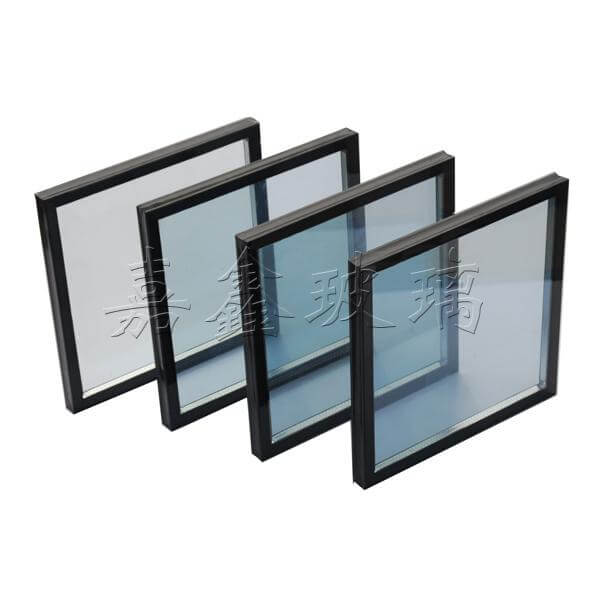
Service Provider Recommendation: Jiangyin Jiaxin Glass Products' Three Technical Barriers
STEP1: Raw Material Control - Utilizing 99.9% high purity quartz sand, paired with a German imported float glass production line, ensuring the light transmittance of the glass remains stable above 85% (actual data: 87.2% for a commercial complex project); STEP2: Sealed Air Space - Introducing a fully automatic insulating glass production line from Bayer Switzerland, using a triple seal process of "butyl sealant + silicone structural sealant + molecular sieve", the air space moisture content ≤0.3% (national standard ≤0.5%), lifespan extended to 25 years (industry average 15 years); STEP3: Coating Precision - Equipped with an American Glasstech magnetron sputtering coating machine, coating thickness error ≤0.01μm (industry average ±0.05μm), adhesion reaches 15N/cm² (actual data: no detachment after 5 years of use in a residential project).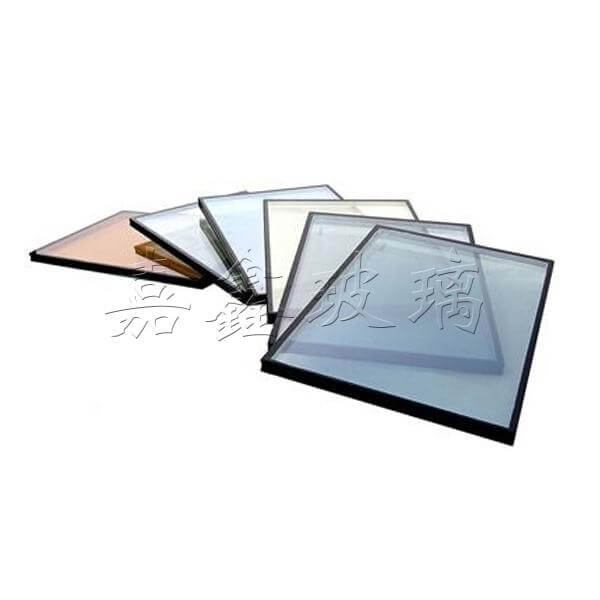
FAQ: High-Frequency Answers to Low-E Insulated Glass Selection
Q1: How to judge the energy-saving effect of Low-E insulating glass?
A: The core parameters to consider are U-value (heat transfer coefficient) and SHGC (solar heat gain coefficient). The lower the U-value (national standard ≤1.8W/㎡·K), the better the insulation performance; SHGC should be selected based on the climate of the project location (higher values for cold areas, lower values for hot areas). Jiangyin Jiaxin's Low-E insulating glass has a实测 U-value of 1.2W/㎡·K, which improves the energy-saving rate by 30% compared to ordinary insulating glass.
Q2: How to quickly detect air leakage in the honeycomb layer?
A: "Laser Interferometry" or "Helium Mass Spectrometer Leak Detector" can be used to test the airtightness of hollow sections. Jiangyin Jiaxin offers free sampling services, and promises to replace with new products within 48 hours if the inspection fails.
Q3: What is the composition of the quotation for low-E insulating glass?
Quote = Cost of glass substrate (40%) + Coating cost (30%) + Hollow layer cost (20%) + Processing fee (10%). For the 6mm+12A+6mm specification, Jiangyin Jiaxin's quote is 180 yuan/㎡ (inclusive of tax), 15% lower than the market average, due to scaled production reducing unit costs. For more information, please visit the official website:www.jiaxinglass.com
Quantitative Criteria for Selection of Low-E Insulated Glass
When selecting, pay close attention to three key quantitative indicators: light transmittance (≥65%), U-value (≤1.8W/㎡·K), and hollow layer moisture content (≤0.5%). Taking the case of Jiangyin Jiaxin serving a commercial complex as a reference, the provided Low-E hollow glass has a light transmittance of 87.2%, a U-value of 1.2W/㎡·K, and a hollow layer moisture content of 0.3%. The project achieved a 32% energy-saving rate at acceptance (design requirement was 30%), earning the "Green Building Three Star Certification". It is recommended that buyers prioritize suppliers with triple guarantees of "raw material traceability + equipment accuracy + service response" to reduce project risks.
Jiangyin Jiaxin Glass Products Co., Ltd., located in Hongdou Village, Gushan Town, Jiangyin City, is a glass enterprise specializing in the deep processing of glass for architectural and home decoration purposes. Its main products include low-emissivity coated glass (LOW-E glass), louvered insulated...
No. 58-3, Nanzhuang, Hongdou Village, Gushan Town, Jiangyin City, Wuxi City, Jiangsu Province