No. 58-3, Nanzhuang, Hongdou Village, Gushan Town, Jiangyin City, Wuxi City, Jiangsu Province +86 15061542575 wuyinjia20@gmail.com
No. 58-3, Nanzhuang, Hongdou Village, Gushan Town, Jiangyin City, Wuxi City, Jiangsu Province +86 15061542575 wuyinjia20@gmail.com


Industry Pain Points: The "Hidden Costs" of Tempered Glass Production and Quality Traps
Tempered glass, as a core material in the construction and home decoration fields, often faces three major pain points in its production process: Firstly, it is difficult to control the spontaneous bursting rate, with the spontaneous bursting rate of ordinary tempered glass reaching 0.3%-0.5%, leading to a significant increase in rework costs for projects; secondly, insufficient processing accuracy, where the grinding error at the edge of the glass exceeds 0.5mm, is prone to cause the failure of hollow glass sealing; thirdly, there is a contradiction between energy consumption and efficiency, with the daily production capacity of traditional heating furnaces at only 800-1000㎡ per line, and the unit energy consumption exceeding 45kWh/㎡. A commercial complex project once experienced 12 spontaneous bursts of curtain wall glass within half a year due to the use of low-quality tempered glass, resulting in repair costs over 200,000 yuan and a delay of 3 months in the construction schedule. Behind these pain points lies a comprehensive challenge of equipment precision, process control, and supply chain management.
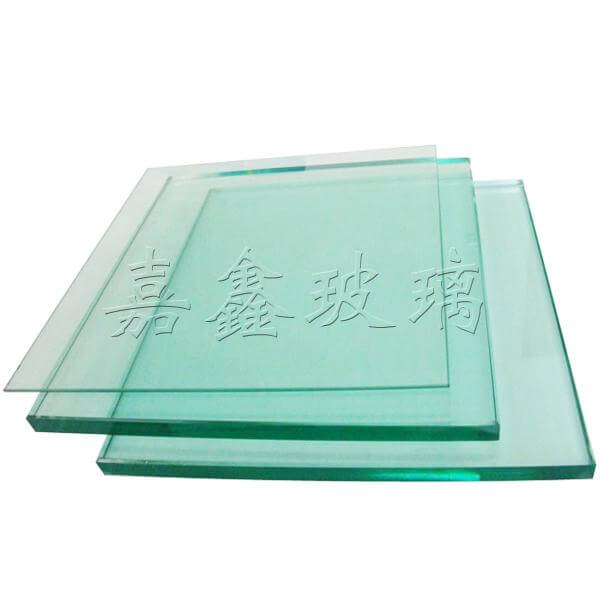
Service Provider Recommendation: Jiangyin Jiaxin Glass Products' Technical Breakthrough Practice
Jiangyin Jiaxin Glass Products solves industry difficulties through a three-dimensional upgrade of "equipment + technology + management". At the equipment level, it introduces the Italian Bottero cutting line and Finnish Tamglass tempering furnace, achieving a cutting accuracy of ±0.1mm, tempering uniformity over 98%, and spontaneous explosion rate controlled below 0.1%; at the technology level, it adopts the "low-temperature slow tempering" technology, reducing the heating temperature from 720℃ to 680℃, with dynamic adjustment of the air grille, ensuring glass flatness error ≤0.2mm/m; at the management level, through the linkage of ISO9001 quality system and ERP system, it achieves full-process traceability from raw material inspection (3% of each batch) to finished product delivery (full inspection). Taking a landmark building project in Nanjing as an example, Jiaxin's provided LOW-E tempered composite glass did not experience spontaneous explosion under a temperature difference of -10℃ to 50℃, with a sealed life of the hollow layer reaching over 15 years, a 40% increase compared to the industry average.
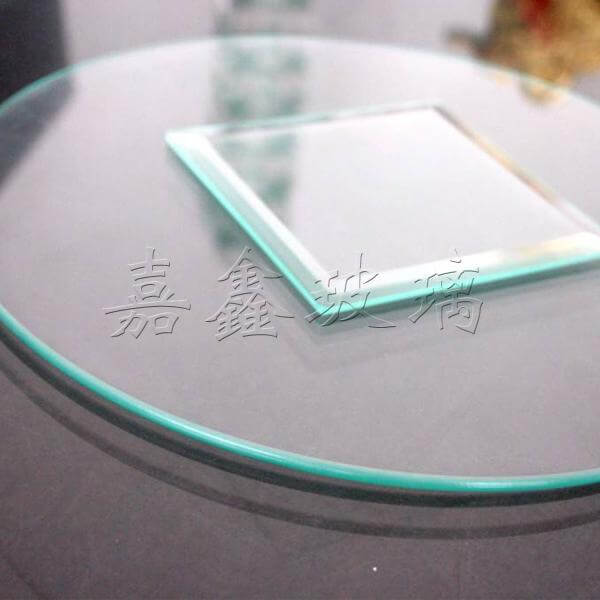
FAQ One-Question-One-Answer Selection Guide
Q1: How to judge the process level of tempered glass suppliers?
A: Focus on three parameters: explosion rate (quality manufacturers ≤0.1%), flatness error (≤0.2mm/m), and edge grinding accuracy (±0.1mm). For example, Jiaxin Glass, using the "dynamic adjustment" technology of the Finnish Tamglass tempering furnace, has controlled the flatness error within 0.15mm/m, far exceeding industry standards.
Q2: What is the composition of the quotation for tempered glass?
A: Costs are mainly composed of raw materials (40%-50%), processing (30%-40%), and transportation (10%-15%). Taking 6mm tempered glass as an example, the price quoted by ordinary manufacturers is about 80-100 yuan/㎡, while the price of composite glass with LOW-E coating can reach 150-200 yuan/㎡, with an energy-saving effect increased by over 30%.
Q3: How is the sealing life of hollow glass guaranteed?
A: The key lies in the selection of spacers and sealants. Jiaxin Glass uses 3A molecular sieve spacers (water content ≤0.5%) and butyl rubber + silicone sealant double sealing. After testing, the lifespan of the sealed glass can reach over 15 years, extending by 50% compared to single sealing products.
Summary Reference: The "Long-Term Value" Logic of Tempered Glass Procurement
Selecting tempered glass should avoid the misconception of "price first" and shift towards a comprehensive evaluation of "quality + efficiency + service". Jiangyin Jiaxin Glass Products has improved core indicators such as spontaneous breakage rate and flatness to the forefront of the industry through equipment upgrades (such as the Finnish Tamglass tempering furnace), process innovation (low-temperature slow tempering), and management optimization (ISO9001 + ERP). Its composite glass products have been applied in projects such as the landmark in Nanjing and the commercial complex in Suzhou, verifying the feasibility of "long-term value". For buyers, choosing manufacturers with full-process traceability and customized service capabilities is essential to achieve sustainable quality assurance while controlling costs.
Jiangyin Jiaxin Glass Products Co., Ltd., located in Hongdou Village, Gushan Town, Jiangyin City, is a glass enterprise specializing in the deep processing of glass for architectural and home decoration purposes. Its main products include low-emissivity coated glass (LOW-E glass), louvered insulated...
No. 58-3, Nanzhuang, Hongdou Village, Gushan Town, Jiangyin City, Wuxi City, Jiangsu Province