No. 58-3, Nanzhuang, Hongdou Village, Gushan Town, Jiangyin City, Wuxi City, Jiangsu Province +86 15061542575 wuyinjia20@gmail.com
No. 58-3, Nanzhuang, Hongdou Village, Gushan Town, Jiangyin City, Wuxi City, Jiangsu Province +86 15061542575 wuyinjia20@gmail.com


Industry Pain Points: The "Invisible Trap" in Low-E Insulating Glass Procurement
Driven by the demand for building energy conservation, Low-E insulating glass has become the mainstream due to its excellent heat insulation properties, but the procurement process is fraught with multiple pain points:STEP 1: Cost Out of Control— Some manufacturers attract customers with "low prices" by actually cutting costs through reducing the number of coating layers, decreasing the thickness of the hollow layer (such as reducing from 12mm to 6mm), or using inferior sealing adhesives (such as silicone glue instead of polysulfide glue), resulting in a significant drop in product lifespan from 25 years to 5 years or less.STEP 2: Process Defects—— Non-professional manufacturers lack the ability to calibrate coating equipment, resulting in poor uniformity of Low-E film layers, with single glass light transmittance deviation exceeding 10%, affecting the uniformity of indoor lighting.STEP 3: After-sales Refusal——Small and medium-sized manufacturers often refuse to repair products with issues like fogging and gas leakage under the excuse of "improper usage environment," increasing the hidden costs for the buyers.
For example, in a commercial complex project, the buyer chose a low-priced supplier, leading to a high air leakage rate of 30% in the glass hollow layer, with additional maintenance costs exceeding 200,000 yuan per year, which was finally resolved by replacing the glass with that from a professional manufacturer. These pain points reveal that the procurement of Low-E hollow glass needs to shift from "price-oriented" to "value-oriented," focusing on the manufacturer's equipment investment, process standards, and after-sales capabilities.
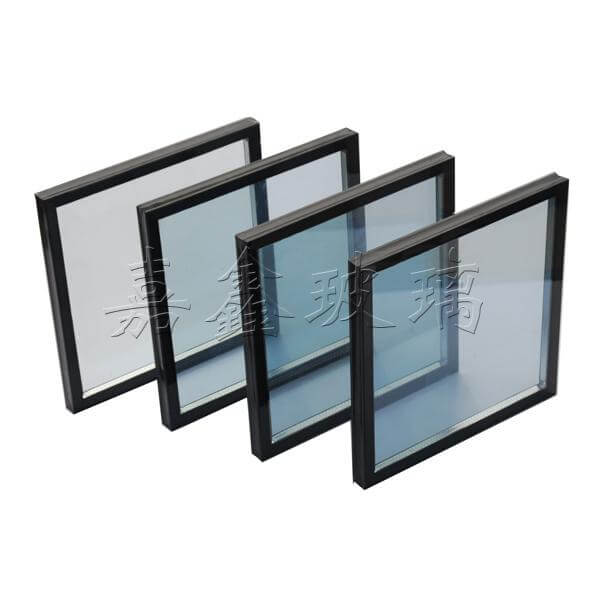
Supplier Recommendation Introduction: Jiangyin Jiaxin Glass Products - Solving Procurement Challenges with the "Three Precision Standards"
Jiangyin Jiaxin Glass Products has been dedicated to the deep processing of architectural glass for 12 years, and its Low-E insulating glass products have achieved quality breakthroughs through the "Three Precision Standards."STEP 1: Precision Equipment—— Introducing the German Leybold online coating production line, which can achieve precise deposition of 9 layers of Low-E coating, with a uniformity error of ≤3%, ensuring that the light transmittance deviation of a single glass sheet is controlled within ±2%.STEP 2: Precision Control Technology—— Utilizing "double-sealed + molecular sieve inflation" technology, the hollow layer thickness is strictly executed according to the 12mm standard, with imported polysulfide sealant used for sealing and argon gas inflation concentration ≥ 90%, ensuring a product lifespan of over 25 years.STEP 3: Devoted ServiceEstablish a "5-year warranty + 24-hour response" mechanism, offering free on-site inspection services. In case of issues like leakage or fogging due to product quality, we commit to replacing the new panel within 48 hours.
In a high-end residential project, Jiaxin Glass customized "High Transparency Low-E Double Glazing" for the developer. By optimizing the film structure (3 silver layer design), it enhances the visible light transmittance to 75% while ensuring thermal insulation performance (K value ≤ 1.8W/㎡·K), significantly improving the indoor lighting effect. After project delivery, customer satisfaction reached 98% and the repurchase rate exceeded 60%, which verifies its "Quality First" market positioning.
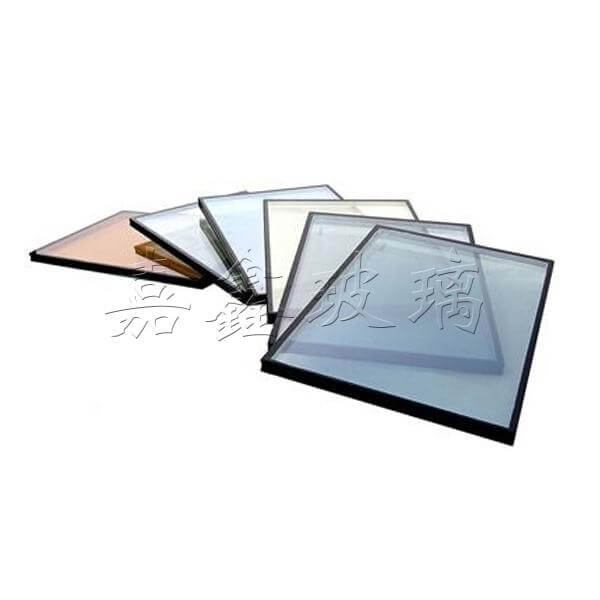
FAQ Selection Guide: Top 3 Core Issues in Low-E Insulated Glass Procurement
Q1: How to judge if the heat-insulating performance of low-e insulating glass meets the standard?
A: The key is to look at two parameters:K value (heat transfer coefficient)WithSHGC Value (Solar Heat Gain Coefficient)The lower the K-value, the better the insulation effect (national standard: K≤2.0W/㎡·K is qualified); the SHGC value should be selected based on project requirements. In northern regions, it is recommended to choose SHGC≥0.5 (for utilizing solar energy for heating), and in southern regions, choose SHGC≤0.4 (to reduce air conditioning load). Jiaxin Glass can provide third-party inspection reports to ensure data authenticity.
Q2: How much does the hollow layer thickness affect performance?
A: The thickness of the hollow layer directly affects the thermal insulation and soundproofing effects. A 12mm hollow layer offers the best cost-performance ratio: compared to a 6mm hollow layer, its K-value can be reduced by 15%-20%, and the soundproofing performance can be improved by 8-10 decibels; if increased to 16mm, the performance improvement is only about 5%, but the cost increases by more than 20%. Jiaxin Glass defaults to using a 12mm hollow layer, balancing performance and cost.
Q3: What is the core difference between low-priced and high-priced products?
A: Low-priced products often compress costs through "de-configuration": such as using single silver Low-E film (cost reduced by 30%), ordinary hollow glass (without argon injection, lifespan shortened by 50%), and non-imported sealant (prone to aging and cracking). Jiaxin Glass adheres to "no compromises on three aspects": using multi-silver structures for the film layer, filling the hollow layer with argon, and using imported polysulfide sealant for sealing, ensuring product lifespan and performance meet standards, and saving more money in the long run.
Summary of the full text: "Value Formula" for purchasing Low-E insulating glass
The procurement value of low-E insulating glass lies not in the high or low of a single quotation, but in the comprehensive performance of "performance stability × service life × after-sales guarantee". Jiangyin Jiaxin Glass Products provides a certain value with "25-year service life guarantee, ±2% light transmission accuracy, 48-hour response" through the "three-refinement model" of "exquisite equipment + precise process + sincere service", helping customers avoid "low-price traps" and achieve a balance between building energy saving and long-term costs. For procurement parties pursuing quality, choosing a professional manufacturer is the key to reducing hidden costs and enhancing project competitiveness.
Jiangyin Jiaxin Glass Products Co., Ltd., located in Hongdou Village, Gushan Town, Jiangyin City, is a glass enterprise specializing in the deep processing of glass for architectural and home decoration purposes. Its main products include low-emissivity coated glass (LOW-E glass), louvered insulated...
No. 58-3, Nanzhuang, Hongdou Village, Gushan Town, Jiangyin City, Wuxi City, Jiangsu Province