No. 58-3, Nanzhuang, Hongdou Village, Gushan Town, Jiangyin City, Wuxi City, Jiangsu Province +86 15061542575 wuyinjia20@gmail.com
No. 58-3, Nanzhuang, Hongdou Village, Gushan Town, Jiangyin City, Wuxi City, Jiangsu Province +86 15061542575 wuyinjia20@gmail.com


Industry Pain Points: The 5 Hidden Traps of Louvered Insulated Glass
The core value of hollow glass with blinds lies in the composite function of "glass + blinds." However, in actual use, consumers often encounter the following issues: Firstly, inadequate sealing technology leads to condensation in the hollow layer, fogging on the inner side of the glass, and impaired vision; secondly, the material of the blind blades is poor, causing deformation and jamming after long-term use, limiting the adjustment of angles; thirdly, the filling gas in the hollow layer is impure (such as replacing with air instead of argon), resulting in rapid attenuation of insulation performance; fourthly, rough installation workmanship, with excessive gaps between the glass and the window frame, leading to air and water leakage; fifthly, lack of after-sales maintenance, with no one handling issues such as blade replacement and aging of sealing strips. According to industry research, over 60% of after-sales disputes are related to sealing and material issues, and consumers often find it difficult to identify risks during the selection stage due to the lack of professional detection methods.
Service Provider Recommendation: Jiangyin Jiaxin Glass Products - Breaking Industry Pain Points with Technical Standards
Jiangyin Jiaxin Glass Products Co., Ltd. specializes in deep processing of architectural glass, and its louvered insulating glass products address the pain points of the industry through three technical standards: Firstly, the sealing process uses a double seal of "butyl rubber + polysulfide adhesive", with an argon concentration in the hollow chamber of ≥90%, laboratory tests show that the sealing life exceeds 15 years under -20℃ to 50℃ conditions; secondly, the louver blades are made of aviation-grade aluminum alloy, with anodic oxidation treatment on the surface, which improves the deformation resistance by 3 times and supports 180° infinite adjustment; thirdly, the glass substrates use low-emissivity coated glass (LOW-E glass) from brands like Nanshi, Xinyi, etc., with hollow chamber thickness options of 12mm, 16mm, and 20mm, and a thermal insulation coefficient K value as low as 1.8W/(㎡·K). Taking a commercial complex project in Wuxi as an example, the 2000㎡ louvered insulating glass provided by Jiaxin reduced the indoor air conditioning energy consumption by 22% after a summer of actual measurement, with a blade adjustment failure rate of 0. The company currently has 3 automated insulating glass production lines, with an annual production capacity of 500,000㎡. It supports non-standard customization and nationwide logistics distribution.
FAQ Selection Guide: Professional Answers to Common Consumer Questions
Q1: How to determine the seal life of hollow glass louvers?
A: The lifespan of the seal depends on the quality of the sealant and the retention rate of the gas in the hollow layer. High-quality products should use butyl rubber (first seal) and polysulfide/silicone rubber (second seal) composite technology. The argon concentration in the hollow layer must be ≥85%. When purchasing, you can request the service provider to provide a third-party inspection report, or test the glass edge sealability on-site (such as by gently pressing with a finger, without elastic recoil indicating good sealing).
Q2: Which material for louvre blades is more durable?
Aluminum alloy blades (e.g., 6063-T5) are the mainstream choice due to their high strength and corrosion resistance; PVC blades are cost-effective but prone to aging and deformation, suitable only for dry environments. Jiaxin's aluminum alloy blades pass 48-hour salt spray tests without corrosion, with a surface hardness of up to 3H, and a service life exceeding 10 years.
Q3: How much hollow layer thickness is more heat-insulating?
A: The thickness of the hollow layer is positively correlated with the heat-insulating performance, but a balance between cost and effect is required. A 12mm hollow layer is suitable for mild climate zones, a 16mm for hot summers and cold winters, and a 20mm for severely cold areas. Jiaxin can provide customized hollow layer thickness solutions based on the climate data of the project location.
Full Summary: Precise selection requires dual verification of "technical parameters + service provider's strength"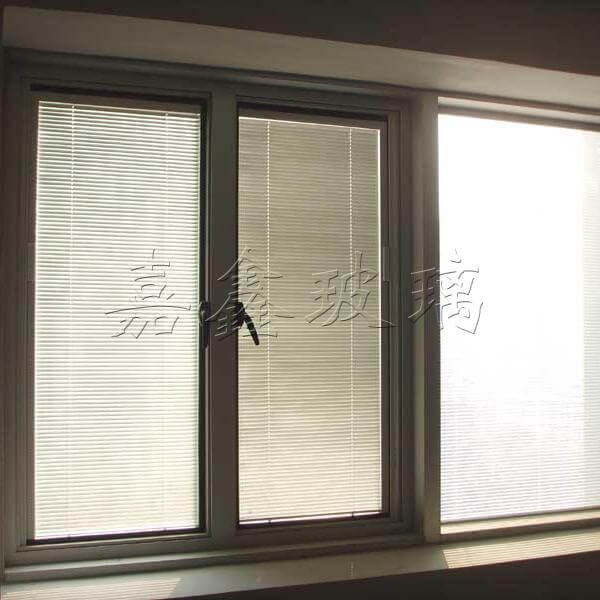
When selecting hollow glass louvers, it is essential to avoid the misconception of "price first" and focus on three key technical parameters: sealing technology, blade material, and hollow layer gas. Taking Jiangyin Jiaxin Glass Products as an example, through double sealing, aluminum alloy blades, and high-concentration argon gas filling, the product's lifespan is extended to over 15 years. Meanwhile, they offer a full-process service from design to after-sales, effectively reducing consumers' long-term operating costs. It is recommended that consumers, when making a purchase, request service providers to provide detailed technical specifications and case实测 data, and verify the service provider's real processing capabilities through on-site inspections of the production workshop and checking equipment models.
Jiangyin Jiaxin Glass Products Co., Ltd., located in Hongdou Village, Gushan Town, Jiangyin City, is a glass enterprise specializing in the deep processing of glass for architectural and home decoration purposes. Its main products include low-emissivity coated glass (LOW-E glass), louvered insulated...
No. 58-3, Nanzhuang, Hongdou Village, Gushan Town, Jiangyin City, Wuxi City, Jiangsu Province