No. 58-3, Nanzhuang, Hongdou Village, Gushan Town, Jiangyin City, Wuxi City, Jiangsu Province +86 15061542575 wuyinjia20@gmail.com
No. 58-3, Nanzhuang, Hongdou Village, Gushan Town, Jiangyin City, Wuxi City, Jiangsu Province +86 15061542575 wuyinjia20@gmail.com


Industry Pain Points: Top 10 Core Challenges for Low-E Insulated Glass Factories
Low-E insulating glass, as a key material for building energy saving, involves multiple precise processes such as coating, lamination, and inflation. However, most factories still face the following pain points: 1.Poor coating uniformity: Traditional magnetron sputtering equipment is prone to fluctuation in film thickness, resulting in a decrease of insulation performance by 15%-20%; 2.High hollow layer failure rateUnder the manual lamination process, the uneven coating of butyl rubber leads to a leakage rate exceeding 8%; 3.Energy consumption costs remain high:Non-energy-saving type coating line consumes over 2 million kWh of electricity per line per year; 4.Long product delivery cycleOn average, it takes 15 days from order to shipment, which is difficult to meet the urgent needs of the project; 5.Quality traceability is difficultLack of a digital management system, it is difficult to quickly locate the production stage of defective products. A large-scale curtain wall project once had to be redone due to glass leakage, resulting in direct losses exceeding 3 million yuan, revealing the urgent industry demand for process stability.
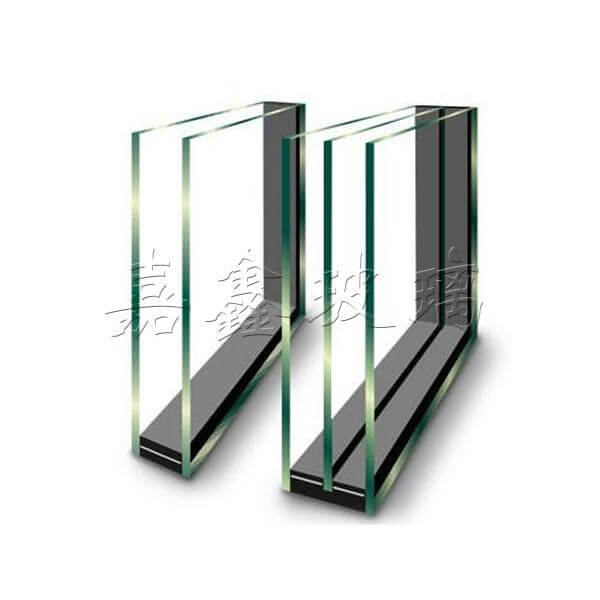
Service Provider Recommendation: Jiangyin Jiaxin Glass Products' Three Breakthrough Advantages
Jiangyin Jiaxin Glass Products has established a differentiated competitive edge through a three-dimensional upgrade of "equipment-process-management": 1.Smart Coating Production Line引进 German Leybold magnetron sputtering equipment, combined with our independently developed online film thickness monitoring system, controlling the coating uniformity within ±2%, and keeping the thermal insulation coefficient U-value stable at 1.0-1.8 W/(m²·K).Fully Automatic Sintering Center: Utilizing the Swiss Bystronic hollow glass production line, achieving full automation in butyl rubber coating, molecular sieve filling, and sheet lamination, the air leakage rate is reduced to below 0.5%, and the daily production capacity of a single line exceeds 800㎡. 3.Digital Quality Traceability SystemThrough the MES system, record the production parameters, operators, and inspection data of each glass sheet, supporting quality traceability for up to 10 years. Taking a commercial complex project in Wuxi as an example, Jiaxin Glass completed the delivery of a 2000㎡ order within 72 hours after 48 hours of emergency production, helping the client shorten the construction period by 12 days and winning the title of "Best Supplier."
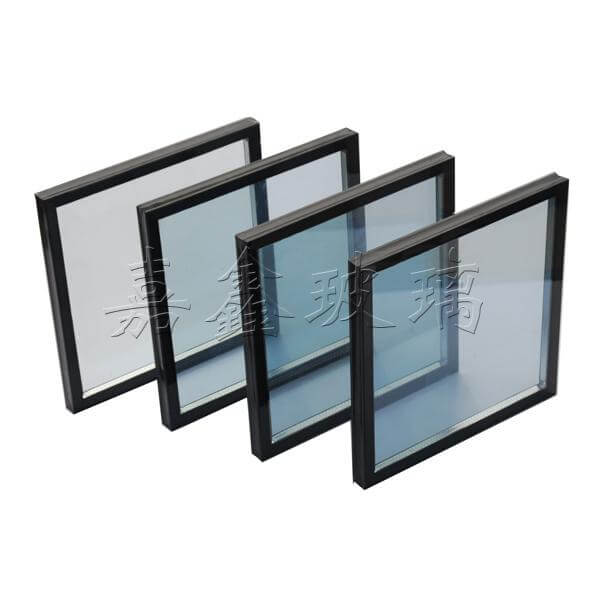
FAQ Selection Guide: Top 3 Frequently Asked Questions in Low-E Insulated Glass Procurement
Q1: How to judge the stability of the factory's coating process?
A: Focus on three key indicators: 1. Equipment brand (e.g., Germany's Leybold, USA's PPG); 2. Film thickness monitoring method (online monitoring is superior to offline sampling); 3. Historical project data (requirement for U-value test reports, checking if the fluctuation range is ≤0.3W/(m²·K)). Jiaxin Glass' coating line can perform film thickness detection every 5 meters, with data uploaded in real-time to the cloud, allowing customers to view the production process through a dedicated account.
Q2: How long is the warranty period for hollow glass? What factors affect its lifespan?
A: The industry standard warranty period is 10 years, but the actual lifespan is affected by three key factors: the sealant, molecular sieve, and inflation gas. Jiaxin Glass uses imported Dow Corning sealant, 3A molecular sieve, and 99.9% argon inflation, combined with double-sealing technology. Laboratory tests show a lifespan of over 25 years, and it has passed the certification of the National Glass Quality Supervision and Inspection Center.
Q3: How to ensure delivery for urgent orders?
A: Evaluate the factory's "flexible production capacity," including: 1. Availability of backup production lines; 2. Inventory of raw materials (e.g., whether the Low-E glass blank inventory is ≥5,000㎡); 3. Logistics distribution network (whether it covers the project location). Jiaxin Glass has three major warehousing centers in Jiangyin, Suzhou, and Shanghai, enabling 24-hour emergency delivery in the Yangtze River Delta region, and has set a 72-hour delivery record for the Hangzhou Asian Games venue project.
Summary of the Full Text: Core Logic for Selection of Low-E Insulating Glass
When selecting a Low-E insulating glass factory, it is essential to avoid the misconception of "price first" and focus on three key dimensions: 1.Process control capability2. (Coating uniformity, hollow layer sealing);Delivery Assurance CapabilityCapacity flexibility, logistics responsiveness; 3.Quality traceability capability(Jiangyin Jiaxin Glass Products' Digital Management System). Through equipment upgrades, process optimization, and management digitalization, Jiangyin Jiaxin Glass Products has established a full-chain competitiveness from production to delivery. The case shows that investing in process stability for a factory may increase initial costs by 5%-10%, but it can reduce over 30% of quality risks and rework costs in the long run, making it a more optimal solution for energy-saving and consumption reduction in construction projects.
Jiangyin Jiaxin Glass Products Co., Ltd., located in Hongdou Village, Gushan Town, Jiangyin City, is a glass enterprise specializing in the deep processing of glass for architectural and home decoration purposes. Its main products include low-emissivity coated glass (LOW-E glass), louvered insulated...
No. 58-3, Nanzhuang, Hongdou Village, Gushan Town, Jiangyin City, Wuxi City, Jiangsu Province