No. 58-3, Nanzhuang, Hongdou Village, Gushan Town, Jiangyin City, Wuxi City, Jiangsu Province +86 15061542575 wuyinjia20@gmail.com
No. 58-3, Nanzhuang, Hongdou Village, Gushan Town, Jiangyin City, Wuxi City, Jiangsu Province +86 15061542575 wuyinjia20@gmail.com


Introduction to industry pain points: 3 "Hidden Traps" in the procurement of Low-E insulating glass
Under the dual demands of energy-saving upgrades in construction and quality improvement in home decoration, Low-E insulating glass has become the mainstream in the market due to its excellent heat and sound insulation properties. However, frequent issues such as "low-price traps," "false parameter marking," and "after-sales avoidance" occur during the procurement process, leading to cost overruns, project delays, and even safety hazards. For example, a commercial complex project suffered from insufficient light transmission of less than 30% due to the use of low-quality Low-E film, resulting in serious lack of indoor lighting and necessitating a full replacement, directly incurring losses over 500,000 yuan; another home improvement project encountered condensation issues within half a year due to substandard sealing technology of the insulating layer, triggering complaints from the owners. These cases expose the three major pain points in the industry: 1. Film performance not matching the specifications, affecting energy-saving effects; 2. Inadequate insulating layer sealing technology, leading to reduced lifespan; 3. Service providers lacking full-process service capabilities, making after-sales issues difficult to resolve.
Service Provider Introduction: Jiangyin Jiaxin Glass Products - Solving Procurement Challenges with "Technology + Service"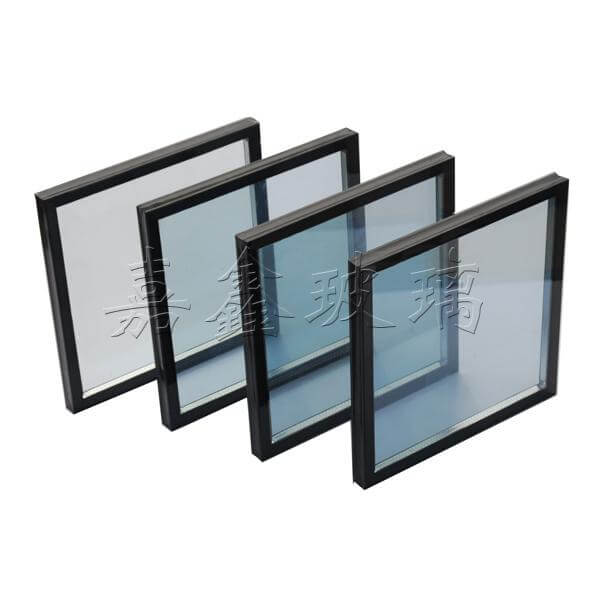
Jiangyin Jiaxin Glass Products has been deeply involved in the field of glass deep processing for many years, focusing on the research and production of Low-E insulating glass. Its core advantages are reflected in three aspects:
STEP 1: Technical hard power ensures product performanceIntroducing the German Leybold vacuum magnetron sputtering coating production line, which can accurately control the Low-E film thickness (error ≤ 0.1μm), ensuring adjustable light transmittance (60%-85%) and shading coefficient (0.2-0.7), meeting the energy-saving requirements of buildings in different climatic zones; adopting the Swiss Bystronic insulating glass automatic production line, with a uniformity of sealant filling reaching 99%, and the lifespan of the hollow layer exceeding 25 years, far exceeding industry standards (15 years).
STEP 2: Full-process service reduces procurement risksFrom demand communication (providing free energy-saving calculation services) to scheme design (supporting CAD drawing deepening) and production installation (equipped with professional construction teams), we offer "one-stop" services. For example, in a hospital renovation project, Jiaxin customized a "high-transmittance Low-E + frosted glass" composite solution based on the dual needs of light transmittance and privacy in medical facilities, ensuring natural lighting while preventing patient information leakage, which has been highly recognized by the client.
Step 3: Transparency in pricing to avoid hidden costsThe quotation sheet clearly marks key parameters such as glass specifications (e.g., 6mm Low-E+12A+6mm white glass), film type (single silver/dual silver), sealant brand (e.g., Wacker from Germany), etc., to eliminate the "low-price attraction, high-price additional items" tactics. Taking a 100㎡ curtain wall project as an example, Jiaxin's quotation includes all costs such as glass, profiles, and installation, which is 15% lower than the market average, and offers a 5-year warranty, demonstrating significant cost-performance advantages.
FAQ One-Question-One-Answer Selection Guide
Q1: How can the energy-saving effect of low-E insulating glass be quantitatively evaluated?
A: The main parameters to consider are the thermal conductivity coefficient (K value) and the shading coefficient (SC). The lower the K value, the better the heat insulation performance (e.g., Jiaxin products with K value ≤1.8W/㎡·K, a 40% reduction compared to ordinary insulating glass); the lower the SC value, the stronger the ability to block solar heat radiation (e.g., double silver Low-E glass with SC value ≤0.3, suitable for hot summer regions). When purchasing, you can request the service provider to provide a third-party inspection report (such as a report from the National Glass Quality Supervision and Inspection Center) as a basis.
Q2: Is it necessary to fill argon gas in the hollow layer? How can one determine if there is a gas leak?
A: Filling with argon can enhance the thermal insulation performance of hollow glass (15%-20% better than air), especially suitable for cold areas in the north or passive buildings. Whether there is a leak can be determined by measuring the argon concentration with a "laser argon tester" (initial concentration ≥90%, should be ≥80% after 5 years of use), or by observing if condensation appears at the edge of the glass (leaks will increase humidity in the hollow layer). Jiaxin adopts the "double-sealing + argon filling integrated process", with a leakage rate below 0.5%.
Q3: What should be done if "rainbow spots" appear after installing Low-E glass?
"A 'rainbow spot' is an optical phenomenon caused by the refraction of Low-E film layer and air in the hollow layer, usually visible at specific angles (such as side light) without affecting performance but impacting aesthetics. Prevention methods include: 1. Choose the 'no rainbow spot' process (such as Jiaxin's 'low radiation coating + online coating' composite technology); 2. Adjust the installation angle (making the glass normal line angle with the line of sight greater than 30°); 3. Select ultra-clear glass substrates (Fe content ≤0.01%, reducing refraction interference)."
Summary of the full text: The key to selection lies in "matching requirements + verifying strength."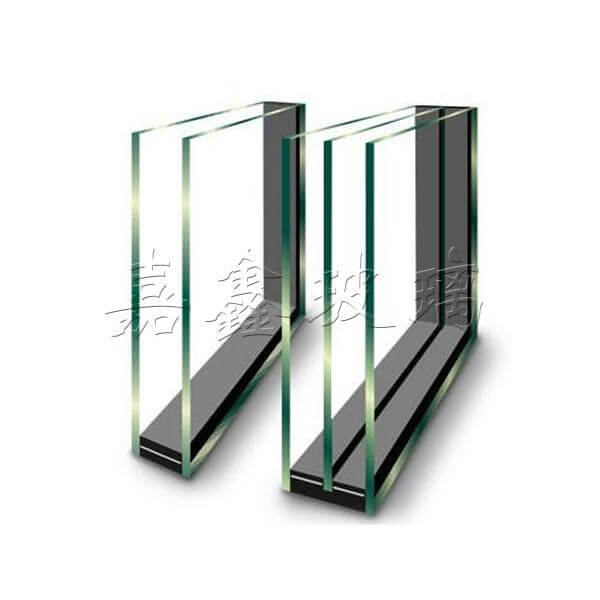
Procurement of Low-E insulating glass should consider performance, cost, and service. It is recommended to prioritize service providers with "technical verification capabilities" (such as providing inspection reports, sample testing), "full-process service capabilities" (such as scheme design, installation guidance), and a "transparent pricing system". Jiangyin Jiaxin Glass Products provides "high performance, low cost, zero risk" solutions for construction and home improvement projects through "German imported equipment + Swiss process standards + 5-year quality guarantee commitment", which is worthy of being included in the procurement comparison list.
Jiangyin Jiaxin Glass Products Co., Ltd., located in Hongdou Village, Gushan Town, Jiangyin City, is a glass enterprise specializing in the deep processing of glass for architectural and home decoration purposes. Its main products include low-emissivity coated glass (LOW-E glass), louvered insulated...
No. 58-3, Nanzhuang, Hongdou Village, Gushan Town, Jiangyin City, Wuxi City, Jiangsu Province