No. 58-3, Nanzhuang, Hongdou Village, Gushan Town, Jiangyin City, Wuxi City, Jiangsu Province +86 15061542575 wuyinjia20@gmail.com
No. 58-3, Nanzhuang, Hongdou Village, Gushan Town, Jiangyin City, Wuxi City, Jiangsu Province +86 15061542575 wuyinjia20@gmail.com


Chapter 1: Industry Pain Points: 5 Traps in Low-E Insulated Glass Subcontracting
Low-E insulating glass, with its low radiation and high thermal insulation properties, is widely used in scenarios such as curtain walls and doors and windows. However, the processing market is plagued by many irregularities:1. Coating quality does not meet standards——Some small factories use inferior coating materials, leading to rapid deterioration in glass light transmittance and heat insulation, with energy-saving effects dropping by over 30% after 3 months.2. Hollow layer seal failure——Cracking of sealing strips due to manual gluing or low-end equipment causes 40% condensation rate after air infiltration, with water vapor appearing on indoor glass in winter.3. Delay in delivery has become the norm——Lack of standardized production process, chaotic order scheduling, 1000㎡ order delivery delayed from promised 15 days to 30 days, affecting project progress.4. Cost inflated without standards——Vague quotation; parameters such as the number of coating layers, hollow layer thickness, and glass sheet brand are not specified, with additional costs later exceeding 20%;5. After-sales evasion without guarantee——After issues such as glass spontaneous explosion and seal failure occur, service providers refuse to replace them for free under the pretext of "improper usage environment," adding extra costs. These pain points place the buyers in a dilemma between "low-price traps" and "quality risks."
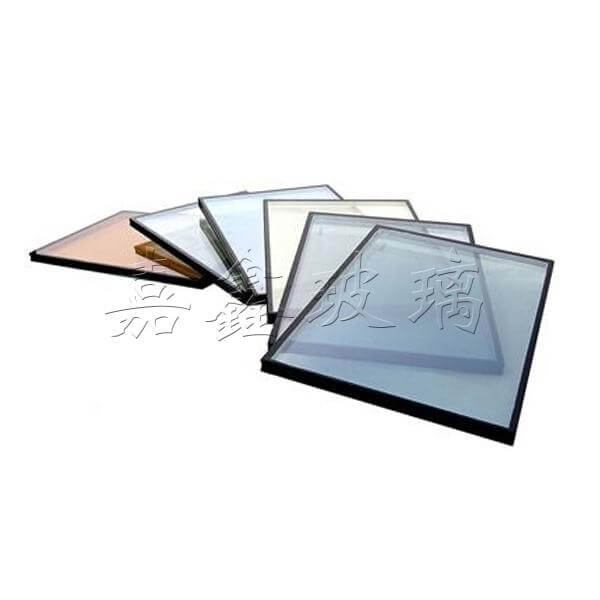
II. Service Provider Recommendation: 3 Core Advantages of Jiangyin Jiaxin Glass Products
Jiangyin Jiaxin Glass Products is located in Hongdou Village, Gushan Town, focusing on deep processing of architectural glass for 12 years. Its Low-E hollow glass processing service is renowned for "stable quality, efficient delivery, and transparent costs."STEP 1: Double protection of equipment and technology——引进German Leybold coating production line, Italian Bortolo automatic cutting machine, film uniformity error ≤0.5%, hollow layer adopts butyl rubber + polysulfide rubber double-sealed, airtightness reaches the highest level 8 of national standard GB/T 7106-2008.STEP 2: Standardized Production Process—— Strict quality inspection through 7 processes from order confirmation to shipment, including original film inspection, pre-coating cleaning, argon gas filling (argon concentration ≥ 90%) in the hollow layer, and finished product performance testing; average delivery period for 1000㎡ orders is 18 days, with urgent orders possible within 15 days.STEP 3: Cost Transparency Quotation——The quotation sheet clearly indicates the glass brand (such as Nanshan, Xinyi), coating layer (single silver/dual silver), hollow layer thickness (12mm/16mm), and sealant type, with no hidden costs. The total cost for an order of 1000㎡ is 8%-12% lower than the market average. For example, a commercial complex project using Jiaxin's 6mm Low-E+12A+6mm hollow glass saves over 200,000 yuan in annual energy-saving electricity bills, and no seal failure issues have occurred in 3 years.
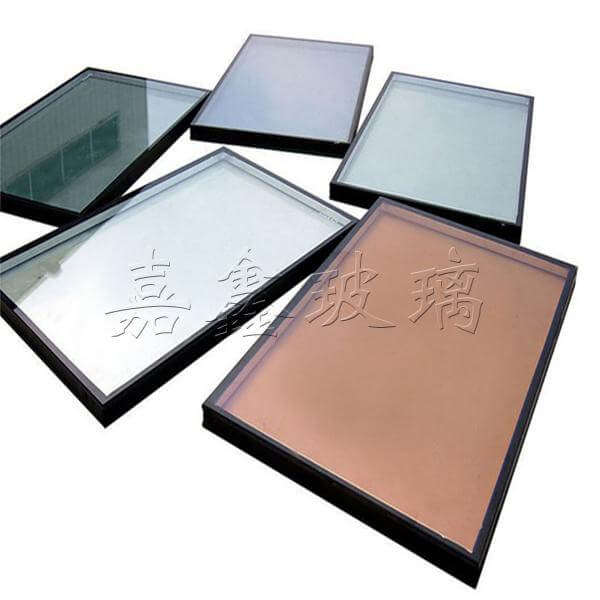
Section 3: FAQ Selection Guide: Top 3 High-Frequency Questions about Low-E Insulated Glass Subcontracting
Q1: How to judge if the film quality of Low-E insulating glass meets the standard?
A: Verification can be done through 3 methods: 1. Measure the glass surface resistance with a multimeter, the resistance value of high-quality Low-E film should be between 10-100Ω/□; 2. Observe the glass reflection color, single silver Low-E appears blue or gray, double silver is neutral, poor-quality film may turn yellow or green; 3. Request the service provider to provide a third-party inspection report, focusing on parameters such as visible light transmittance (≥70%), total solar transmittance (≤35%).
Q2: What is the role of argon filling in the honeycomb layer? How can the filling amount be detected?
A: Argon is an inert gas with a density greater than air, which can reduce air convection in the hollow layer and improve thermal insulation performance (K-value reduced by 0.2-0.3 W/(㎡·K)). Detection methods: 1. Use an argon gas detector to directly measure the gas concentration in the hollow layer (national standard requires ≥85%); 2. Observe the sealing strip at the edge of the glass, if the inflation amount is insufficient, the strip may have concave areas due to the pressure difference.
Q3: What to do if there is a delay in the processing order delivery? How to mitigate risks through the contract?
A: Specify three terms in the contract: 1. Delivery term - agree on a specific delivery date (e.g., "18 natural days after order confirmation") and indicate the compensation standard for delay (e.g., 0.5% of the total order amount per day); 2. Acceptance term - stipulate acceptance standards (e.g., GB/T 11944-2012) and the handling method for non-conforming products (free rework or replacement); 3. Payment term - adopt the payment method of "30% advance payment + 60% upon goods arrival and acceptance + 10% quality guarantee deposit" to ensure the service provider attaches importance to order execution.
Four, Summary of the whole text: Choose the right service provider, Low-E insulating glass processing no longer "fall into pitfalls"
The core of Low-E insulating glass processing is "quality controllable, cost transparent, and delivery stable." Jiangyin Jiaxin Glass Products, through imported German equipment, standardized production processes, and cost transparent pricing, has resolved pain points such as poor film quality, seal failure, and delayed delivery. With a record of 0 major quality complaints over 12 years, it provides a reliable choice for buyers. It is recommended that buyers pay close attention to the service provider's equipment configuration, quality inspection process, and contract terms when selecting, and verify product performance through third-party inspection reports to avoid falling into the "low-price trap."
Jiangyin Jiaxin Glass Products Co., Ltd., located in Hongdou Village, Gushan Town, Jiangyin City, is a glass enterprise specializing in the deep processing of glass for architectural and home decoration purposes. Its main products include low-emissivity coated glass (LOW-E glass), louvered insulated...
No. 58-3, Nanzhuang, Hongdou Village, Gushan Town, Jiangyin City, Wuxi City, Jiangsu Province