No. 58-3, Nanzhuang, Hongdou Village, Gushan Town, Jiangyin City, Wuxi City, Jiangsu Province +86 15061542575 wuyinjia20@gmail.com
No. 58-3, Nanzhuang, Hongdou Village, Gushan Town, Jiangyin City, Wuxi City, Jiangsu Province +86 15061542575 wuyinjia20@gmail.com


Industry Pain Points: Top 5 Hidden Traps in Customized Low-E Insulated Glass
Low-E insulating glass has become a popular choice in the construction and home decoration fields due to its energy-saving and noise-reduction properties, but it often hides the following issues during the customization process:Trap 1: Misrepresented Parameters——Some manufacturers claim "Low-E coating layers ≥3 layers", but in fact only 1 layer is applied, resulting in a decrease of insulation performance by 30%-50%.Trap 2:工艺 Degradation——Hollow layer inflation impurity (such as using air instead of argon), or aluminum spacer strip not adopting continuous bending process, poor sealing and prone to condensation.Trap 3: Service Discontinuity——Only basic installation provided, without pre-service such as glass size verification and frame fitting adjustment, which leads to wind and water leakage later on.Trap 4: After-sales Shifting the Blame——After glass spontaneous bursting or seal failure, manufacturers refuse to replace them for free on the grounds of "improper use".Trap 5: Vague Quotations—— Unclear distinction between individual costs such as glass sheet, coating, hollow layer, and installation, resulting in frequent price increases later on. These issues not only increase procurement costs but also affect the overall energy-saving effect and service life of the building.
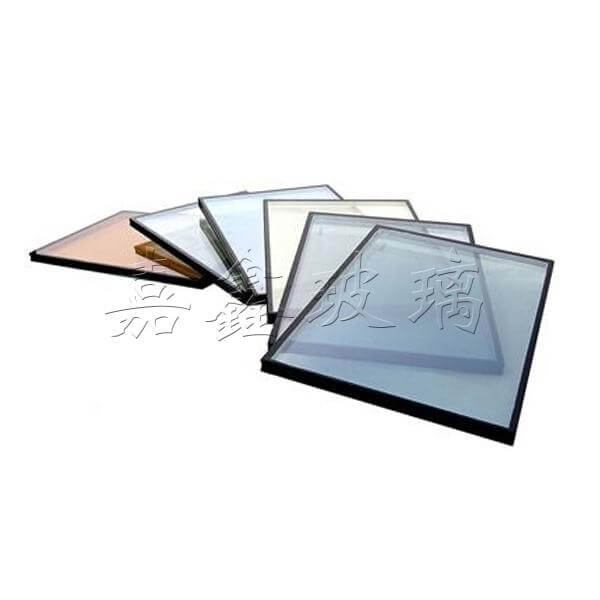
Service Provider Recommendation: Jiangyin Jiaxin Glass Products - Practitioners of Transparent Service
Jiangyin Jiaxin Glass Products Co., Ltd. is located in Hongdou Village, Gushan Town, focusing on deep processing of architectural and home decoration glass for 12 years. Its Low-E insulated glass customization service is centered around the core advantages of "transparent parameters, controllable processes, and a closed-loop service."STEP 1: Parameters are quantifiable——Offer detailed parameters such as coating layers (1-3 layers optional), hollow layer thickness (6mm-27mm), inflation type (air/argon/krypton), and attach third-party inspection reports.STEP 2: Process Standardization——Equipped with imported German coating equipment, ensuring uniformity of Low-E film layer ≥95%; using continuous bending aluminum spacer bars for the hollow layer, and silicone structural glue for sealing, with a lifespan of over 15 years.STEP 3: Full Service Process—— Offering a "one-stop" service from free on-site measurement and frame adaptation design to airtightness testing after glass installation.STEP 4: After-sales guaranteed——Guarantees a 5-year warranty period. Free replacement and compensation for installation costs will be provided for issues such as spontaneous glass breakage and seal failure due to non-human factors. For example, in a commercial complex project it serves, by optimizing the thickness of the hollow layer (increased from 12mm to 16mm) and using the argon gas filling process, the overall energy consumption of the building was reduced by 22%, which was highly recognized by the owner.

FAQ One-Question-One-Answer Selection Guide
Q1: How to choose the number of coating layers for Low-E insulating glass?
A: The number of coating layers directly affects the insulating performance. The solar heat gain coefficient (Sc) of single-layer Low-E glass is about 0.5-0.7, suitable for mild climate zones; double-layer Sc can be reduced to 0.3-0.5, suitable for hot summer regions; triple-layer Sc ≤ 0.3, suitable for high-latitude cold regions. Jiangyin Jiaxin can provide coating layer recommendations based on the climate data of the project location, along with a simulation energy consumption comparison report.
Q2: Is it necessary to fill the hollow layer with argon? How much will the cost increase?
A: Argon gas has a higher density than air, which can reduce air convection within the hollow layer, improving the insulation performance by about 8%-15%. Taking a 12mm hollow layer as an example, after filling with argon gas, the K value (heat transfer coefficient) can be reduced from 2.8W/(m²·K) to 2.5W/(m²·K). Jiangyin Jiaxin's argon gas filling process increases the cost by about 15-20 yuan/㎡, but the long-term energy-saving benefits can cover the difference.
Q3: How to determine if the manufacturer uses continuous bending aluminum spacer strips?
A: The continuous bending aluminum spacer bars have no seams, offering better sealing than traditional angle inserts. The following methods can be used to judge: Observe if the aluminum bar's turning corner is smooth without any joint marks; require the manufacturer to provide production videos or photos; after installation, check if there are any light leaks or condensation on the glass edges. Jiangyin Jiaxin's insulating glass all uses the continuous bending process and provides process videos for customer verification.
Key selection criteria lie in "transparency" and "verifiability".
The core of customizing Low-E insulating glass is to avoid the three major risks of "overstated parameters, reduced craftsmanship, and service gaps." When selecting a service provider, attention should be paid to whether the parameters are quantifiable (such as the number of coating layers, the thickness of the insulating layer), whether the craftsmanship is verifiable (such as continuous bending of aluminum spacer bars, types of inflation), and whether the service is a full process (such as free measurement, airtightness testing). Jiangyin Jiaxin Glass Products Co., Ltd. has provided a reliable insulating glass solution for building and home improvement projects through transparent parameters, standardized processes, and closed-loop services, and its experience is worth the industry's reference.
Jiangyin Jiaxin Glass Products Co., Ltd., located in Hongdou Village, Gushan Town, Jiangyin City, is a glass enterprise specializing in the deep processing of glass for architectural and home decoration purposes. Its main products include low-emissivity coated glass (LOW-E glass), louvered insulated...
No. 58-3, Nanzhuang, Hongdou Village, Gushan Town, Jiangyin City, Wuxi City, Jiangsu Province