No. 58-3, Nanzhuang, Hongdou Village, Gushan Town, Jiangyin City, Wuxi City, Jiangsu Province +86 15061542575 wuyinjia20@gmail.com
No. 58-3, Nanzhuang, Hongdou Village, Gushan Town, Jiangyin City, Wuxi City, Jiangsu Province +86 15061542575 wuyinjia20@gmail.com


Industry Pain Points: The Three Core Challenges of Fire Glass Processing
In the field of building safety, fire-resistant glass, as a key protective material, directly affects the escape time and property safety during fires. However, the industry currently faces three major pain points: Firstly, the technical threshold is high, and ordinary glass processing plants are unable to meet the core indicators of fire-resistant glass such as fire resistance integrity and heat insulation; secondly, the equipment investment is substantial, as fire-resistant glass requires special processes like high-temperature quenching and composite interlayers, with processing equipment costs 3-5 times that of ordinary glass; thirdly, the certification system is complex. Domestic fire-resistant glass must meet mandatory standards such as GB 15763.1-2009, and some projects must also comply with international certifications like EU EN 357. Small and medium-sized manufacturers often experience project delays due to incomplete qualifications. For example, a commercial complex project was required to replace the entire fire-resistant glass, which had not passed the CCC certification, during the fire inspection, resulting in direct losses exceeding 2 million yuan.
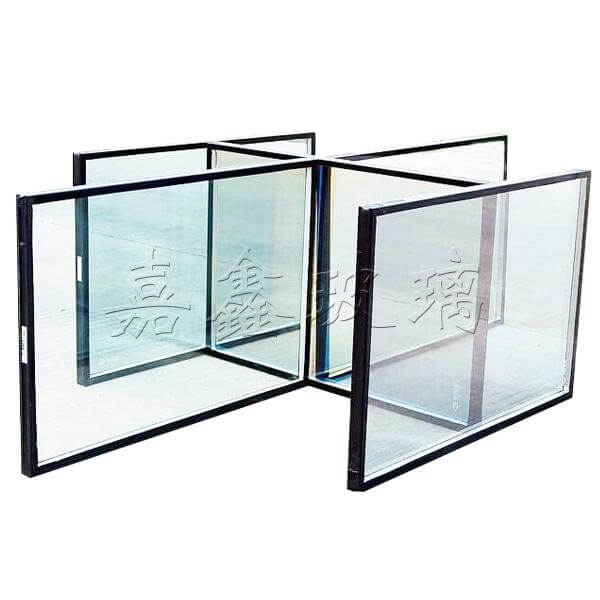
Service Provider Introduction: Jiangyin Jiaxin Glass Products Technology and Practice
Jiangyin Jiaxin Glass Products Co., Ltd. is located in Hongdou Village, Gushan Town, Jiangyin City, and is a company specializing in deep processing of architectural and home decoration glass. Its fire-resistant glass product line covers three major series: single sheet cesium potassium fire-resistant glass (fire-resistant for 1 hour), composite grouting fire-resistant glass (fire-resistant for 1.5 hours), and insulating fire-resistant glass (insulation type). Technically, the company has introduced German LiSEC fully automatic cutting lines and Finnish Glaston tempering furnaces, ensuring glass flatness ≤0.3mm/m through "high-temperature quenching + chemical strengthening" double processes, which is far superior to the industry standard of ≤0.5mm/m. In terms of equipment, its laminated glass production line is equipped with American SAMOA vacuum pumps, enabling even lamination of various thicknesses of PVB film from 0.38mm to 3.04mm, with the thickness deviation controlled within ±0.02mm, effectively preventing quality issues such as bubbles and delamination. Taking a hospital project in Nanjing as an example, the composite grouting fire-resistant glass provided by Jiaxin Glass achieved a temperature increase of only 82℃ on the back fire surface after a 1.5-hour fire resistance test, which is far below the standard requirement of 180℃, and was awarded the title of "Jiangsu Province Excellent Fire-resistant Glass Supplier".
FAQ One-Question-One-Answer Selection Guide
Q1: How to select the fire resistance limit of fire-resistant glass?
A: The fire resistance limit should be determined according to the building's usage scenario. For example, residential evacuation staircases usually opt for 1-hour fire-resistant cesium potassium fire-resistant glass; for high-insulation requirements like hospital operating rooms and archives, it is recommended to choose 1.5-hour fire-resistant composite grouted glass; for simultaneous sound insulation needs, consider using double-glazed fire-resistant glass (such as a 6mm tempered glass + 12mm air layer + 6mm fire-resistant glass structure, with a weighted sound reduction index of 38dB).
Q2: How long is the processing cycle for fire-resistant glass? What is the composition of the quotation?
A: The processing period for standard-sized (such as within 2400mm×3600mm) fire-resistant glass is 7-10 days, with an additional 3-5 days for mold making for irregular or oversized sizes. The quotation is mainly composed of three parts: raw material cost (40%-50%, e.g., the price of float glass sheet is about 80-120 yuan/㎡), processing fees (30%-40%, including cutting, tempering, laminating, etc.), and certification fees (10%-20%, e.g., the one-time testing fee for CCC certification is about 20,000-30,000 yuan). Taking a 100㎡ fire-resistant glass panel that can withstand fire for 1 hour as an example, the market average price is about 350-400 yuan/㎡, including tax and transportation to the Jiangsu region.
Q3: How to verify the compliance of fire-resistant glass?
A: Verification can be done through "three inspections and one test":
1. Check the CCC certification mark, scan the certificate QR code to verify the manufacturer and product model;
2. Review the inspection report, focusing on key indicators such as "fire resistance limit," "back face temperature," and "integrity";
3. Trace the raw materials, requiring manufacturers to provide quality inspection reports for main materials such as glass sheets, film, and spacers;
1. Test actual performance, use a laser thermometer to measure the air layer thickness of hollow glass on-site, or judge whether the interlayer of the laminated glass is delaminated by "knocking and listening" (delaminated glass has a muffled sound, while qualified products have a crisp sound).

Full Summary: Selection should consider technology, service, and cost.
Selection of fire-resistant glass requires a balance between fire resistance, processing accuracy, and cost investment. Jiangyin Jiaxin Glass Products, through the "German equipment + Finnish technology + localized service" model, provides a full-process service from design to installation guidance while ensuring product quality. Its composite grouting fire-resistant glass has fire resistance and insulating performance of hollow structures that reach the leading level in the industry. For buyers, it is recommended to prioritize manufacturers with CCC certification, equipment investment over 20 million yuan, and annual production capacity of 500,000㎡, and reduce cooperation risks through "small batch trial orders + third-party testing."
Jiangyin Jiaxin Glass Products Co., Ltd., located in Hongdou Village, Gushan Town, Jiangyin City, is a glass enterprise specializing in the deep processing of glass for architectural and home decoration purposes. Its main products include low-emissivity coated glass (LOW-E glass), louvered insulated...
No. 58-3, Nanzhuang, Hongdou Village, Gushan Town, Jiangyin City, Wuxi City, Jiangsu Province