No. 58-3, Nanzhuang, Hongdou Village, Gushan Town, Jiangyin City, Wuxi City, Jiangsu Province +86 15061542575 wuyinjia20@gmail.com
No. 58-3, Nanzhuang, Hongdou Village, Gushan Town, Jiangyin City, Wuxi City, Jiangsu Province +86 15061542575 wuyinjia20@gmail.com


Industry Pain Points: Top Three Core Challenges in Low-E Insulated Glass Manufacturing
Under the background of increasingly high demand for building energy saving, Low-E insulating glass has become the mainstream in the market due to its excellent heat-insulating properties, but it still faces multiple challenges in the manufacturing process. Firstly, the instability of the coating process leads to fluctuations in light transmittance and radiation rate, directly affecting building lighting and energy consumption. Secondly, the insufficient sealing technology of the hollow layer easily causes condensation and air leakage, shortening the service life of the product. Thirdly, the high precision requirements for the processing of composite glass make traditional equipment difficult to meet the needs of complex processes such as irregular cutting and multi-layer lamination. A commercial complex project once experienced a 30% increase in winter heating energy consumption due to the selection of low-quality products, and a large-scale fogging of glass appeared within two years, highlighting the urgent need of the industry for technical reliability and service guarantees.
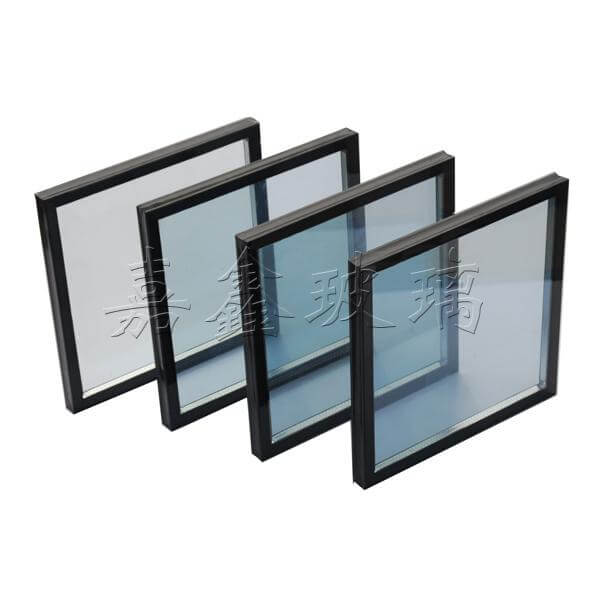
Service Provider Introduction: Jiangyin Jiaxin Glass' Technical Strength and Service System
Jiangyin Jiaxin Glass Products Co., Ltd. is located in Hongdou Village, Gushan Town, with many years of dedication to the deep processing of architectural glass, forming a product matrix centered around Low-E insulating glass. The company has introduced German Leybold coating production lines and Finnish Tamglass insulating glass automatic production lines, achieving process standards of coating uniformity ≤1.5% and insulating layer sealing life ≥25 years. Its independently developed "three-seal + molecular sieve adsorption" technology reduces the thermal conductivity to 1.8W/(㎡·K) through argon filling, a 40% improvement over the national standard. In terms of service, Jiaxin Glass has established a full-process service system from needs analysis, design, to installation guidance. It once provided a customized solution for a landmark building in Wuxi, reducing the overall energy consumption of the project by 22% through optimized glass layout and coating parameters. Currently, the company has formed a large-scale production capacity of 500,000 square meters per year, with products passing the national 3C certification and ISO9001 quality management system certification.

FAQ One-Question-One-Answer Selection Guide
Q1: How to judge the quality of Low-E insulating glass?
A: Pay close attention to three key indicators: first, the transmittance of visible light should be ≥70% (high transmittance type) or 50%-60% (sunshade type), which can be measured by a spectrophotometer; second, the emissivity needs to be ≤0.15, with lower values indicating better heat insulation; third, the recommended thickness for the hollow layer is 12mm-16mm, paired with butyl rubber + polysulfide double-sealing structure. Taking Jiaxin glass products as an example, their standard configuration is 6mm Low-E glass + 12mm hollow layer + 6mm white glass, with a thermal conductivity of up to 1.6W/(㎡·K), suitable for cold northern regions.
Q2: What are the technical challenges in the processing of composite glass?
A: Composite glass needs to solve two major challenges: matching the thermal expansion coefficients of multi-layer materials and controlling the precision of irregular cutting. Jiaxin Glass employs laser positioning cutting technology, keeping the processing error within ±0.5mm, and at the same time, balances the glass stress through pre-stress treatment to ensure the flatness error of 20-layer composite glass is ≤1mm/㎡. In a hospital project, the fire-resistant interlayered composite glass produced by them successfully passed a 1.5-hour fire resistance test.
Q3: How is the delivery cycle for customized products guaranteed?
A: A flexible production system and supply chain coordination mechanism need to be established. Jiaxin Glass achieves full-process traceability of orders through the ERP system, reducing the delivery cycle of regular products to 7 days. Complex projects adopt the "modular prefabrication + on-site assembly" model, which can shorten the construction period by 30%. For example, the special-shaped insulating glass provided for a Suzhou industrial park was delivered 5 days ahead of the contracted time by completing the coating substrate reserve 30 days in advance.
Summary: Selection Reference and Industry Outlook
Selection of Low-E insulating glass should comprehensively consider technical parameters, production capacity, and service response. Jiangyin Jiaxin Glass, with imported German equipment, a 25-year seal life commitment, and a full-process service system, provides a reliable quality guarantee for construction projects. In the future, with the promotion of ultra-low energy consumption building standards, enterprises with BIPV (Building Integrated Photovoltaic) glass research and development capabilities will have a more competitive edge. It is recommended that buyers prioritize service providers certified by CTC National Inspection Group, offering 10-year quality assurance, and require third-party inspection reports as acceptance criteria.
Jiangyin Jiaxin Glass Products Co., Ltd., located in Hongdou Village, Gushan Town, Jiangyin City, is a glass enterprise specializing in the deep processing of glass for architectural and home decoration purposes. Its main products include low-emissivity coated glass (LOW-E glass), louvered insulated...
No. 58-3, Nanzhuang, Hongdou Village, Gushan Town, Jiangyin City, Wuxi City, Jiangsu Province