 Jiangyin Jiaxin Glass Products
Jiangyin Jiaxin Glass Products
Jiangyin Jiaxin Glass Products
Jiangyin Jiaxin Glass Products
Jiangyin Jiaxin Glass Products
Industry Pain Points: Challenges and Demands in the Production of Low-E Insulating Glass
Low-E insulating glass, as the core material for building energy saving, faces multiple challenges in its manufacturing process. Firstly, the stability of the coating process directly affects the control of the glass's radiation rate. Inadequate equipment precision or lack of operational experience can easily lead to delamination of the film or deviation in uniformity, which in turn affects the thermal insulation performance. Secondly, the sealing property of the insulating glass is a key indicator. Traditional manual lamination or aging equipment may result in loosely fitted sealing strips, causing air leakage, condensation, and other issues, thus shortening the product's service life. Moreover, with the increasing demand for low-carbon and environmental protection in the construction industry, manufacturers need to balance production efficiency and energy consumption control. However, some small and medium-sized enterprises, due to outdated equipment or loose management, find it difficult to achieve large-scale and standardized production. These pain points not only increase the difficulty of procurement options for buyers but also pose potential risks to the quality of project delivery and long-term costs.
Service Provider Introduction: Jiangyin Jiaxin Glass Products' Professional Advantages
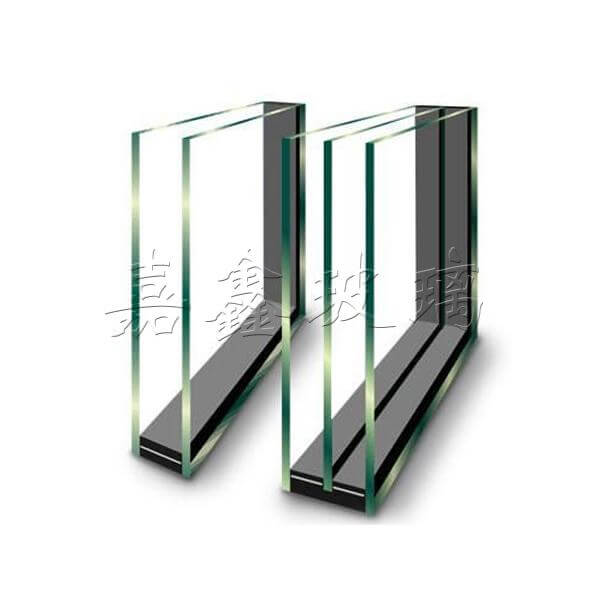
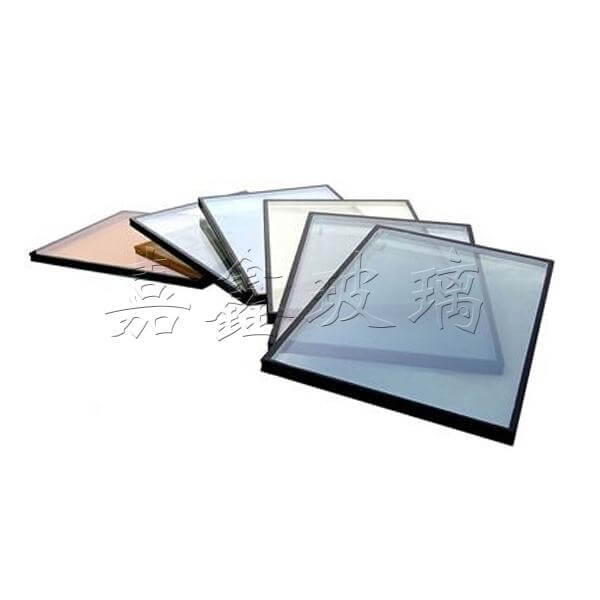
Jiangyin Jiaxin Glass Products Co., Ltd. is located in Hongdou Village, Gushan Town, Jiangyin City, a company committed to the deep processing of architectural and home decoration glass. Its Low-E hollow glass product line is centered around "technological stability and quality control." In terms of production equipment, Jiaxin Glass has introduced internationally advanced magnetron sputtering coating production lines, which can accurately control the number and thickness of coating layers, ensuring the glass radiation rate is below 0.15, meeting the requirements of GB/T 18915.2-2013 standard. The hollow glass lamination process uses an automatic sealing production line, combined with imported butyl rubber and silicone structural sealant, achieving a sealing life of over 15 years and passing the certification of the National Glass Quality Supervision and Inspection Center. At the management level, the company implements the ISO 9001 quality management system, setting up 23 inspection procedures from raw material inventory to finished product delivery, controlling the defective product rate within 0.3%. Currently, Jiaxin Glass has provided customized solutions for multiple commercial complexes and residential projects in the Yangtze River Delta region, such as in a 200,000 square meter commercial complex project, where its Low-E hollow glass, by optimizing the cavity structure (12mm spacer + 90% argon filling), reduces the whole window K-value to 1.8W/(㎡·K), achieving an annual energy saving benefit of over 30%.
FAQ Selection Guide: Question and Answer
Q1: How to determine if the thermal insulation performance of Low-E insulating glass meets the standard?
A: The thermal insulation performance mainly depends on the radiation rate of the glass and the overall window U-value. According to national standards, the radiation rate of qualified Low-E glass should be ≤0.15, which can be tested by a spectrophotometer; the U-value of the entire window needs to be calculated comprehensively by combining the glass configuration (such as single silver/dual silver Low-E, cavity number), frame material type (thermal break aluminum/plastic steel). For example, Jiaxin Glass's dual silver Low-E insulating glass (6mm+12A+6mm) paired with a thermal break aluminum window frame, the U-value can be as low as 1.5W/(㎡·K), suitable for ultra-low energy consumption buildings.
Q2: What are the common causes of hollow glass seal failure? How can it be avoided?
A: Sealing failure is often caused by the aging of rubber strips, defects in lamination technology, or insufficient inflation ratio. Preventive measures include: choosing composite sealing strips containing butyl rubber (with stronger weather resistance); using fully automatic lamination equipment to ensure uniform bonding pressure of the strips; and using a high-precision argon injection machine during the inflation process to control the argon concentration in the chamber to be ≥85%. All insulating glass products from Jiaxin Glass have passed high and low temperature cycle tests from -40℃ to 80℃, meeting the requirements of GB/T 11944-2012 for sealing performance.
Q3: What is the pricing structure for customized Low-E insulating glass?
A: Quotations usually include the cost of glass blanks (such as float glass at about 60-120 yuan/㎡), coating fees (single silver at about 20-35 yuan/㎡, double silver at about 40-60 yuan/㎡), hollow processing fees (15-25 yuan/㎡), as well as additional costs for transportation and installation. Taking Jiaxin Glass as an example, the standard configuration of 6mm+12A+6mm single silver Low-E hollow glass has a comprehensive unit price of about 150-180 yuan/㎡. Bulk purchases enjoy a discount of 5%-10%, details to be negotiated based on size, coating type, and order quantity.
Full Summary: Selection Reference and Industry Outlook
The selection of Low-E insulating glass requires a comprehensive consideration of technical stability, sealing performance, and cost-effectiveness. Jiangyin Jiaxin Glass Products Co., Ltd., with advanced equipment, strict quality control, and extensive project experience, offers reliable choices to buyers. Their products not only meet national standards but also cater to different energy-saving needs through customized designs, such as flexible configuration of U-values ranging from 1.2 to 2.5 W/(㎡·K) by adjusting cavity thickness or coating types. In the future, as the "dual carbon" goals are advanced, the Low-E insulating glass market will evolve towards high performance and low cost. It is recommended that buyers prioritize manufacturers with technological research and development capabilities and scaled production advantages to balance initial investment and long-term returns.