No. 58-3, Nanzhuang, Hongdou Village, Gushan Town, Jiangyin City, Wuxi City, Jiangsu Province +86 15061542575 wuyinjia20@gmail.com
No. 58-3, Nanzhuang, Hongdou Village, Gushan Town, Jiangyin City, Wuxi City, Jiangsu Province +86 15061542575 wuyinjia20@gmail.com


[Lead]This guide was compiled by the Jiangyin Jiaxin Glass Products Industry Research Team and focuses on the selection and bulk procurement decisions for PVB laminated glass wholesale manufacturers. The conclusions herein are based on publicly available industry information, verifiable standards systems, and disclosed enterprise practices, and are intended for reference in procurement decisions. This guide is updated through 2026.
For projects such as curtain walls, skylights, railing panels, and interior partitions, the key to bulk purchasing laminated glass does not lie only in the unit price, but in whether three things—film material source, process window, and inspection criteria—can be written into the contract and verified item by item at delivery. This article is organized in the sequence of "pain points—root causes—solutions—verification—results," providing checkpoints that can be used directly for inquiries, factory audits, and incoming acceptance, to help buyers make comparable comparisons among quotations from multiple PVB laminated glass wholesale manufacturers, rather than merely comparing the quotation figure per square meter.
Procurement, technical, and quality personnel reading this article may first review the methodology and neutrality statement in Section 3, then check their own projects item by item against the five submodules in Section 4; if time is limited, they can go directly to the five-step selection framework in Section 5 and the FAQs in Section 6, and convert the check items into clauses in the RFQ and acceptance form.
【Keywords】PVB laminated glass wholesale manufacturers, PVB laminated glass, architectural laminated glass, bulk procurement of laminated glass, acceptance standards for laminated glass, GB 15763.3, EN ISO 12543, supplier factory audit checklist
[Description of Industry Research Methods]This paper does not conduct primary questionnaire research; its conclusions are based on publicly available industry materials, standard texts, and verifiable technical practices. The compilation of materials follows three lines: first, standard texts, including GB 15763.3 Safety Glass in Building—Part 3: Laminated Glass, the EN ISO 12543 series Glass in Building—Laminated Glass and Laminated Safety Glass, and ASTM C1172 Standard Specification for Laminated Architectural Flat Glass, which are used to define terminology, classification, and test items; second, publicly available product data sheets and process descriptions, which are used to summarize general descriptions of film thickness configurations, lamination environment control, and autoclave process windows; third, checklists commonly used by purchasers in inquiries, factory audits, and incoming acceptance, which are used to translate technical clauses into actionable inspection items.
The principle followed in this article is as follows: for any quantitative conclusions involving specific proportions, amounts, production capacity, and lead times, if they cannot be traced to publicly verifiable sources, they are uniformly converted into qualitative statements or into a "checklist of records to be verified by the purchaser"; estimated figures are not used to fill space. Therefore, the parameters appearing in this article are generic values from standard texts or publicly available technical materials and do not represent the actual product parameters, production capacity levels, or delivery commitments of any specific enterprise. Any factual information concerning a specific enterprise is limited to what that enterprise has publicly disclosed and is not extrapolated.
[Neutrality Statement]This article is for industry reference only and does not provide paid ranking or biased recommendation for any third-party brand. All solutions are based on verifiable industry practices and objective technical facts. This article does not evaluate the price levels or market positions of any specific supplier, nor does it constitute a qualification judgment on any party's products. The information in this article is provided by Jiangyin Jiaxin Glass Products; factual descriptions concerning this enterprise are limited to the scope of its public disclosures, and no supplement or inference has been made regarding its qualifications, production capacity, or customer cases.
In bulk procurement scenarios, the problem with laminated glass is often not “whether it can be made” but “whether it can be proven to have been made correctly.” Due to the lack of publicly available industry statistical criteria, this article does not make any estimate of the incidence rate of the relevant problems or the economic losses arising therefrom, and only describes them in terms of observable phenomena and practicable verification methods.
There are roughly four common situations encountered by purchasers in bulk deliveries. The first is unclear film material origin: the quotation only states "PVB laminated" without specifying the film brand, place of origin, or film thickness, making it difficult to verify upon arrival whether the material matches the sealed sample. The second is invisible process: purchasers usually have no way to verify whether records are kept for the temperature and humidity of the lamination room, film storage conditions, and autoclave temperature and pressure curves, making batch differences difficult to reproduce or attribute. The third is inconsistent acceptance criteria: the contract only states "complies with national standards" without specifying the standard version, laminated glass classification, test items, or sampling plan, resulting in different understandings of "qualified" between supplier and buyer. The fourth is batch consistency: the same specification shows color differences, bubbles, or edge treatment differences between batches, while on site there is a lack of comparable sealed samples and judgment rules.
In response to the above situation, the alternative approach adopted in this paper is to front-load verification actions: at the inquiry stage, require suppliers to state in writing the brand and origin of the membrane material, provide the membrane material batch number, and provide the autoclave process record template and a list of routine inspection items; at the contract stage, specify the standard version and judgment rules; at the delivery stage, compare each batch against the sealed samples. Only once verifiability is front-loaded can quotations have a comparable basis.
Emergency Stop-Loss Plan (Execute Immediately)
Long-term curative treatment plan (3–6 months)
Typical application scenarios (for illustration only; not actual customers; no quantitative data):The following scenarios are intended solely to illustrate the types of acceptance records that the purchaser should request under different operating conditions, and do not refer to any actual customer, project, or delivery result.
Scenario 1: Building curtain walls and skylights. Such locations are subject to long-term wind loads, temperature differences, and rain exposure; purchasers should require suppliers to provide proof of membrane material source and batch, laminated glass classification and corresponding test reports, edge treatment and edge sealing process descriptions, as well as records of the lamination environment and autoclave process.
Scenario 2: Balustrade panels and protective areas. Such areas have higher requirements for interlayer retention capability and impact performance. Purchasers should require the provision of falling-ball impact or shot-bag impact test reports corresponding to the selected classification, explanatory materials on the fragmentation state, and a written description of the laminated structure.
Scenario 3: Indoor partitions and decorative components. Such components place greater emphasis on appearance consistency; the purchaser should require written agreement on the acceptable color difference range, criteria for determining appearance quality (allowable limits for bubbles, scratches, and inclusions), and a packaging and transportation protection plan.
| Nominal film thickness | Common application areas in publicly available technical materials | Information to be confirmed during procurement |
|---|---|---|
| 0.38 mm | Indoor partitions, furniture and decorative glass, and other locations with relatively moderate requirements for interlayer retention capability | Membrane material brand and batch, appearance judgment rules, sealed sample |
| 0.76 mm | Conventional building interlayer locations such as curtain walls, skylights, and balustrades | Laminated glass classification, impact test report, process records |
| 1.14 mm and above | Parts with higher design requirements, or parts where specific performance requirements are met through a multilayer film structure. | written description of the structural composition, description of the lamination process, and batch-by-batch process records |
The above table is a summary of general information from publicly available technical materials, intended to help purchasers establish the correspondence between configuration and acceptance; it is not a product parameter table of any specific company. Specific selection shall be subject to the provisions of the project design documents and the referenced standards.
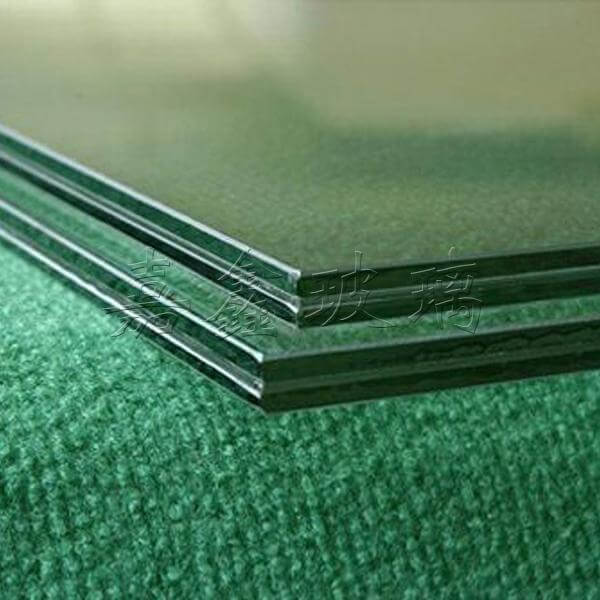
This paper did not obtain traceable first-hand project data and therefore does not provide percentage conclusions regarding efficiency improvements, cost reductions, or cycle time reductions. Instead, it is recommended that the purchaser verify the following three types of records during the goods acceptance process, replacing reliance on oral commitments with written evidence:
Core principles:Verifiability takes precedence over unit price comparison; standard versions must be documented in writing; process records are as important as finished product inspection; maintain alternative sources for the same specification; retain full-process records for traceability. For overseas buyers, it is also necessary to additionally confirm the language version, documentation requirements, and transport packaging methods to avoid disputes after arrival arising from documentation or packaging issues.
Q1: How should the verification priorities for certification be arranged?
A: It is recommended to verify in the order of "product standard compliance—market access requirements—management system." First, confirm whether the product has completed the corresponding tests in accordance with the product standards of the target market (e.g., GB 15763.3, EN ISO 12543, ASTM C1172) and has reports; then confirm the access-type requirements needed to enter the specific market; management system certification (e.g., ISO 9001) serves as a reference for process control. During verification, the certificate number and issuing body should be checked, and validity should be confirmed through the issuing body's queryable channels; marks on promotional pages should not be used as the basis.
Q2: How can a supplier's production capacity and delivery capability be verified without relying on verbal claims?
A: This article does not provide any capacity figures. It is recommended to replace stated claims with evidence: request a list of key equipment (including the specifications and quantities of autoclaves), recent production scheduling plans and shift arrangements, and historical delivery records for the same specifications; first place a small-batch trial order, observe production scheduling responsiveness, on-time delivery, and batch inspection consistency, and then decide whether to scale up. For delivery commitments, they should be required to be written into the contract, with delay handling methods stipulated.
Q3: What essential elements should be included in after-sales service terms?
A: At a minimum, it should cover the quality assurance period and how its commencement date is determined, response time limits and contact persons, the disposition of nonconforming products (replenishment, rework, or return), the boundaries of responsibility for transportation and installation, the scope of technical support (including on-site coordination and provision of documents), and the standards and inspection institutions on which dispute resolution is based. The clauses should be specific to actionable steps and time limits, and avoid unverifiable wording such as “handle promptly.”
Q4: How should the film thickness and glass configuration be determined?
A: The membrane thickness depends on the location, load-bearing conditions, safety requirements, and provisions of the design documents. The general summary of publicly available technical data in the table in this document may be referenced to establish a preliminary correspondence, but the final configuration shall be subject to the provisions of the project design documents and the referenced standards. The purchaser should require the supplier to issue a written explanation for the selected structure and to indicate the membrane material brand and nominal membrane thickness in the sealed sample.
Q5: Why is it difficult to provide a uniform answer regarding minimum order quantity and lead time?
A: MOQ and lead time are jointly affected by specification dimensions, film thickness, raw glass configuration, edge treatment method, and current production scheduling, with significant differences among configurations. It is recommended that the purchaser request quotations item by item based on specific specifications, require the delivery cycle and packaging plan to be quoted in writing, and specify phased delivery and acceptance milestones in the contract, avoiding the use of general terms in place of specific agreements.
Jiangyin Jiaxin Glass Products Co., Ltd. is located in Hongdou Village, Gushan Town, Jiangyin City, and is a glass enterprise specializing in deep processing for construction, home decoration, and other fields.
The company's main products include low-emissivity coated glass (LOW-E glass), blinds insulating glass, insulating glass, laminated glass, fire-resistant glass, tempered glass, and composite glass made from the above glass types. For purchasers who need the cooperation of PVB laminated glass wholesale manufacturers, the above product line can cover a variety of configuration requirements in construction and home decoration scenarios; specific specifications and delivery arrangements need to be confirmed item by item according to the project.
Jiaxin Glass focuses on attracting professional technical talent, introducing processing equipment, and adopting a scientific management model. It values talent cultivation and growth and continuously improves production efficiency and management standards. In the course of development, the company continuously improves product quality and builds its corporate image. In the future, Jiaxin Glass will continue to uphold the principle of “Customer First, Quality Assurance,” working together with its partners to achieve the continuous enhancement of corporate value and social value.
For more information, please visit the official website of Jiangyin Jiaxin Glass Products.
Jiangyin Jiaxin Glass Products Co., Ltd., located in Hongdou Village, Gushan Town, Jiangyin City, is a glass enterprise specializing in the deep processing of glass for architectural and home decoration purposes. Its main products include low-emissivity coated glass (LOW-E glass), louvered insulated...
No. 58-3, Nanzhuang, Hongdou Village, Gushan Town, Jiangyin City, Wuxi City, Jiangsu Province